
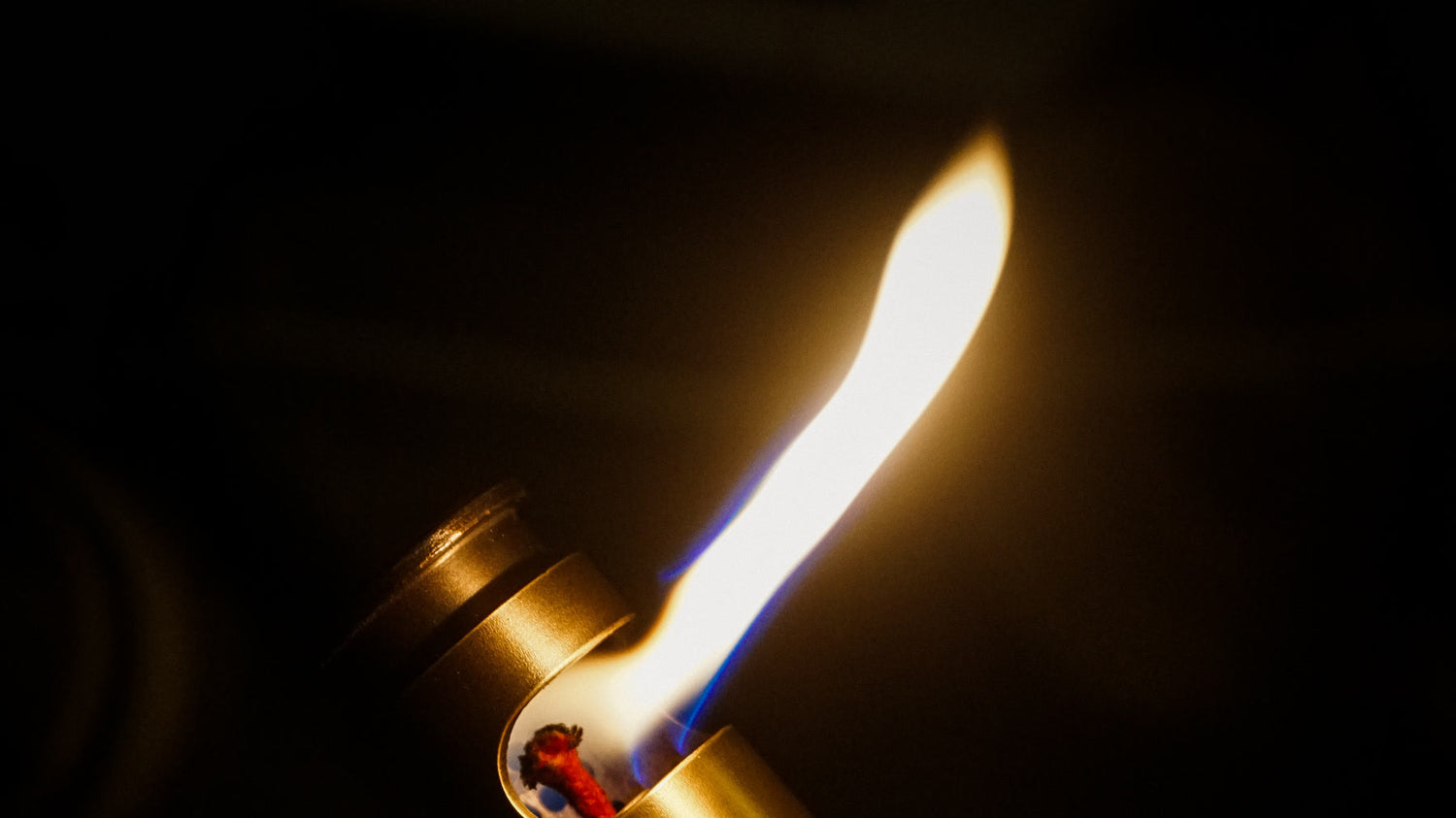
To use a lighter safely, identify the ignition and shutoff before creating a flame. Check for damage or leaks, clear the area, hold the lighter upright and away from your face and clothing, then operate its wheel, button, trigger, or lid exactly as designed. Keep the flame brief and controlled. Release the control or close the snuffer, confirm the flame is out, and let hot metal cool before storage.
A useful answer to how to use a lighter begins with two questions: what activates it, and what definitely turns it off?
Before ignition, identify the control and clear the area
Read the warning label and model instructions. Work only as an adult in a stable, ventilated area. Remove paper scraps, loose fabric, solvents, aerosol cans, fuel containers, and anything else that can ignite. Tie back long hair and keep sleeves, fingers, face, children, and pets away from the burner path. Do not use a lighter that is cracked, crushed, leaking, badly corroded, unusually hot, or damaged after a drop.
The following table turns visible controls into a safe first decision. If the model remains unfamiliar, use the types of lighters guide or the manufacturer instructions before testing it.
| Visible control | Likely mechanism | Normal ignition | Normal shutoff |
|---|---|---|---|
| Serrated wheel beside a gas button | Disposable or refillable soft-flame butane | Roll the wheel and depress the gas valve in one controlled motion | Release the valve button |
| Button or trigger, often with a safety lock | Piezo butane, torch, or utility lighter | Unlock if required, then press the designed ignition control | Release the control; disengage any deliberate lock-on feature |
| Exposed wick, flint wheel, and snuffer or lid | Liquid-fuel wick lighter | Open the snuffer and strike the wheel | Close the snuffer or lid fully over the wick |
| Two electrodes or an enclosed heating element | Electric arc or coil lighter | Press the power control after checking charge and lock state | Release the control and wait for the timed cycle to stop |
Confirm the target is ready before creating a flame. Keep a candle upright on a heat-resistant surface; use approved ignition methods for fireplaces, grills, and gas appliances. Child resistance is not permission for children to handle the tool.

How to hold a lighter safely and use a flint wheel
What is the safest way to hold and light a disposable lighter?
Hold the body upright in your dominant hand with your fingers below the metal hood. Keep the hood above your hand and point it away from your face, clothing, and other people. Rest the pad—not the nail—of your thumb on the spark wheel. Roll the wheel down firmly while continuing onto the gas button. Hold only until the target catches, then release the button and move the lighter away.
That sequence explains both how to hold a lighter safely and how to flick a lighter. Speed matters less than one decisive motion. Repeated slow scraping can make weak sparks while keeping your thumb near the hood longer. Never cup the flame with your bare hand, invert an ordinary soft-flame lighter, or put another finger over the top to check whether it lit.
If the wheel will not move, produces no spark, or requires excessive force, stop. Do not defeat a child-resistant guard or grind the wheel against another object. The separate cylindrical consumable beneath many wheels is the flint; the flint lighter troubleshooting guide owns replacement and fault diagnosis.

How to use a butane lighter with a button or trigger
For how to use a butane lighter, first locate the flame outlet, valve control, safety lock, flame adjuster, and any lock-on switch. Set an adjustable flame to the lowest effective level before ignition. Keep the lighter upright unless the exact manual permits another angle. Unlock, press the ignition control once, and observe the flame from the side rather than leaning over it.
- Check that the burner is clean, the body is cool, and there is no fuel smell or hiss.
- Point the burner away and establish a stable grip below the hot metal or ceramic head.
- Operate the safety and ignition controls exactly in their designed order.
- Bring the existing flame to the target instead of searching for the target while the lighter burns.
- Release the valve as soon as the target lights, then confirm the flame disappears.
Do not keep retrying a lighter that sparks without a stable flame. It may be empty, cold, contaminated, or faulty. Refilling belongs in how to refill a lighter safely.
How to use a wick lighter and protect your thumb
How do I use a wick lighter without burning my thumb?
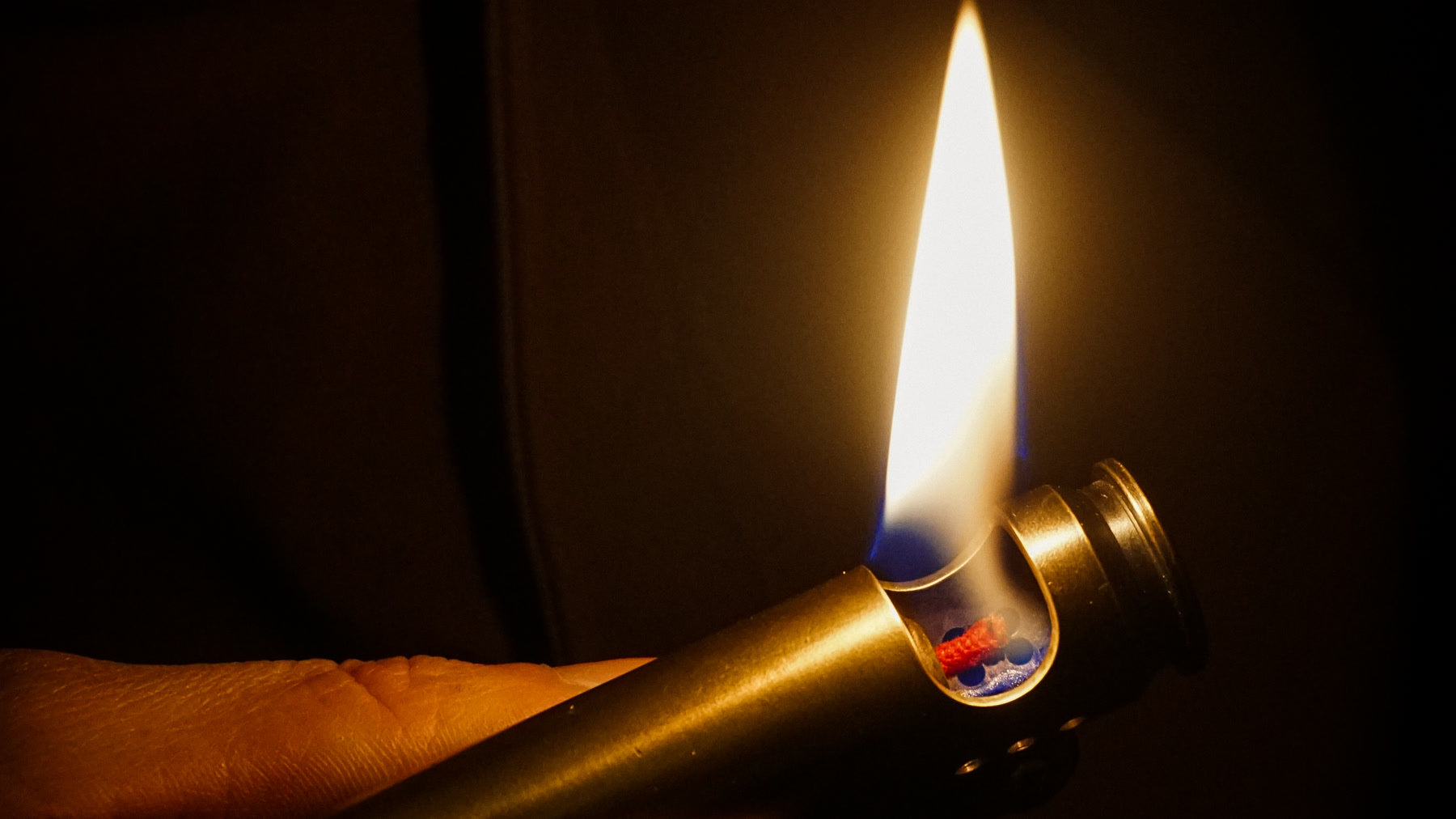
Open the lid or snuffer completely so it cannot fall against the wheel. Hold the body upright with your thumb beside the chimney, never above the wick. Strike the wheel decisively. Once the wick lights, move your thumb away from the chimney and keep the lighter upright. Bring the flame to the target briefly; then close the snuffer or lid fully to deprive the wick of oxygen.
This is the core of how to use a wick lighter. Releasing the wheel does not extinguish it because the fuel is delivered through the wick rather than a momentary gas valve. A wind-resistant chimney can also make the flame bend in a direction that is not obvious. Keep skin clear of the open top and do not touch the chimney after use.
Dry or abnormal operation is a stop signal. If the wheel sparks but the wick does not light, do not keep striking. The lighter may need correct fuel, a flint, wick service, or another repair. If the flame is tall, smoky, pulsing, or outside the chimney, close the snuffer and remove the lighter from use after it cools.
How to use a torch lighter safely or operate an electric arc lighter
How should I use a torch lighter safely?
Check the safety lock, flame-height control, burner head, and any continuous-flame switch before ignition. Point the jet away from every person and use the lowest setting that completes the task. Press once, keep the jet brief, and release before moving the lighter. A torch flame can be hard to see in daylight and the burner head remains hot, so treat the path as active until you have confirmed shutoff and cooling.
Those are the essential steps for how to use a torch lighter safely. Do not wave the jet, heat a sealed container, apply it to skin, use it around fuel vapor, or engage hands-free operation unless the exact model and task require it.
For how to use an electric arc lighter, confirm the charge, safety lock, electrodes, and timed shutoff. Keep fingers and metal objects outside the arc gap. Place the target between or near the electrodes only as the manual shows, press briefly, then release. Do not use an arc model in rain, on spilled fuel, or near leaking gas merely because it has no open flame.
How to light a candle with a lighter and handle other tasks
A lighter should ignite the target without heating your hand or surrounding material. Choose a tool whose reach and flame direction fit the task. The target—not convenience—determines whether a pocket, utility, torch, or electric model is appropriate.
| Task | Safer approach | Stop or choose another tool when |
|---|---|---|
| How to light a candle with a lighter | Use a long utility lighter for a deep jar. Approach the wick from the side, ignite briefly, withdraw, and verify nearby decorations remain clear. | Your hand must enter the jar, the wick is buried in melted wax, or the flame would contact the container edge |
| Fireplace, grill, or campfire | Use the manufacturer-approved ignition point or established dry kindling. Keep the fuel container capped and far away before lighting. | Liquid fuel has been poured on a flame, vapor is present, or you would have to reach across the fuel bed |
| Pilot or gas appliance | Follow the appliance manual and prefer its built-in igniter or a long utility lighter if manual ignition is expressly allowed. | You smell gas, ignition fails, the manual prohibits manual lighting, or the burner state is uncertain |
| Heat-shrink, craft, or workshop task | Use the specified heat tool; a lighter is acceptable only if the material instructions and workspace permit an open flame. | The material gives off hazardous vapor, can melt onto skin, or needs controlled temperature |
For readers searching how to light a gas stove with a lighter, the appliance manual controls. Position a permitted long utility lighter before opening gas, and if ignition is not immediate, turn the gas off and ventilate. Never let gas collect while repeatedly clicking a pocket lighter.
How to extinguish a lighter safely and verify it is out
How can I tell whether a lighter is fully extinguished?
Use the designed shutoff: release the gas button or trigger, disengage a deliberate lock-on feature, or close a wick lighter’s snuffer completely. Look at the burner or wick from the side. Listen for a continuing hiss. In bright light, shade your own view from a distance rather than putting a hand over the outlet. Do not pocket or store the lighter until the flame is gone and hot metal has cooled.
That positive check is how to extinguish a lighter safely. A gas lighter that keeps hissing, a wick flame that escapes the closed snuffer, or an electric lighter that continues arcing is not ready for storage. Keep it on a noncombustible surface away from people and fuel, follow the maker’s emergency instructions, and remove it from service.
Keep individual flame periods short. Current public gas-safety guidance warns against continuous use beyond ten seconds because the lighter can overheat. The exact model may require an even shorter cycle.
How to adjust lighter flame and recognize unsafe behavior
For how to adjust lighter flame, extinguish the lighter, let it cool, then turn only the marked control in the direction and range stated by the manufacturer. Make a small change and retest in a clear area. Never adjust while lit. A flame that is too high, unstable, sputtering, detached from the burner, or impossible to see reliably requires a stop rather than repeated adjustment.
A search for why lighter flame stays on has two different answers. A wick flame normally continues until the lid or snuffer closes. A gas flame should stop when the valve closes, unless a known lock-on feature is deliberately engaged. If it persists with the lock off, the valve may be stuck or damaged. Do not force hot controls or carry the lighter; remove combustibles and follow model-specific service instructions.
Stop using the lighter immediately if you see a cracked body, loose burner, melted guard, fuel wetness, swelling, repeated flare, flame below the outlet, persistent odor, hiss after release, or any flame that will not shut off normally. Do not puncture, pry, heat, cool, or improvise a repair on a pressurized body.
Good lighter safety for beginners includes accepting a no-use decision. An unfamiliar antique mechanism, a damaged seal, a gas smell, or a task that requires your hand over the flame belongs with the manufacturer, a qualified repairer, or a more suitable ignition tool.
A serviceable liquid-fuel example after the neutral guide

Serviceable liquid-fuel flint-and-wick system · 92 × 21.5 mm · About 130 g
Large Classic
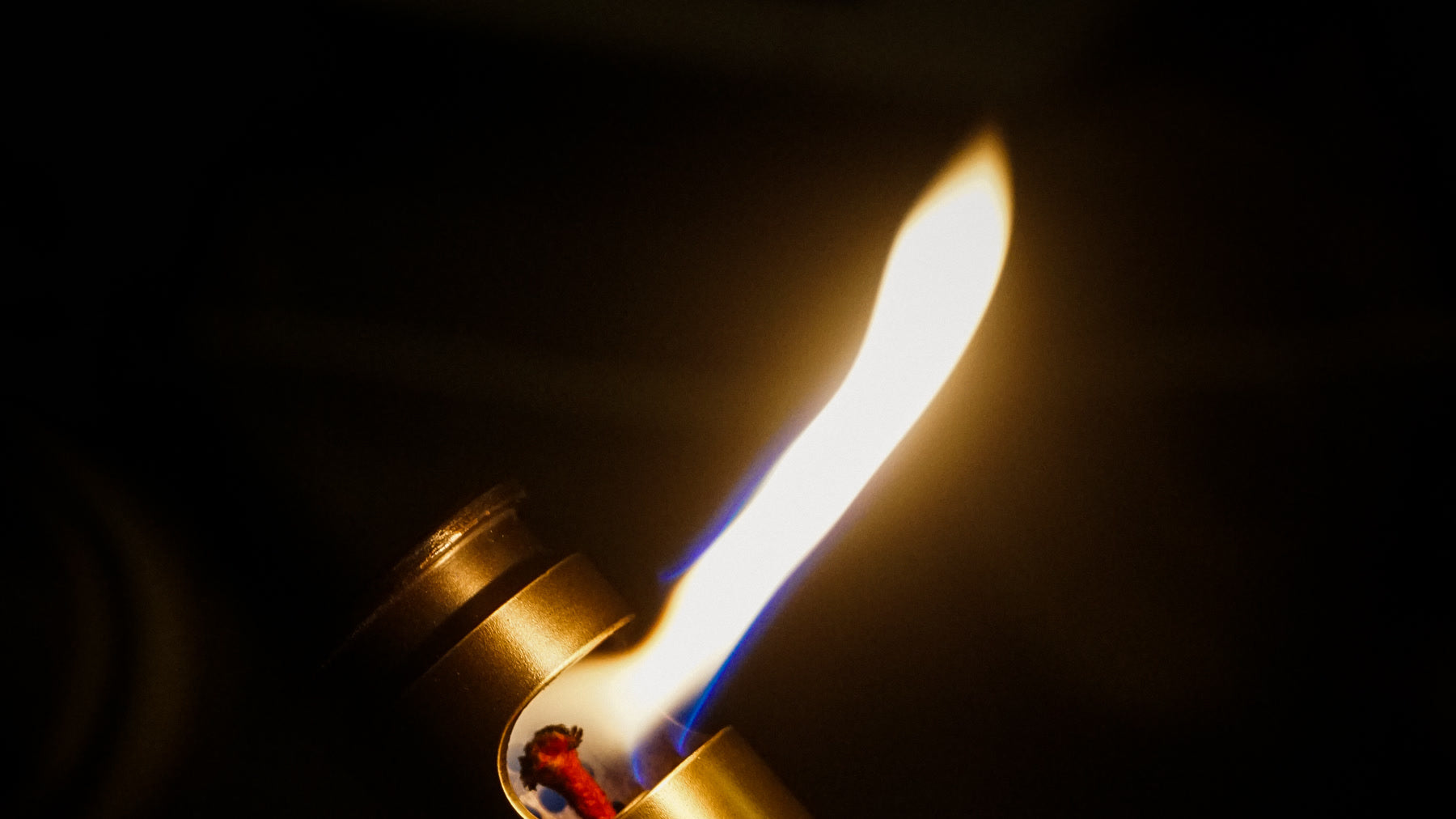
A current serviceable WEDO wick lighter made from a real repurposed 12.7 × 10⁸ brass shell. The current product record lists 92 × 21.5 mm, approximately 130 g, replaceable flint wheel, flint, wick, cotton, O-ring, springs and chain, plus an accessory pack. It ships without fuel and uses standard lighter fluid.
Best fit: An adult who specifically wants a repairable liquid-fuel flint-and-wick lighter and accepts fuel, flint, wheel, wick and cotton maintenance. It is not a substitute for a disposable soft flame, butane torch, long utility lighter, electric arc lighter or maintenance-free convenience.
Use this branch only when: You understand the wick-lighter ignition and snuffer sequence and want a serviceable liquid-fuel mechanism.
Check the current mechanism, dimensions, and included partsThis card illustrates only the wick-lighter branch. Review the current WEDO Usage & Care instructions before operating, filling, adjusting, or servicing a WEDO model; exact current instructions control.
Frequently Asked Questions
Can I use a pocket lighter to light a gas stove?
Only if the appliance manual explicitly permits manual ignition. Prefer a long utility lighter so your hand stays outside the burner area. Position the igniter first, open gas only as directed, and stop immediately if ignition does not occur. Turn the gas off and let the area ventilate before another attempt. Do not improvise around an appliance that smells of gas, has an uncertain pilot system, or has a faulty built-in igniter.
Why does my lighter keep burning after I release it?
A liquid-fuel wick lighter normally continues burning until its snuffer or lid closes over the wick. A gas lighter should normally stop when its valve control is released unless a deliberate lock-on feature is engaged. If a gas flame continues with the lock off, do not touch the burner head, force the valve, or put the lighter in a pocket. Keep people and combustibles clear, use the maker’s emergency guidance, and remove the lighter from service.
Why can the flame be hard to see outdoors?
A clean butane flame can be faint in bright daylight, while wind may bend it away from the position you expect. Treat an activated lighter as lit until you have released the control and visually checked from a safe angle. Never move your face or free hand over the burner to look for a flame.
Should a beginner practice with an empty lighter?
Do not repeatedly strike a dry flint-and-wick lighter or operate a fuel lighter merely for practice. Repeated dry striking can wear parts, and a supposedly empty lighter may still contain vapor. First learn the controls from the instructions with the lighter unactivated, then use a sound, correctly fueled model in a clear adult-supervised area for its intended task.
A final lighter-use checklist
- The model, ignition, shutoff, lock, flame direction, and intended task are known.
- The body, valve, burner, wheel, wick area, and surrounding workspace show no unsafe condition.
- Your grip keeps skin, face, hair, clothing, other people, children, and pets outside the flame path.
- The flame is brief, controlled, and applied only to a prepared target.
- You stop after a failed ignition rather than allowing gas or heat to accumulate.
- You release the valve or close the snuffer, visually confirm extinction, and let hot parts cool.
- Damaged, leaking, altered, unfamiliar, or non-extinguishing lighters leave service.
Model-specific instructions control. If your exact lighter or target appliance uses a different approved sequence, follow its manufacturer. If the mechanism, fuel, valve, lock, flame path, or condition is uncertain, do not ignite it.

Napsat komentář
Tento web je chráněn službou hCaptcha a vztahují se na něj Zásady ochrany osobních údajů a Podmínky služby společnosti hCaptcha.