
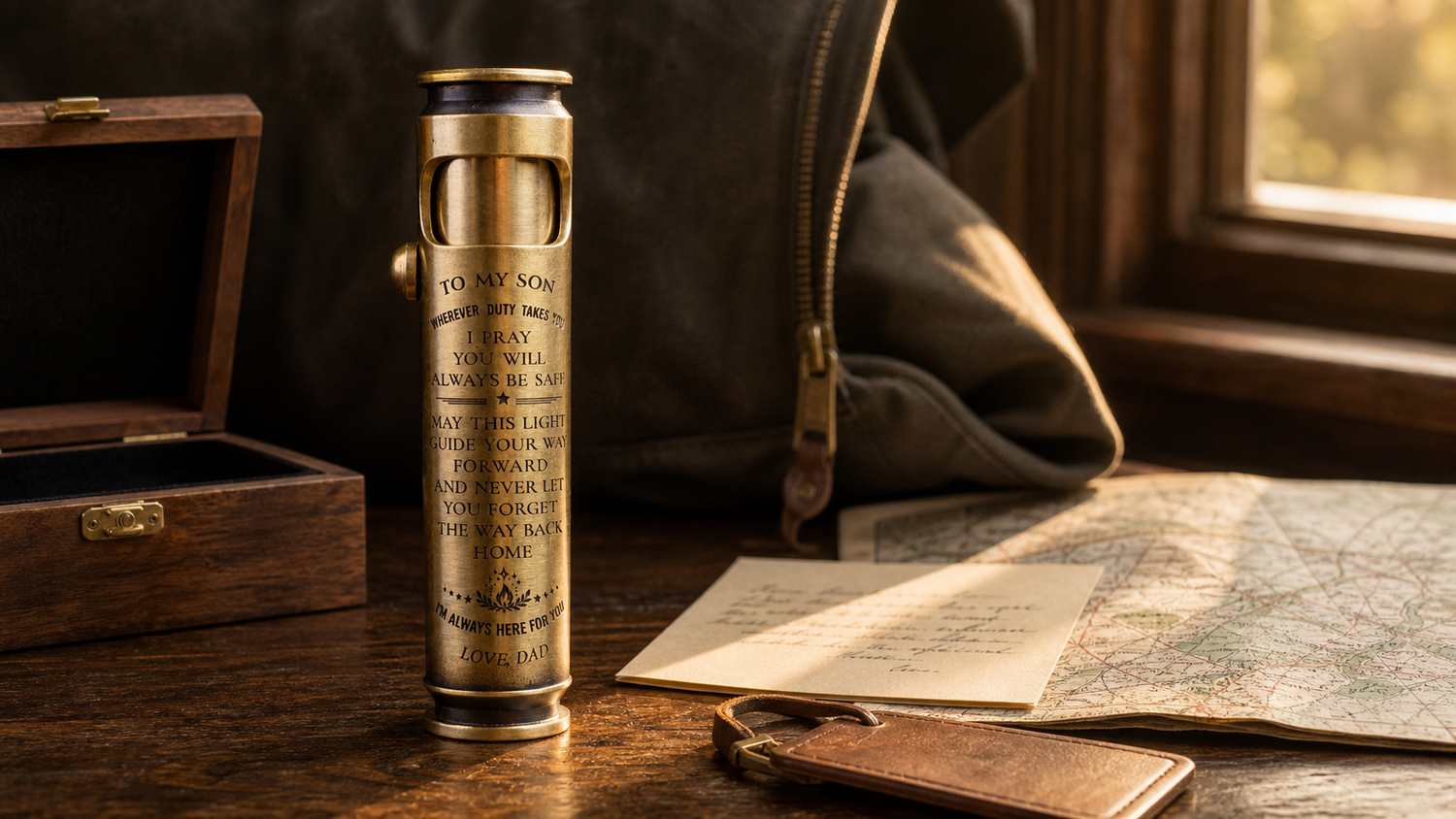
Can you mail a lighter? You can mail a lighter only when its exact condition, fuel system, route, carrier service, and shipper eligibility satisfy current dangerous-goods rules. In the United States, USPS generally requires fueled lighters to use domestic surface transportation with DOT design approval and prior written USPS authorization; air and international mail are not available for that exception. A used lighter is not safely “empty” until all fuel and vapors are properly removed and the carrier accepts its classification.
The short version is deliberately stricter than “send it by ground.” Parcel shipping is not the same as flying with a lighter as a passenger. The sender must identify what is inside, whether fuel or vapor remains, which network will carry it, and whether the carrier accepts that sender and package. A counter clerk, web label, or marketplace listing does not cancel dangerous-goods rules.
Use five gates before choosing a label
Start with the object, not the carrier logo. A wick lighter with absorbent cotton, a refillable butane lighter, a disposable soft-flame lighter, a torch, and an electric arc lighter do not enter the same rule branch. The useful decision order is condition → energy source → route → carrier acceptance → documentation.
| Gate | Question | Why it changes the answer |
|---|---|---|
| 1. Condition | Factory-unfueled, fueled, used, leaking, damaged, or truly purged? | “Does not light” is not proof that fuel or vapor is absent. |
| 2. Energy | Liquid fuel, compressed butane, separate refill, or lithium battery? | Each can have a different hazard class and packaging rule. |
| 3. Route | Domestic surface, domestic air, APO/FPO/DPO, or international? | A domestic surface exception does not become an air or international permission. |
| 4. Carrier | Does this exact service accept the item from this shipper? | UPS, FedEx, and USPS publish carrier-specific variations and qualification rules. |
| 5. Proof | Are approval, declaration, packaging, marks, labels, and records complete? | A label created online does not prove the contents were eligible. |
This framework answers more than “can you mail a lighter USPS.” It prevents the common mistake of finding one surface-mail sentence and skipping the design approval, shipper authorization, residue, destination, and package requirements attached to it.
USPS: fueled lighters need more than surface service
Can you mail a lighter through USPS?
For a lighter containing flammable liquid or gas, current USPS Publication 52 does not offer an ordinary consumer shortcut. The design must be certified by a DOT-authorized lighter testing agency and carry an approval number commonly shown as LAA followed by digits. The mailer must also obtain prior written authorization from the USPS Pricing and Classification Service Center, use the required packaging, secure the ignition mechanism, present the approval as instructed, and use eligible domestic surface transportation.
If your question is “can you ship a lighter through USPS,” the same conditions apply: the word ship does not bypass postal dangerous-goods approval, packaging, service, or documentation requirements.
USPS air transportation is not part of that fueled-lighter exception. International postal rules prohibit Class 2 gases and Class 3 flammable liquids. “Surface Only” therefore describes one routing condition, not complete permission. If you cannot document the approved design and USPS authorization, do not tender the fueled lighter as ordinary mail.
Stop before buying postage: declaring “ground” in a marketplace app, handwriting “no air,” or choosing a slow service does not create the required approval. Never omit the lighter from a hazardous-material question and never invent an LAA number, mark, label, or certification.
“Empty” must mean fuel and vapor are gone
Can you mail an empty lighter?
USPS Publication 52 separately lists new or empty lighters that are purged of all residual fuel and vapors. That wording matters. A wick that looks dry, a disposable that no longer lights, or a butane lighter with no visible flame can still hold liquid in absorbent packing, gas under low pressure, or flammable vapor in a reservoir. The carrier decides how the prepared item is classified and accepted.

Do not turn “purged” into a home experiment. Do not puncture a sealed butane tank, remove a safety valve, heat the lighter, rinse fuel into a sink, or test vapor by smell or flame. A reusable wick insert may have manufacturer instructions for safe servicing, while a sealed disposable or damaged reservoir may not be designed for consumer purging at all. When the maker provides no safe method, use a qualified dangerous-goods specialist or do not ship.
A factory-unfueled product is easier to classify than a previously fueled product, but it still needs accurate description and carrier acceptance. Packaging material, an old insert, a returned item, or a used display sample can reintroduce residue. Keep the product record or manufacturer statement that supports its condition.
Used and vintage lighters need a residue decision
Can you ship a used lighter?
A used lighter should be presumed to have an unresolved fuel history until you can establish otherwise. Ask what fuel it used, whether the reservoir was ever filled, whether absorbent packing remains, whether a butane valve still holds pressure, whether odor or staining is present, and whether anyone modified the mechanism. “Estate sale,” “collectible,” and “for display only” describe ownership or purpose, not transport condition.

Vintage lighters create a second problem: some use non-absorbent liquid reservoirs, unusual permanent-match inserts, obsolete seals, or uncertain materials. A seller should not dismantle an unfamiliar antique simply to make it shippable. Document the model and condition, ask a qualified carrier or dangerous-goods professional what proof is required, and choose local pickup when the item cannot be safely classified.
If you search “how to ship a lighter safely,” the honest answer may be “do not ship this one.” Leakage, corrosion, damaged seals, stuck valves, heat exposure, fuel odor, missing approval information, or an altered ignition system are stop conditions, not packing challenges.
Classify the exact lighter type
Can you ship a Zippo lighter?
A Zippo-style lighter is normally an absorbed-liquid wick system. The brand does not grant permission. A fueled insert or one retaining residue follows the applicable hazardous-material rules; a genuinely purged insert may follow a different classification, but the carrier still decides whether its evidence and service are acceptable. The same logic applies when asking about a current brass wick lighter.
The phrase “can you ship a butane lighter” covers at least three different objects: a disposable soft-flame lighter, a refillable soft-flame lighter, and a torch or jet lighter. All can contain flammable gas, while a torch may also face tighter design and carrier restrictions. Do not describe a pressurized lighter as empty only because the flame is weak.
The question “can you ship lighter fluid” is separate from shipping the lighter. Liquid fuel, butane refill cans, and replacement cartridges are separate dangerous goods. They need their own classification, quantity limits, packaging, marks, service and destination check. Never place a refill can in the box as a free accessory unless a qualified shipping program has approved that exact shipment.
An electric arc or plasma lighter has no liquid flame fuel, but it is not automatically unrestricted. It contains a lithium battery and an activation mechanism. Battery condition, watt-hour rating, installed versus spare status, new versus used device rules, short-circuit protection, accidental-activation protection, route, service and destination all matter.
UPS and FedEx use regulated hazardous-material programs
People asking “can you ship a lighter through UPS” or “can you ship a lighter through FedEx” often want an alternative after reading USPS limits. A private carrier is not a loophole. UPS identifies cigarette lighters, refills, and torches as articles that may contain flammable gas or liquid. Its published service variation says cigarette lighters or similar devices must be fully declared with shipping papers, proper packaging, marks and labels.
FedEx lists lighters among dangerous goods and distinguishes ground hazardous materials from air dangerous goods. Its current U.S. hazardous-material guidance says shippers must complete an approval process. For UN1057 lighters or lighter refills, the published instructions call for the appropriate LAA number and FedEx hazardous-material certification documents.
Service availability changes by account, origin, destination, commodity and regulation. Before packing, give the carrier the exact model, fuel condition, quantity, battery or gas details, route and business status. Ask which service accepts it, what shipper qualification is required, and which current written instructions control. If the answer is informal or uncertain, escalate to the carrier’s dangerous-goods desk rather than testing the package at a drop box.
International lighter shipping is a separate decision
Can you ship lighters internationally? Do not extend a U.S. domestic surface rule across a border. USPS Publication 52 states that Class 2 gases and Class 3 flammable liquids are prohibited in international mail. Private carriers also apply IATA or other dangerous-goods rules, carrier variations, export restrictions, customs requirements, destination-country law, and sometimes account qualification that a casual sender does not have.
A genuinely unfueled or properly purged lighter may still face destination restrictions, security screening, import rules, product-safety rules, or documentary requirements. A used electric lighter can face stricter international lithium-battery limits than a new device in original packaging. Check origin, every transit point, destination, carrier service and return route; “legal to own” does not mean “accepted in the parcel network.”
A compliant preparation path
Safe preparation begins after acceptance, not before it. The carrier or qualified dangerous-goods program should first confirm classification, service, shipper eligibility and required documents. Then follow its exact packaging instruction. The practical sequence is:
- Record the exact lighter type, model, condition, quantity and energy source.
- Stop if it leaks, smells of fuel, is damaged, corroded, pressurized without documentation, or has an altered ignition system.
- Determine whether it is fueled, factory-unfueled, previously used, or properly purged of all residual fuel and vapors.
- Ask the carrier’s dangerous-goods desk which exact service accepts that configuration from you.
- Obtain every required approval, account qualification, shipping paper, mark, label and packaging instruction.
- Protect the ignition or activation mechanism and prevent movement only in the manner the approved instruction specifies.
- Present the parcel at the authorized facility; do not use an unattended drop box if the program requires staff acceptance.
- Keep the approval and shipment records required by the carrier or regulation.
Ordinary cushioning cannot convert hazardous contents into nonhazardous contents. Likewise, a commercial “hazmat sticker” is not a self-issued permit. Use only the marks and labels required for the actual classification, because incorrect hazard markings can also make a package unacceptable.
What sellers and gift senders should promise
A seller can accurately say a product leaves the workshop without fuel when that is true. The seller should not turn that fact into “ships anywhere,” “USPS approved,” “safe for air,” or “no hazmat rules.” Carrier acceptance depends on the product’s actual condition at tender, the selected service, route, shipper eligibility and current rules. Returns deserve special attention because a customer may have fueled the lighter after delivery.
For a gift, the lowest-risk choices are local handoff, local pickup, or buying from a seller with a documented dangerous-goods shipping process. Send the lighter without separate fuel when the approved process calls for it, and let the adult recipient buy the exact compatible fuel locally after delivery. The fuel system must be identified before the recipient follows any refilling instructions.
If the lighter is collectible, sentimental, one-of-a-kind, altered, or poorly documented, non-shipment can be the best decision. Carrier refusal, return, disposal, storage fees, delay or damage can outweigh the convenience of mailing it.
A conditional unfueled product example
WEDO’s current wick lighters leave the workshop without fuel. That controlled starting condition supports the seller’s own documented fulfillment process; it is not a transferable permission for every customer, return, carrier or route. Use WEDO Usage & Care instructions to identify the mechanism, then obtain current carrier acceptance before any shipment.

Large Classic
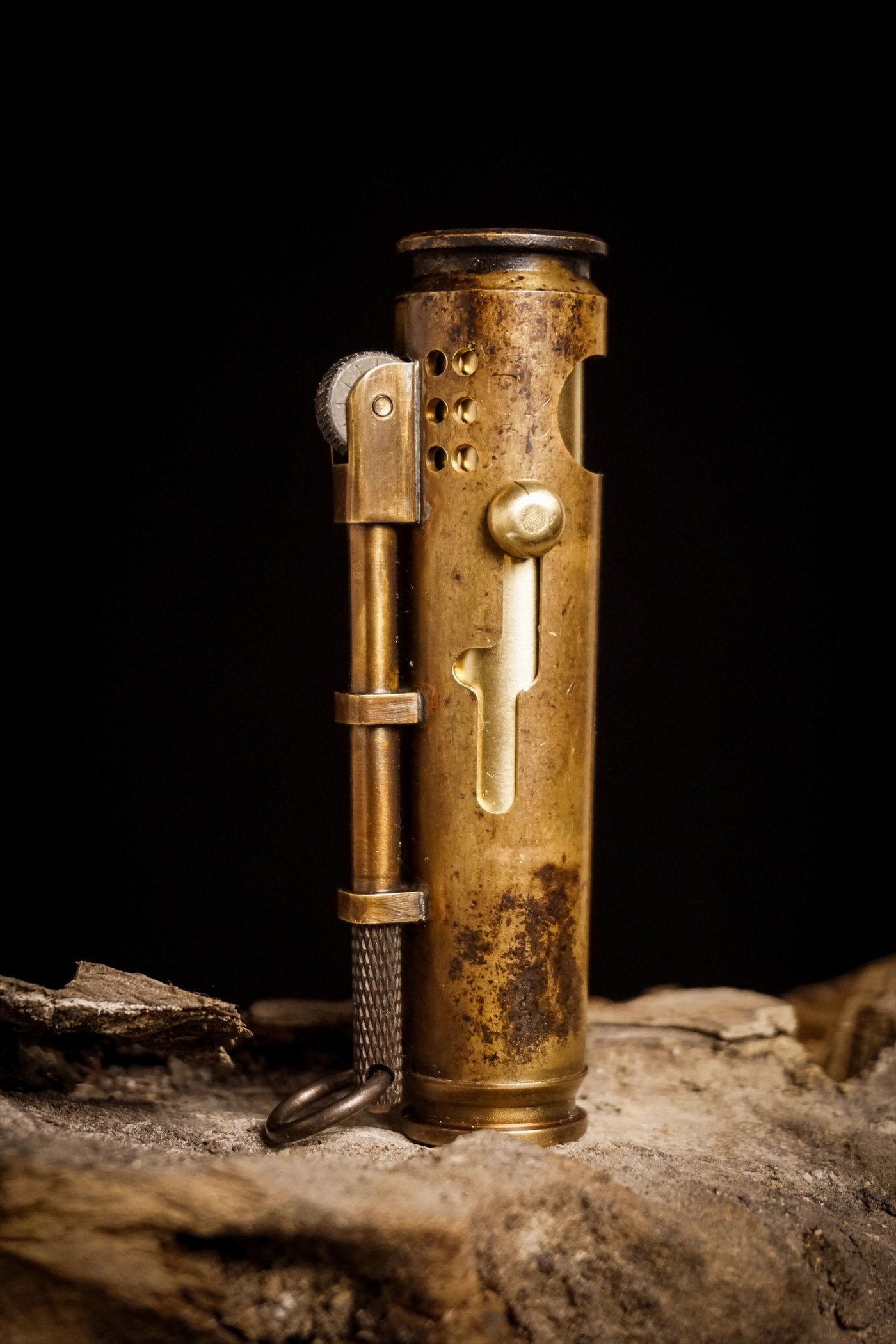
A current WEDO wick lighter made from a real repurposed .50 BMG brass casing, with replaceable wheel, flint, wick, lighter cotton, O-ring, springs and chain. It ships without fuel. That product fact does not replace the sender’s carrier, route, declaration, packaging or approval duties.
Check the Large Classic mechanism and partsFrequently asked questions
Sometimes, but not as an ordinary undeclared parcel. UPS requires covered lighter shipments to be fully declared with shipping papers, proper packaging, marks and labels. FedEx identifies lighters as dangerous goods and requires hazardous-material shipper qualification; its UN1057 guidance calls for the applicable LAA number and certification documents. Obtain written confirmation for the exact item and service.
An electric arc or plasma lighter follows lithium-battery and electronic-device rules. Acceptance depends on battery installation, watt-hour rating, condition, new or used status, protection against short circuit and activation, service and destination. International limits are often stricter. Do not conceal or misdescribe the battery.
Not as ordinary accessories inside a lighter parcel. They are separate flammable-liquid or flammable-gas articles with their own classification, quantity, packaging, marking, service and destination rules. USPS international mail prohibits Class 2 gases and Class 3 flammable liquids. Buy compatible fuel locally or use a qualified dangerous-goods shipper.
No. Failure to ignite does not prove fuel, vapor, pressure or absorbent packing is absent. A blocked jet, worn flint or dry-looking wick can stop ignition while residue remains. Do not puncture, vent, heat or smell-test a sealed reservoir; use manufacturer instructions or a qualified specialist.
Current sources and limits
This guide was checked on 2026-08-25 against the February 2026 USPS Publication 52 and its current Appendix A and international-dangerous-goods sections, plus current UPS and FedEx hazardous-material guidance. Carrier pages, regulations, account eligibility and destination rules can change. This article cannot classify an altered or unidentified lighter, grant an approval, or replace the written instruction of the carrier accepting the parcel.
- USPS Publication 52
- USPS Appendix A mailability table
- USPS international dangerous-goods prohibitions
- UPS common hazardous items
- UPS hazardous-material service definition
- FedEx dangerous-goods guide
- FedEx hazardous-material guide
Final mailing checklist
- Identify wick liquid, butane gas, torch, refill, or lithium battery.
- Record factory-unfueled, fueled, used, damaged, leaking, or properly purged condition.
- Do not call a non-lighting lighter empty without resolving fuel and vapor.
- Separate domestic surface, domestic air and international routes.
- Confirm the exact carrier service accepts the item from your shipper type.
- Obtain required design approval, shipper authorization and documents.
- Use only the instructed package, mark and label.
- Never puncture, heat, vent, hide, misdescribe or drop-box an unresolved lighter.
- Ship fuel or refills only under their separate approved program.
- Choose local pickup or a qualified specialist when any gate remains unclear.

Hinterlasse einen Kommentar
Diese Website ist durch hCaptcha geschützt und es gelten die allgemeinen Geschäftsbedingungen und Datenschutzbestimmungen von hCaptcha.