
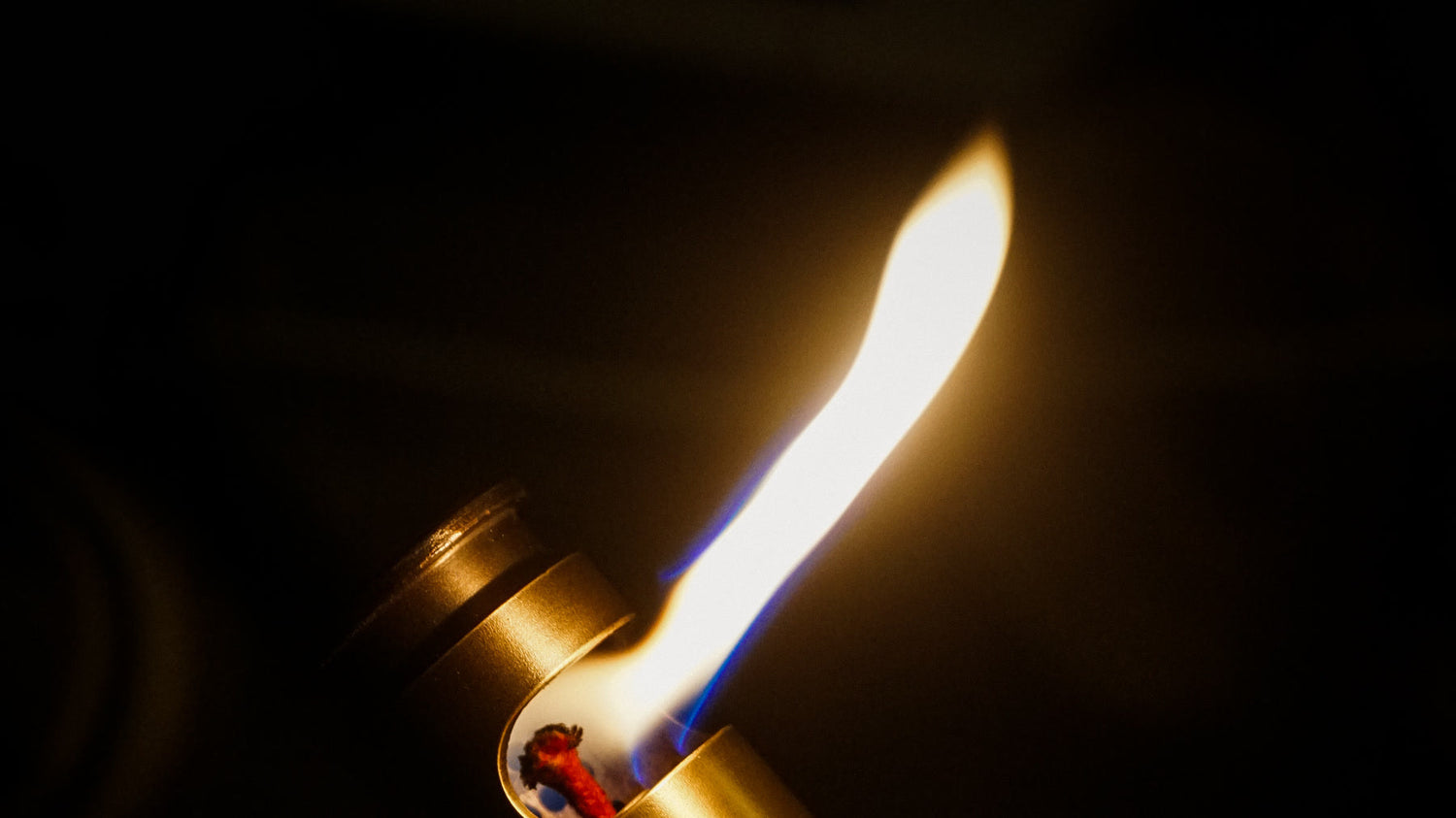
What counts as a flint lighter?
A flint lighter is defined by its spark source, not by one fuel. The familiar thumb wheel presses against a replaceable rod commonly made from ferrocerium. That spark system can sit above a liquid-fuel wick, beside a soft-flame butane burner, or inside another specialist design. Some butane lighters therefore are flint lighters; some are not, because they use piezoelectric or electronic ignition.
The search phrase is unusually ambiguous. “Flint” is also a lighter brand whose current product is electric, and a workshop “flint lighter” can mean a handheld striker used to ignite a separate gas torch. If you are trying to identify a pocket lighter, look for the wheel, flint tube, spring, wick or burner, and filler before ordering parts. The broader types of lighters guide helps when the mechanism is still unknown.
How do the wheel and flint create a spark?
The toothed wheel does not merely rub the rod warm. Its hard edges shear tiny particles from the ferrocerium. Those particles heat and oxidize rapidly in air, producing the bright shower we call sparks. Spring pressure keeps the shrinking rod in contact with the wheel. The wheel teeth, flint material, contact pressure and turning speed all affect the number, direction and energy of the sparks.
In a liquid-fuel wick lighter, the spark needs to enter the vapor-rich area around the wick. In a butane design, the gas valve and wheel action must coordinate so gas is present where the spark lands. This is why a lighter can produce visible sparks and still fail to make flame: the spark stage and the fuel stage are related, but not identical.
What does each part of a flint lighter do?
| Part | Primary job | What normal operation looks like | Common failure clue |
|---|---|---|---|
| Flint | Supplies spark-producing particles. | Touches the wheel under steady spring pressure and wears gradually. | Weakening sparks, free-spinning wheel, or pusher contact after the rod is exhausted. |
| Spark wheel | Shears particles from the flint and directs sparks. | Turns with controlled resistance; teeth stay clean and defined. | Slipping, binding, polished teeth, packed debris, or an irregular spark path. |
| Flint spring and pusher | Keeps the rod against the wheel as it shortens. | Compresses and returns without scraping the wheel itself. | Loose pressure, wrong assembly, corrosion, or metal-on-wheel scraping. |
| Wick or burner | Presents fuel vapor in the spark path. | Clean, correctly positioned, and supplied with the right fuel. | Dry, charred or displaced wick; blocked or misaligned burner. |
| Fuel reservoir and airflow | Deliver fuel at a usable mixture. | No leaks, correct fuel, open air path, stable flame. | Spark without flame, delayed flare, fuel odor, leakage, or unstable burning. |

Separate the spark system from the fuel system
Fast troubleshooting begins by asking two questions in order: Is there a usable spark? Then, is compatible fuel reaching the exact place where the spark lands? Replacing a flint cannot fix an empty reservoir or dry wick. Refilling cannot fix an empty flint tube, worn wheel or blocked spark path.
| Observation | Most likely system | Check next | Stop condition |
|---|---|---|---|
| No spark and wheel feels normal | Flint or spring | Exact-model flint level, compatibility and spring assembly. | Unknown parts, damaged retainer, or spring contacting the wheel. |
| Wheel spins with little resistance | Flint pressure | Empty tube, short flint, weak spring, blocked tube. | Metal scraping or a pusher trapped against the wheel. |
| Wheel will not turn | Wheel, axle or flint tube | Visible debris, crumbled old flint, corrosion, wetness, or damaged teeth. | Force is required or the axle is bent. |
| Strong sparks but no flame | Fuel delivery or spark placement | Fuel level, correct fuel, wick or burner, airflow, valve operation. | Leakage, persistent strong odor, heat, damaged seal, or uncertain fuel. |
| Flame starts then dies | Fuel flow or airflow | Dry wick, tight cotton, blocked air path, low gas pressure, cold conditions. | Repeated flare, delayed ignition, or unpredictable flame. |
Why does a flint lighter spark but not light?
A bright spark is useful evidence, but it proves only that the wheel, flint and spring can generate some hot particles. It does not prove the reservoir contains the correct fuel, the wick is saturated, a gas valve is opening, the burner is clear, or the spark lands in the vapor zone.
- Identify the fuel system. A wick leading into absorbent packing usually indicates liquid pocket-lighter fuel; a refill valve and gas burner usually indicate butane. Use the exact model instructions.
- Check fuel delivery without repeated ignition. Look for an empty reservoir, dry wick, blocked burner, closed or failed valve, or incorrect packing. The lighter fluid compatibility guide covers the fuel decision.
- Watch where the sparks land. Sparks that fly away from the wick or burner may look strong but never reach the ignitable mixture.
- Check the air path. Soot, debris, a displaced chimney or an overpacked wick system can change the fuel-air mixture.
- Let wet parts dry. Fuel on the wheel or flint can reduce friction and collect debris. Wipe external fuel and follow the maker’s waiting procedure before another attempt.
- Stop after a clear safety warning. Leakage, damaged seals, unusual heat, persistent odor, corrosion, cracked parts or delayed flaring need repair—not more test strikes.
Why does the flint wheel spin freely or get stuck?
A freely spinning wheel usually lacks proper contact with the flint. The rod may be consumed, too short, the wrong diameter, stuck below debris, or not being pushed upward. A weak, missing or incorrectly assembled spring can produce the same symptom. When the flint is fully gone, the pusher may reach the wheel; stop before continued metal contact damages the teeth.
A stuck wheel is a different problem. An old flint can crumble or swell in the tube, dust can pack the wheel grooves, liquid fuel can wet the contact area, or corrosion can bind the axle. Some model-specific guides recommend gentle clearing, but that is not permission to pry, drill, oil or force an unknown vintage assembly. If the exact construction is unclear, use a specialist repair route.

How to replace a lighter flint without creating a new problem
The exact access point varies. Some lighters use a bottom screw and spring; others use a removable wheel assembly or model-specific retainer. Read the maker instructions before loosening anything under spring pressure.
- Work with the lighter cool, away from flame, sparks and loose fuel. Follow the model procedure for fuel state before service.
- Use the exact replacement diameter, length and material specified for the model. Similar-looking rods are not automatically interchangeable.
- Control the spring and retainer while opening. Small parts can release suddenly.
- Remove old fragments and confirm the tube is clear using only the maker-approved method. Do not push debris deeper.
- Insert one compatible flint in the correct orientation, then reinstall the pusher, spring and retainer without cross-threading or over-tightening.
- Test wheel movement first. Only then test ignition in a safe location, using the maker’s procedure.
When is the wick or cotton the real problem?
In a liquid-fuel lighter, the wick moves fuel from absorbent packing to the ignition area. A charred tip, wick that is too short, dry packing or cotton packed too tightly can prevent vapor from reaching the spark. Trimming or repositioning may be appropriate only when the maker says so; repeatedly cutting the wick shortens its service life and can hide a deeper delivery problem.
If fuel reaches the packing but not the wick, compare the exact arrangement with the WEDO Usage & Care instructions or the original maker guide. Do not substitute household cotton, thread or unknown cord in a hot fuel system. If the lighter is butane, wick advice does not apply—diagnose the valve and burner instead.
Do flint size, color, and hardness affect ignition?
Size and material matter; color alone does not prove compatibility. A rod that is too wide may bind. One that is too narrow can tilt, wear unevenly or make inconsistent contact. A rod that is too short may not stay under spring pressure. Hardness changes wear and the wheel force needed to make sparks, so an unsuitable flint can also accelerate wheel wear.
There is no honest universal answer to “How many lights will one flint last?” Wheel tooth condition, spring force, flint composition, stroke length, contamination and technique all change the result. Track behavior: steadily weakening sparks, a sudden loss of resistance, or pusher contact are more useful than a calendar estimate.
How do cold, wind, dirt, and storage change ignition?
Wind can move sparks and flame away from the wick or burner. Cold can reduce butane pressure and slow vaporization, while a liquid-fuel wick may still struggle if it is dry, over-charred or shielded poorly. Dust and soot reduce wheel bite and block air paths. Long storage can allow some flints to deteriorate and bind in the tube, especially in damp conditions.
Keep the lighter and replacement parts dry, cool and away from children, open flame and high vehicle temperatures. Store fuel in its labeled container. Do not test near the refill area. If an older lighter has unknown fuel, corrosion, altered parts or a seized mechanism, cleaning and identification come before ignition attempts.
When does a serviceable flint-and-wick lighter make sense?
Choose one when you value a mechanical spark system, replaceable wear parts and long-term maintenance—and you are willing to keep compatible fuel, flints and wick materials available. Choose a butane soft flame when clean gas refilling and adjustable flame suit the task better. Choose electric ignition where fuel-free use matters. For a grill, candle or stove, use a purpose-built long-reach tool rather than adapting a pocket lighter.
Repairability is also a buying criterion. The high-quality lighter checklist explains why accessible wear parts, documented dimensions and support matter more than decorative claims.

Liquid-fuel flint-and-wick system · 92 × 21.5 mm · About 130 g
Large Classic
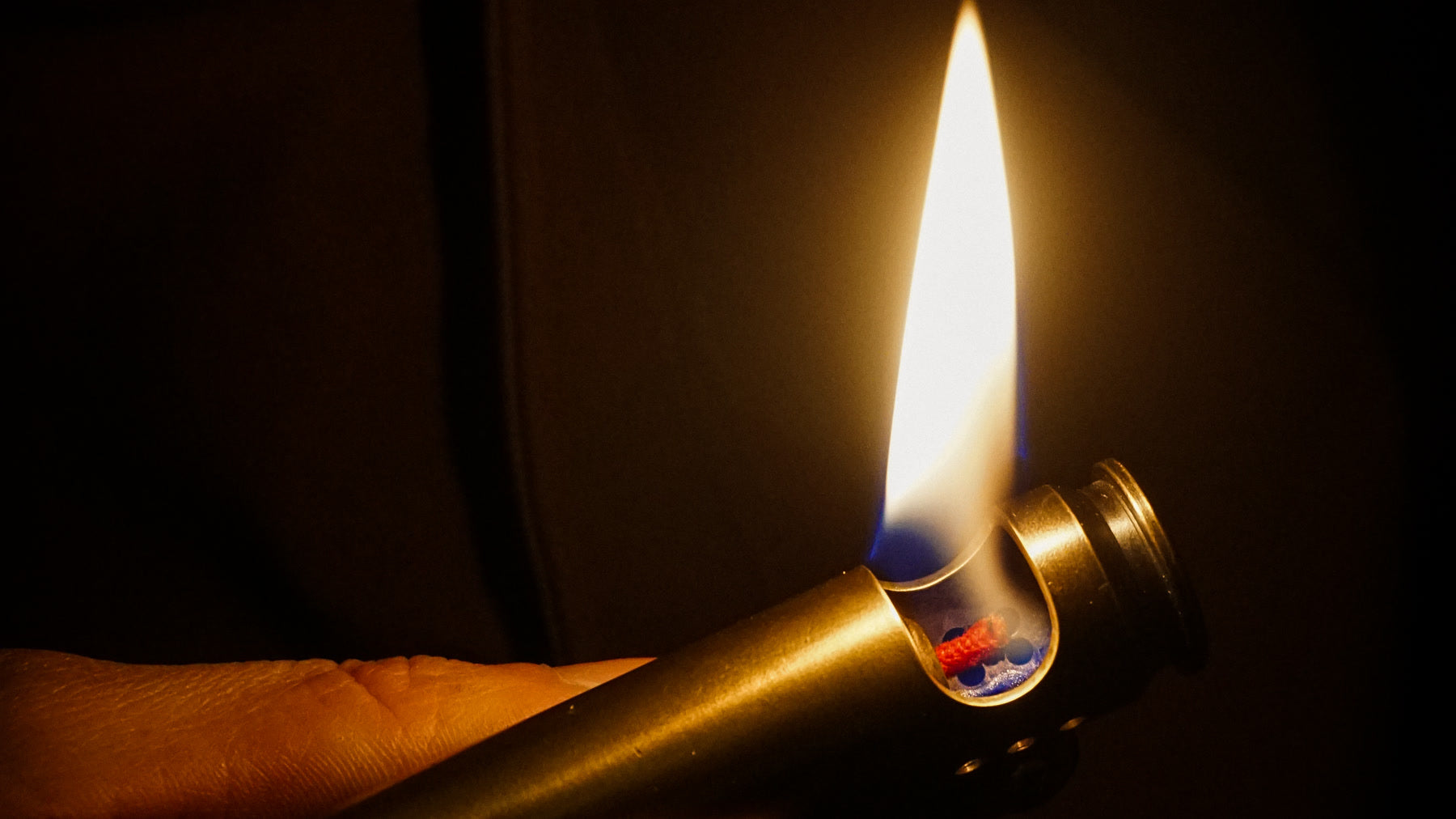
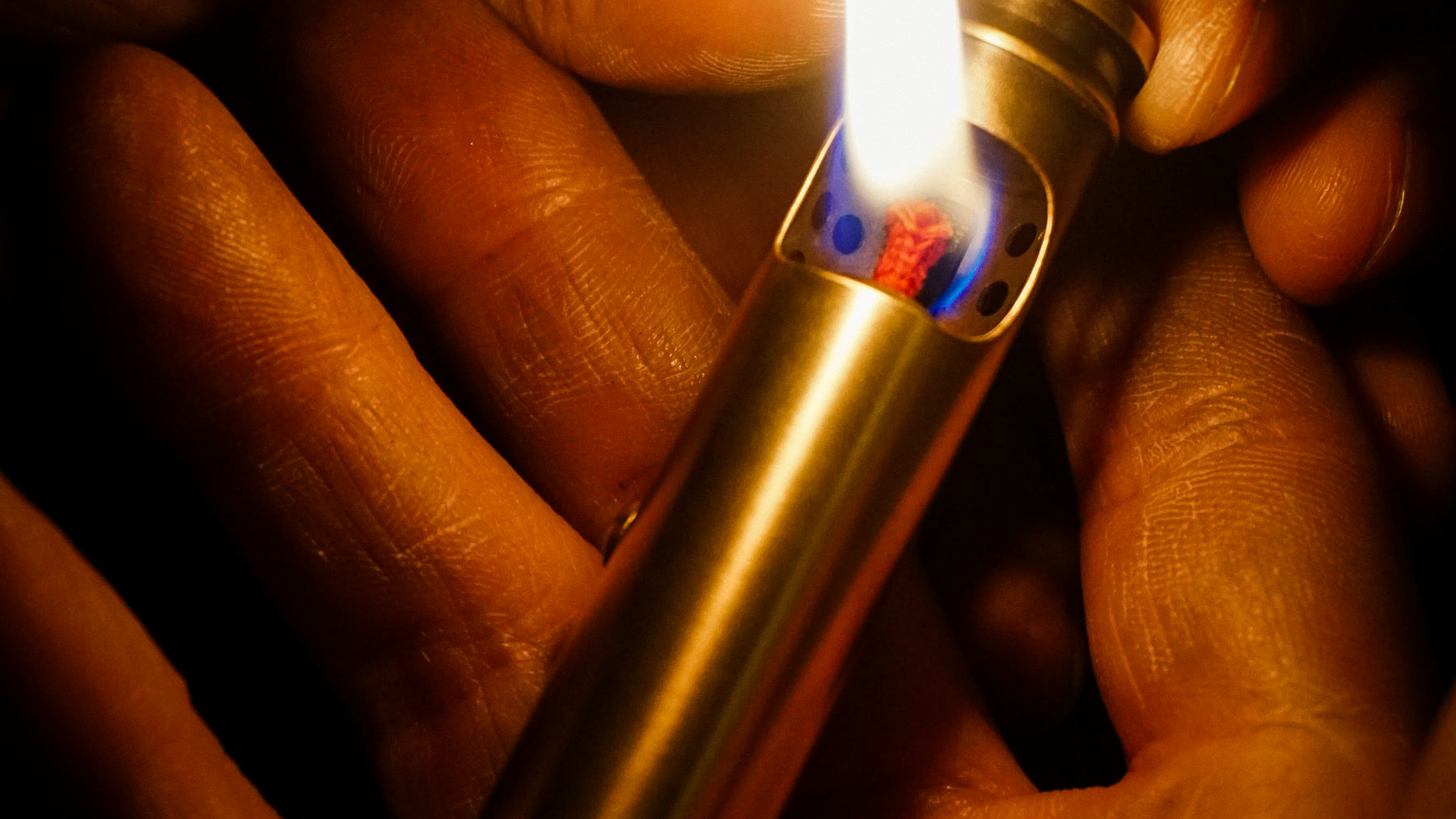
This current WEDO model uses a real repurposed 12.7 × 10⁸ brass shell. Its current product page lists a replaceable flint wheel, flint, wick, lighter cotton, O-ring, springs and chain, plus an accessory pack. It ships without fuel.
Best for: an adult who has already chosen a maintainable liquid-fuel flint lighter and accepts regular part and fuel checks. It is not a substitute for a butane torch, electric lighter, long-reach utility lighter or maintenance-free design.
Check the current mechanism, size and included partsFlint lighter FAQ
Is lighter flint actually flint stone?
Usually no. Modern lighter “flints” are commonly small ferrocerium rods. A toothed steel wheel removes and heats tiny particles from the rod, creating sparks. The familiar name remains, but replacement pieces should be chosen by the lighter maker’s required size and material, not by resemblance to natural stone.
Why does my lighter spark but not light?
A spark only proves part of the ignition system is working. The lighter may be empty, the wick may be dry or charred, the spark may miss the fuel vapor, airflow may be blocked, or a butane valve may not release gas correctly. Diagnose spark, fuel delivery, wick or burner, and airflow separately.
Why does the flint wheel spin freely?
Common causes are an exhausted or missing flint, a flint that is too short, weak or incorrectly assembled spring pressure, a blocked flint tube, or a badly worn wheel. Stop if the pusher or spring is scraping the wheel; forcing it can damage parts that were meant to be replaceable.
Can any lighter flint fit any lighter?
No. Diameter, length, hardness, spring travel and tube design vary. An incompatible flint can bind, crumble, produce poor sparks or prevent the wheel from turning. Use the exact maker or model specification, and do not stack fragments or modify a flint to force a fit.
How long does a lighter flint last?
There is no reliable universal count. Wheel sharpness, spring pressure, flint material, stroke length, contamination and user technique all change wear. Replace it when the maker’s checks show the flint is exhausted, sparks become consistently weak, or the wheel begins to contact the pusher—not on a calendar alone.
Can a butane lighter use a flint wheel?
Yes. “Flint” describes the spark source, not the fuel. Some soft-flame and even some specialty butane lighters use a flint wheel, while others use piezoelectric or electronic ignition. Identify the filler valve and burner before choosing fuel, and identify the ignition assembly before choosing replacement parts.
Should I oil a stuck flint wheel?
Do not add an unidentified lubricant to the ignition area. Oil can collect debris, contaminate a wick or burner, and alter friction. Follow the exact maker’s cleaning method. If the wheel, axle, flint tube or spring is corroded or damaged, use the maker’s repair route instead of improvising.
Sources and verification notes
This guide compares the current first-page pattern with maker and repair documentation. Exact service steps remain model-specific.
- iFixit — Lighter Flint Replacement — Documents the wheel-flint contact and a cautious spring-retainer replacement sequence.
- Zippo — Windproof Lighter Not Lighting — Primary troubleshooting source for fuel, stuck wheel, empty flint and wick delivery checks.
- SAROME — Lighter Troubleshooting — Maker guidance separating oil, wick, flint and worn-wheel faults.
- SAROME — Lighter Maintenance — Maker guidance on compatible flint dimensions, storage deterioration and wick trimming.
- WEDO — Usage & Care — Exact WEDO destination for fuel, flint, wheel, wick and bolt procedures.
- WEDO — Large Classic — Current model material, dimensions, weight, replaceable parts, accessory pack and no-fuel shipment.

Dejar un comentario
Este sitio está protegido por hCaptcha y se aplican la Política de privacidad de hCaptcha y los Términos del servicio.