
To refill a lighter safely, first identify its fuel system. A wick lighter takes labeled liquid lighter fuel through absorbent packing; a refillable butane lighter takes butane through a dedicated valve. Work in a ventilated area away from flames, follow the maker’s instructions, stop at the first sign of overflow or leakage, wipe the lighter dry, and let vapors disperse before testing it away from the filling area.
The verb refill hides two different jobs. One lighter stores liquid in absorbent packing and feeds a wick; another holds liquefied butane under pressure. A disposable lighter may resemble the second type but provide no refill valve. The safe answer to how to refill a lighter starts with identification, not fuel.
How to tell if a lighter is refillable and identify its fuel type
How do I know whether my lighter uses butane or liquid lighter fluid?
Look for the manufacturer name, model, manual, and the actual filling interface. A refillable butane lighter normally has a dedicated recessed valve on the base. A liquid-fuel wick lighter normally has a removable insert or designated opening leading to absorbent packing. Neither the flame shape nor the presence of a spark wheel is enough: butane lighters can use flint ignition, and wick lighters also spark.
That is the practical answer to how to identify lighter fuel type. Do not diagnose by color, smell, body material, or a seller’s vague use of “gas lighter.” If the lighter is sealed, electric, damaged, corroded, altered, unusually old, or lacks a readable model, stop. The types of lighters guide can classify common systems; an unknown vintage mechanism needs a competent repairer.
| What you can verify | Likely system | Correct next step | Stop condition |
|---|---|---|---|
| Removable insert, exposed wick, absorbent packing beneath a felt pad or designated cover | Liquid-fuel wick lighter | Use only the maker-approved liquid lighter fuel and filling opening | No instructions, cracked packing area, strong old-fuel odor, or unknown liquid already inside |
| Dedicated spring-loaded refill valve on the base and a gas burner | Refillable butane lighter | Match the specified butane grade and nozzle to the valve | Damaged valve, constant hiss, seal damage, corrosion, or nozzle mismatch |
| No refill opening designed by the maker | Disposable or non-refillable lighter | Replace and dispose of it according to local rules | Any plan involving puncturing, prying, drilling, heating, or improvised adapters |
| Charging port and no fuel opening | Electric lighter | Follow battery and charging instructions | Never introduce fuel |
For how to tell if a lighter is refillable, the decisive evidence is a maker-designed valve or packing access. Someone forcing the same shell open does not make it refillable.

Lighter refill safety tips before opening the fuel
Read the lighter instructions and fuel label. Work outdoors or in a well-ventilated area away from flames, pilot lights, sparks, hot appliances, smoking, children, and pets. Let the lighter cool. Use a nonabsorbent tray and keep a clean cloth ready.
Check the body, base, valve, seal, wick area, and moving parts. Do not refill a lighter that is leaking, cracked, badly corroded, swollen, modified, or contaminated with unknown fuel. Keep your face away from the filling point and do not press controls while filling.
Stop rule: Fuel choice must come from the model instructions. The lighter fluid compatibility guide explains why gasoline, alcohol, lamp oil, solvents, and aerosol products are not substitutes. If you cannot verify the fuel, do not “try a little” to see what happens.
How to refill a liquid fuel lighter
What is the safest way to refill a liquid fuel lighter without overfilling it?
Use the designated filling area, add approved fuel slowly to the packing, and stop before liquid pools or drips. Never pour fuel onto the wick or into a random opening. Close the filling area, wipe the body and your hands, and let vapor disperse before testing away from the fuel bottle.
- Confirm the system. Verify a liquid-fuel wick mechanism and the exact approved fuel. Close the cap on every other fuel product and move butane cans away.
- Open only the intended access. A common removable-insert design uses a marked felt pad over the packing. Other models differ, so follow their manual.
- Add fuel slowly. Direct the spout toward the packing, not the wick or ignition parts. Move across the packing rather than flooding one point. Give the material time to absorb each small addition.
- Stop early. Stop when the top of the packing looks evenly damp or begins to change color as described by the maker. Pooling, dripping from the base, or wetness on the case means you have gone too far.
- Close, wipe, and air. Return the pad and insert correctly. Wipe the lighter and your hands. Recap and remove the fuel bottle, then allow surface fuel and vapor to clear before any ignition test.

There is no universal milliliter answer to how much lighter fluid to add. Packing volume, remaining fuel, cotton condition, temperature, and design all matter. Use the maker’s visual or measured endpoint. If a lighter dries unusually fast, investigate its seal, wick, storage, or packing instead of repeatedly overfilling it.
How to refill a butane lighter
How do I refill a butane lighter without trapping air in the tank?
Use the exact model instructions. Some manufacturers direct users to purge residual pressure or air; others do not. If specified, purge only with the recommended tool, with the lighter cool and pointed away from the face. That is the safe boundary for how to bleed a butane lighter: a maker-directed step, not a universal ritual.
- Verify the valve and nozzle. Confirm that the lighter is refillable, inspect the valve for damage, and choose the specified butane and adapter. A nozzle that sits crooked or loosely can spray fuel instead of sealing.
- Set up as directed. Many makers advise turning the flame adjustment low before filling. Apply that step only if the model instructions say so; do not force a stuck adjuster.
- Purge only when instructed. Release residual gas or air exactly as the manual describes. Stop if liquid fuel, debris, a damaged seal, or continuous leakage appears.
- Invert both containers. Hold the lighter and butane can upside down so liquid butane transfers through the valve. Align the nozzle squarely and keep hands clear of the burner and ignition control.
- Use short, controlled fills. Follow the specified duration. Stop at backspray, sustained hissing, abnormal valve icing, or any sign that the nozzle does not fit.
- Wait before adjustment or ignition. Remove the can, inspect for leakage, and let the lighter return toward room temperature for the stated interval. Only then adjust the flame in small steps and test away from the filling area.
Butane brands, adapters, tank capacities, flame controls, and purge instructions vary. A cigar torch tutorial is not automatically correct for a soft-flame pocket lighter, a pipe lighter, or a multi-flame burner. Manufacturer instructions outrank a generic sequence whenever the two differ.
How to refill a lighter without spilling or overpressurizing
Use small increments. Keep the opening visible, support the lighter, and never fill over carpet, bedding, clothing, or another absorbent surface. Let packing absorb liquid before adding more. Keep a butane nozzle perpendicular to the valve and use the specified adapter. Do not chase a “completely full” feeling.
If liquid touches the case, stop and close the fuel container before wiping. If butane sprays or the valve keeps hissing, move away from every ignition source, ventilate, and do not operate the ignition. Follow the product label and local safety guidance for cleanup.
These steps answer how to refill a lighter without spilling, but they cannot make damaged hardware safe. Worn valves, displaced seals, cracked inserts, or modified cases need service or replacement.
How long to wait after refilling a lighter and where to test
Use the model’s stated waiting time. Many current butane instructions specify at least two minutes after filling because the transferred fuel cools the lighter. Liquid-fuel instructions focus on wiping spills and clearing vapor. In both systems, visible wetness, strong odor, hissing, frost that does not clear, or an unusually cold body overrides the clock: do not ignite.
Move the capped fuel container away. Test upright in a clear ventilated location away from the filling place. Keep flame away from your face, clothing, and combustible material. One controlled test is enough; repeated striking can confuse the diagnosis and accumulate vapor.
This is the complete answer to how long to wait after refilling a lighter: wait at least as long as the maker states, and longer whenever the observable conditions are not safe. A timer does not cancel a leak.
Why a lighter leaks after refilling—and when to stop
Why does my lighter leak or smell like fuel after refilling?
Causes include overfill, fuel on the case, a misplaced insert or pad, a damaged seal, a nozzle that failed to seat, a stuck valve, temperature change, or wrong fuel. Strong odor, wetness, bubbles, continuous hissing, or pressure loss are stop signals. Do not use flame to locate a leak.
Immediate response: Stop using the lighter, keep it away from flame and electrical sparks, move people away from concentrated vapor, and follow the fuel label and manufacturer guidance. Do not disassemble a pressurized tank or place a leaking lighter in a pocket, drawer, vehicle, or household trash. Persistent leakage needs maker-authorized service or safe local disposal.
| Symptom after refill | Likely category | Safe next check | Do not do |
|---|---|---|---|
| Liquid fuel on the case or from the base | Overfill, displaced insert, or seal/packing fault | Stop, cap the bottle, wipe according to instructions, air fully, and inspect only when safe | Ignite to “burn off” excess fuel |
| Butane hisses after the nozzle is removed | Valve not closed, debris, seal damage, or overfill | Keep away from ignition and follow maker service guidance | Press the ignition or probe the valve repeatedly |
| Sparks but no flame | Fuel delivery, air, wick/burner, temperature, or adjustment | Wait, confirm safe fuel delivery, then use the flint lighter troubleshooting guide | Add more fuel before checking the system |
| Flame is unusually high or unstable | Overfill, incorrect adjustment, temperature, or burner fault | Extinguish, stop use, let the lighter stabilize, and consult the model instructions | Keep testing near the fuel container |
The question why a lighter will not light after refill has no single fuel answer. A visible spark can coexist with poor fuel delivery; a full tank can coexist with a blocked burner; a wet wick lighter can have a worn flint. Diagnose spark, fuel delivery, wick or burner, airflow, adjustment, and temperature separately. If the lighter is still leaking, diagnosis stops until the leak is resolved.
A refillable wick lighter is a maintenance choice
A repairable liquid-fuel wick lighter suits an adult who accepts regular refilling plus flint, wick, and packing checks. A butane torch, electric arc lighter, utility lighter, disposable pocket lighter, or no lighter may fit another task. Refillability transfers more responsibility to the owner.

Serviceable liquid-fuel wick system · 82 × 20 mm · About 105 g
Medium Classic
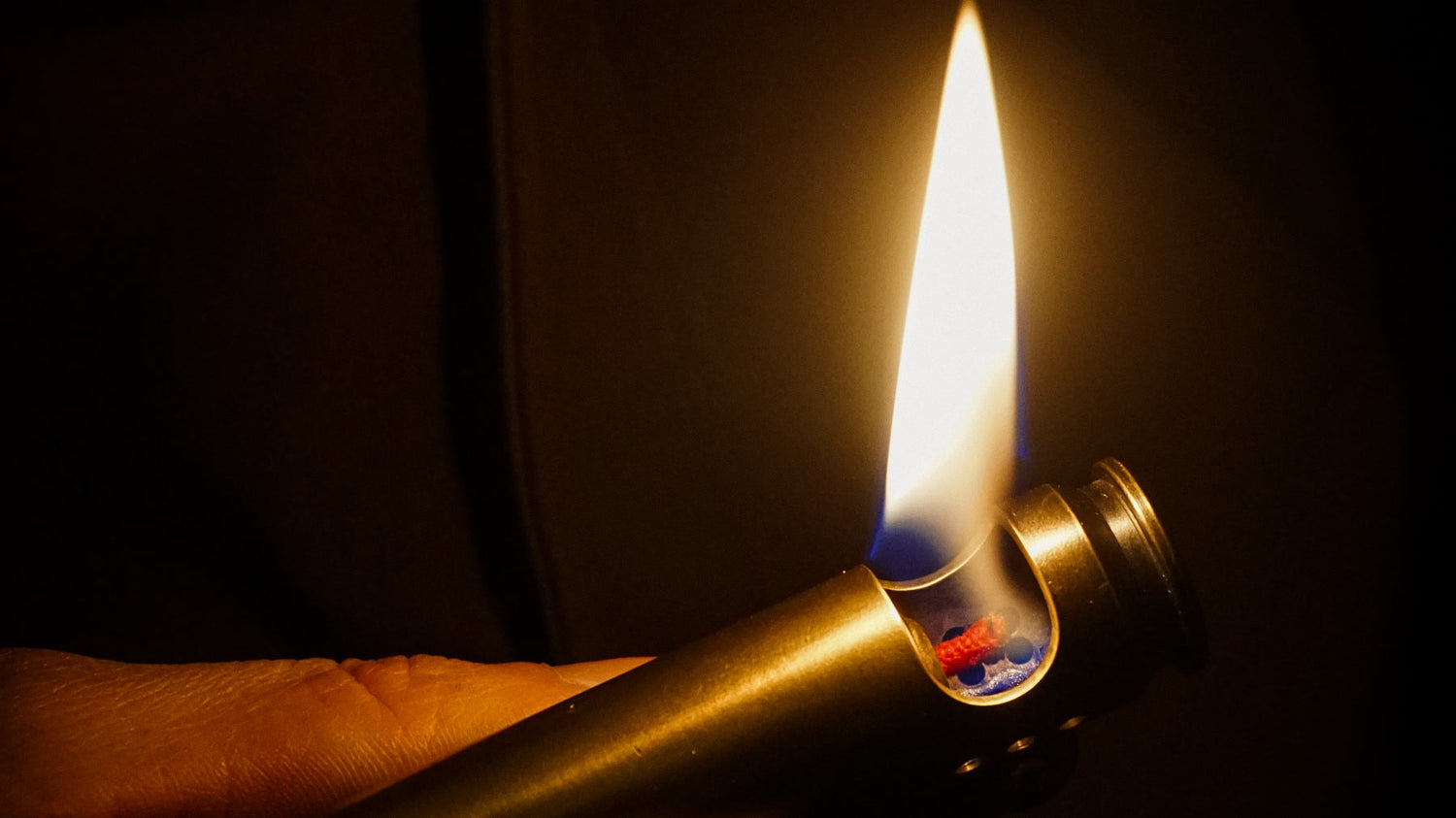
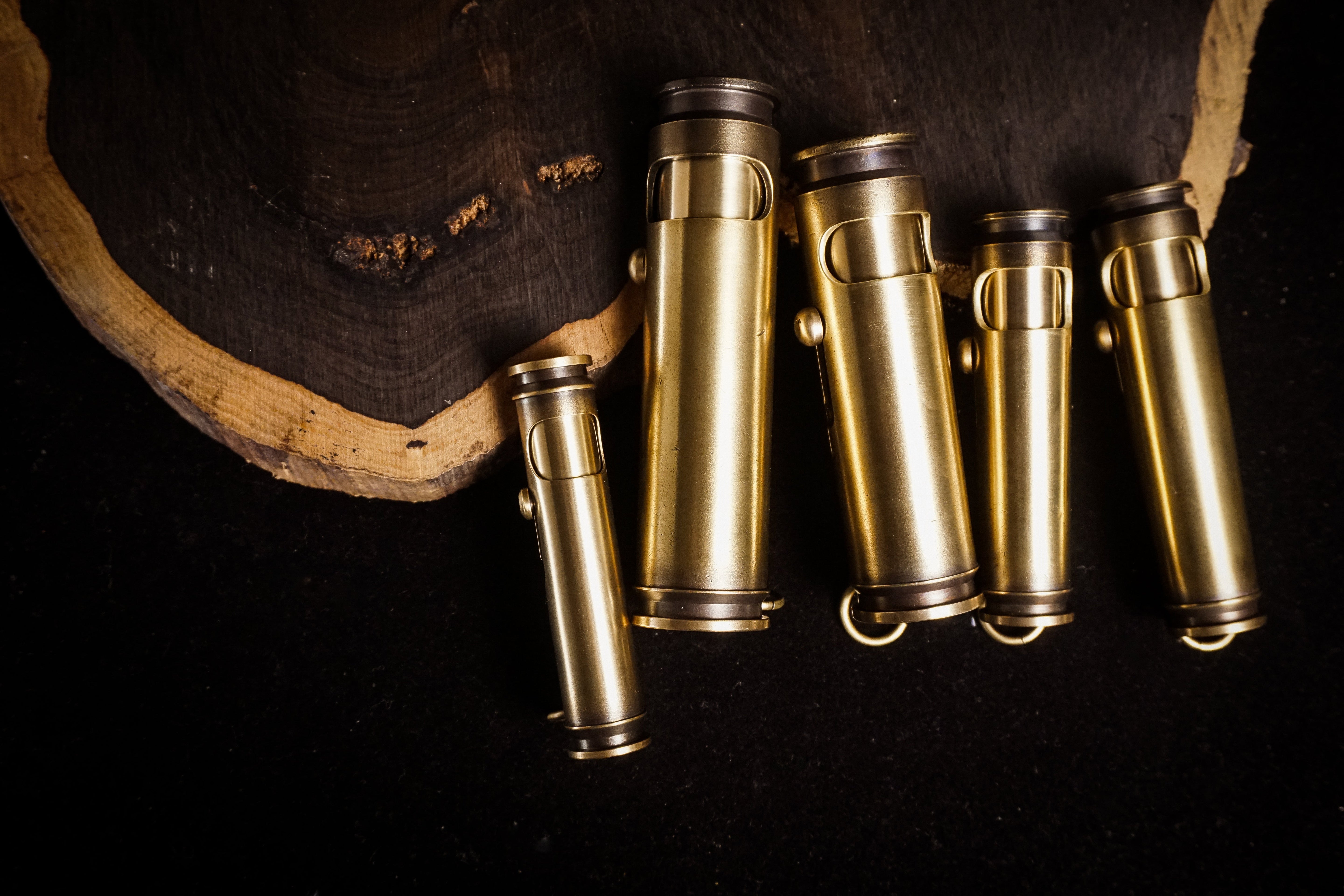
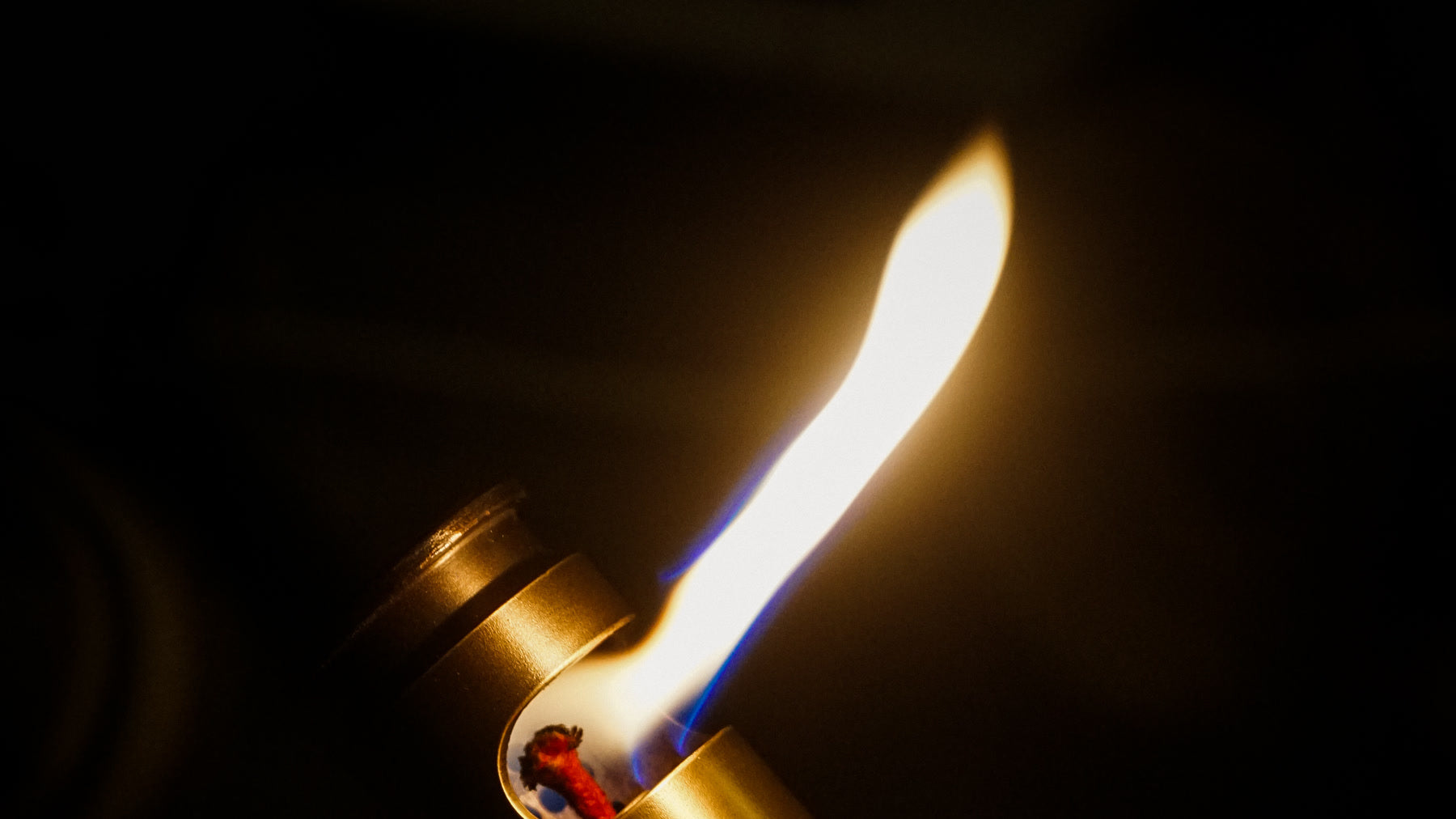
A current WEDO wick lighter made from a real repurposed .50 BMG brass casing. The current product record lists 82 × 20 mm, approximately 105 g, replaceable flint wheel, flint, wick, lighter cotton, O-ring, springs, and chain, plus an accessory pack. It ships without fuel and uses standard lighter fluid.
Best fit: An adult who has already chosen a serviceable liquid-fuel wick lighter and accepts fuel, flint, wick, and cotton maintenance. It is not a substitute for a butane torch, electric lighter, grill starter, disposable lighter, or unknown vintage mechanism.
Use this branch only when: Only after the reader has identified a serviceable liquid-fuel wick system and understands that the exact WEDO care instructions control.
Check the current mechanism, dimensions, and included partsThis card is only a liquid-fuel example. Review the current WEDO Usage & Care instructions before filling a WEDO model; exact model procedures control.
Frequently Asked Questions
How long should I wait before lighting a freshly refilled lighter?
Use the time in the model instructions. Many current butane-lighter directions specify at least two minutes so the fuel and lighter can return toward room temperature. A liquid-fuel lighter also needs enough time for any surface fuel and vapors to clear. If you see wetness, hear hissing, or smell strong fuel, do not use a timer as permission to ignite; wait until the cause is resolved and test away from the filling area.
Can I refill a disposable lighter if it has no refill valve?
No. If you are asking can you refill a disposable lighter, a body with no manufacturer-designed opening must be treated as non-refillable. Do not puncture, pry, drill, heat, freeze, or improvise a valve. Replace it and follow local disposal rules for fuel-containing products.
Why is the flame weak immediately after a butane refill?
The lighter may still be cold, the tank may contain air, the flame control may be low, the nozzle may not have sealed to the valve, or the burner may have a separate fault. Let the lighter stabilize for the stated time before changing settings. If the problem repeats, stop refilling and use the maker’s troubleshooting or service path.
Can I mix lighter fluid brands or butane types?
Use only the fuel grade and nozzle compatibility specified by the lighter maker. Brand names alone do not prove chemical or mechanical compatibility. Do not mix liquid lighter fuel with butane, and do not substitute gasoline, alcohol, lamp oil, aerosol propellant, or another household solvent. When the existing fuel is unknown, stop and identify the model before adding anything.
A final refill checklist
- The lighter is cool, undamaged, and explicitly refillable.
- The fuel system, exact fuel, filling opening, nozzle, and adapter are verified.
- The area is ventilated and clear of flames, pilot lights, sparks, children, and pets.
- Liquid fuel is entering absorbent packing, or butane is entering its dedicated valve—not another opening.
- You stop at overflow, spray, hiss, wetness, odor, damaged seals, or uncertain fit.
- The fuel container is capped and moved away before the lighter is wiped, aired, adjusted, or tested.
- The lighter waits for the maker’s stated interval and is tested away from the filling area.
Those are the durable lighter refill safety tips: identify first, use the specified fuel and interface, fill conservatively, obey stop signals, and test only after the area and lighter are clear.
Model-specific instructions control. If the instructions for your exact lighter or fuel container differ from this general guide, follow the manufacturer. If the model, fuel, valve, or condition is uncertain, stop and contact the manufacturer or a qualified repair service.

Laisser un commentaire
Ce site est protégé par hCaptcha, et la Politique de confidentialité et les Conditions de service de hCaptcha s’appliquent.