
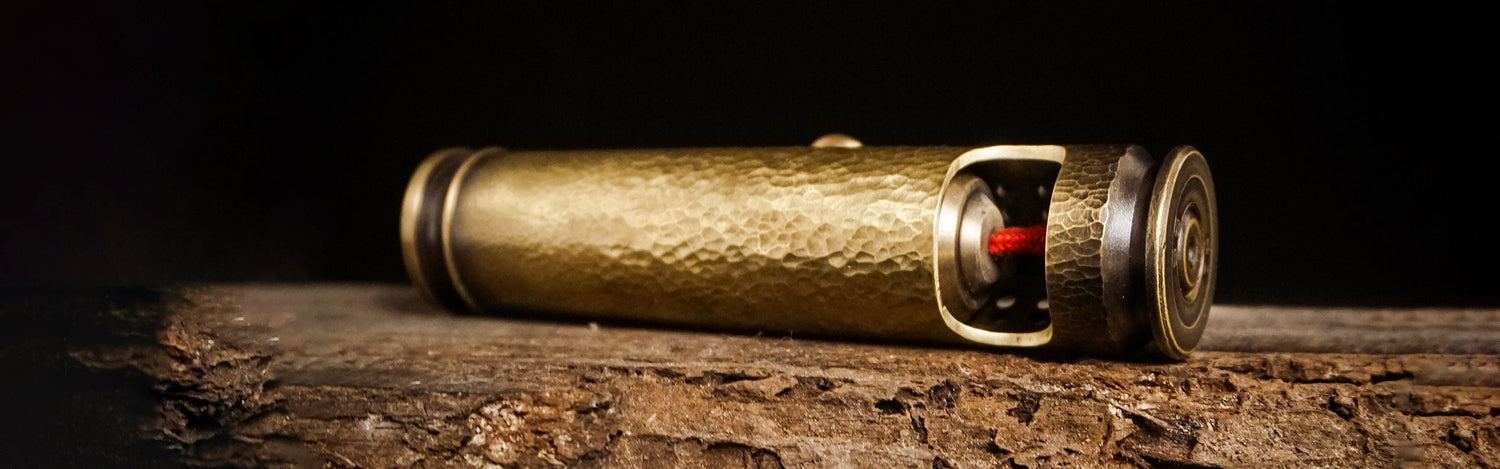
What does “handmade lighter” actually mean?
The phrase describes a making process, but online results often use it for several different products. One seller may build a metal body, mechanism, and finish in a small workshop. Another may place a factory-made insert inside a hand-built ceramic, leather, wood, or resin case. A third may engrave, paint, distress, or decorate a mass-produced blank. A fourth may sell a handmade holder while the lighter itself remains completely standard.
Those products can all involve legitimate handwork. The problem begins when the listing does not tell you where the handwork starts and stops. The useful question is not “Is this handmade?” but “Which parts, operations, and checks were completed by the maker?” That question separates material craft from decoration, and decoration from the ignition unit that must still work safely and consistently.
Do not confuse the making method with the fuel or ignition type. A handmade body can contain a wick-and-flint insert, a butane system, or another mechanism. For that separate decision, compare the types of lighters by fuel and ignition system.
Four levels of handwork you will see in lighter listings
1. Workshop-built body and mechanism
The maker forms or machines the body, fits the moving components, assembles the ignition system, finishes the surface, and checks the completed piece. Some standard consumable parts may still be purchased, just as a furniture maker may use standard screws or hinges. The listing should explain the material source, important dimensions, manual operations, assembly, and functional checks.
2. Handmade shell or case around a factory insert
The craft lives in the exterior: ceramic, metal, leather, wood, stone, resin, or another hand-formed case. The factory insert supplies the flame. This can be a sensible division of work because the maker concentrates on form and surface while the insert provides a familiar fuel system. Buyers still need to know which insert is included, how it is removed, whether replacements fit, and how heat and fuel are isolated from the case material.
3. Hand-finished or hand-engraved factory lighter
The base lighter is mass-produced, then an artist engraves, paints, patinates, polishes, collages, sets stones, or applies another finish by hand. The artistic work may be original and labor-intensive even though the mechanism is not. Judge the base lighter and the added finish separately: one determines function, the other determines appearance and personal meaning.
4. Handmade sleeve, holder, or carrying accessory
Leather sheaths, beaded covers, clay sleeves, metal cages, and resin cases can be handmade without changing the lighter. Check fit, ventilation, access to the ignition control, heat resistance, and whether the lighter can be removed. A well-made holder should not be described as proof that the ignition unit is handmade.
Handmade vs mass-produced lighters: what actually changes?
| Decision point | Small-batch or handmade work | Mass production | What the buyer should verify |
|---|---|---|---|
| Consistency | Small cosmetic differences may remain between pieces. | Dimensions and finish are usually designed to repeat closely. | Whether variation affects only appearance or also fit and function. |
| Process visibility | A credible maker can show material, tools, bench work, assembly, and inspection. | Factory process may be less visible to the retail buyer. | Specific evidence rather than the word “artisan.” |
| Surface character | Hammer marks, patina, sanding, or polishing may differ piece by piece. | Coatings and patterns tend to be more uniform. | How the finish changes through carry, heat, oils, and cleaning. |
| Parts | May combine custom-made structures with standard consumables. | Often uses standardized components at scale. | Which parts are replaceable, proprietary, or permanently fixed. |
| Lead time | Often made or finished after the order. | Usually available from inventory. | Production time separately from shipping time. |
| Price | Can include bench time, material preparation, finishing, and individual inspection. | Can spread tooling and labor across large quantities. | Documented work and support, not a handmade label alone. |
| Best fit | For buyers who value process traceability, material character, serviceability, and controlled variation. | For buyers who prioritize close sameness, immediate replacement, broad availability, or lower cost. | The intended use, not a general claim that one method is superior. |
A factory-made lighter can be excellent, and a handmade lighter can be poorly designed. Production method is only one part of quality. The completed object still needs sound dimensions, clean edges, proper seals, usable controls, a strong spark or stable ignition source, suitable heat behavior, and clear maintenance guidance.
How can you verify what was made by hand?
A trustworthy listing should let you follow the object from material to finished check. You do not need a documentary film, but the seller should be able to answer concrete questions.

The current WEDO workshop story and process, for example, identifies repurposed brass shell casings, mechanism development, hand assembly, surface work, and inspection. That level of specificity is more useful than broad adjectives such as premium, unique, or crafted with care.
Does the material tell you whether the lighter is handmade?
No material proves a making method. Brass may be machined in a factory, hammered by an artisan, cast, wrapped around an insert, plated over another metal, or used only for a decorative panel. Ceramic may be hand-formed around a standard lighter. Leather may be hand-tooled into a sleeve. Resin may be poured by hand around a purchased case. Wood may be carved into a cover while the ignition unit remains unchanged.
Ask about every major layer: the exterior body, the fuel chamber or insert, moving hardware, seals, finish, and decorative elements. A description such as “solid brass body with a factory wick insert” is more informative than “vintage brass handmade lighter.” If reused material is central to the story, verify what it originally was and which parts have been replaced or rebuilt.
Material also changes maintenance. Raw brass can develop patina. Plated brass should not be polished as aggressively as bare brass. Painted or chemically aged finishes can be damaged by abrasives. Leather and wood covers need distance from fuel and heat. Ceramic and resin cases can chip or crack even if the insert remains functional.
Which handmade variations are acceptable, and which are defects?
Variation is not a blanket excuse. Acceptable variation is usually cosmetic, disclosed before purchase, and compatible with the product photographs. Functional problems are still problems.
| Usually acceptable when disclosed | Needs clarification | Not desirable handmade character |
|---|---|---|
| Different hammer-mark spacing, minor patina variation, small shifts in hand sanding, or naturally different grain. | Tool marks near seams, color differences larger than the example range, or engraving that approaches a curve or opening. | Fuel leakage, cracks, loose caps, sharp burrs, blocked vents, or parts that interfere with movement. |
| Raised brass areas polishing faster than recessed texture through use. | A lid, bolt, wheel, or insert that feels different from the listing but still works. | Weak or inconsistent ignition, badly misaligned parts, unreadable engraving, or unstable assembly. |
| Small differences between real individually finished pieces. | A finish sold as sealed that continues changing quickly. | A seller using “handmade” to dismiss damage, missing parts, or incorrect customization. |

Before buying, read the maker’s variation notice and compare several real pieces rather than one polished hero image. If the surface is intentionally irregular, ask whether the exact item is shown or whether the photograph represents a range. For customization, approve the spelling, layout, and actual engraving area separately from the natural finish variation.
Are handmade lighters more reliable?
Reliability comes from design, fit, materials, seals, ignition, assembly, testing, and maintenance—not from the number of units produced. Small-batch work can allow close individual inspection, but it can also introduce variation if the process is poorly controlled. Mass production can deliver repeatable parts, but a low-cost design can still be hard to service or short-lived.
Evaluate the functional path from the user’s hand to the flame. Is the control comfortable? Does the cover or bolt open without scraping? Does the wheel produce a strong spark? Is the wick positioned correctly? Does the insert seal? Can the lighter stand, carry, or store in the intended orientation? Does the maker explain what to do when the flame becomes small or ignition becomes difficult?
For a gift or collectible, test the practical question before the aesthetic one: would the recipient still want this object if the engraving and handmade story disappeared? If not, more personalization will not fix the mismatch.
Why repairability matters more than the handmade label
A durable outer body can outlast its consumable parts. That only helps when the flint, wheel, wick, cotton, seals, springs, and insert can be inspected or replaced. Ask which components are standard, which are proprietary, what tools are needed, and whether instructions and support will still be available after the sale.
Repairability is not the same as a lifetime promise. It is a practical system: accessible parts, documented sizes, realistic maintenance, and a seller who can explain common problems. The lighter usage and care guidance shows the kind of information worth looking for—refueling, wick and cotton checks, flint and wheel checks, O-ring and spring placement, and bolt movement.
If you do not want to maintain a fuel lighter, say so before shopping. A replaceable disposable or a standard removable insert may suit you better than a beautifully made body that requires unfamiliar care.
Why do handmade lighters cost more—and when is the price justified?
Price can include material preparation, small-batch machining, forming, direct surface work, assembly, fitting, inspection, photography, made-to-order time, rejected pieces, replacement parts, and after-sales support. It can also include branding without much additional work. The label alone does not tell you which is true.
Compare value by asking what would be difficult to replace: the maker’s original structure, hand-formed case, specific surface treatment, repair support, verified material, or personal engraving. Then compare the same functional category. A handcrafted case around a standard insert should not be compared as if the insert itself were custom-engineered. A hand-engraved factory lighter should be priced as a base lighter plus original artwork and labor.
Do not use the lowest price as the only benchmark. Also do not assume the highest price proves better handwork. Evidence, fit, finish range, lead time, return terms, and serviceability are stronger signals.
What should you check before buying a handmade lighter?
- Exact object: Is this a complete lighter, insert, case, sleeve, holder, or decorated blank?
- Manual steps: Which forming, machining, finishing, engraving, assembly, and inspection steps are done by hand?
- Materials: What is each major part made from, and is the named metal solid, plated, coated, or only color?
- Ignition and fuel: Is it wick-and-flint, butane, electric, or another system? Does it ship without fuel?
- Dimensions and weight: Are they listed numerically and shown in a real adult hand?
- Variation: What differences should you expect between the photographs and the delivered piece?
- Functional checks: What does the maker inspect before dispatch?
- Parts and care: Which consumables and mechanical parts are replaceable, and are instructions available?
- Lead time: Is the quoted time for making, shipping, or both?
- Customization proof: Who confirms spelling, artwork, position, and finished-size readability before permanent work?
- Support: Are warranty, return limits, defect handling, and seller contact clear?
- Recipient fit: Is the adult recipient already comfortable using, refilling, maintaining, or collecting this type?
Handmade case, custom engraving, or fully workshop-built lighter?
Choose a handmade case when you want ceramic, leather, wood, resin, or sculptural craft around a familiar replaceable lighter. Choose hand engraving when the base mechanism already fits and the main value is original artwork or personalization. Choose a workshop-built body when you value the material, mechanical structure, hand feel, assembly, and long-term service as much as the decoration.
These categories are not a quality ladder. A carefully fitted leather sleeve can be better for one person than a heavy metal collector piece. A standard insert can simplify replacement. A full workshop build can offer a more distinctive mechanical experience. The correct category is the one that solves the user’s real problem without hiding how it was made.
If the goal is personalization rather than a new structure, compare custom engraved lighter options. If the goal is visible surface craft, material feel, and changing brass finishes, browse only after completing the checks above.
A verified example: what is handmade on WEDO Medium Hammered?
The Medium Hammered is useful as a transparent example because the product page separates material, size, surface work, mechanism, consumables, and care. The body uses a real repurposed .50 BMG brass cartridge (12.7 × 99). The verified size is 82 × 20 mm and the weight is about 105 g. Hammer marks are made through direct handwork, so each distribution differs. The piece is made to order in 3–7 business days and ships without fuel.
The listing also names replaceable parts instead of treating the lighter as a sealed art object. That matters for a buyer who wants both visible craft and continued use. It does not make the Medium Hammered universally better than a factory lighter; it makes the handwork and maintenance claims specific enough to compare.

Medium Hammered
Made from a real repurposed .50 BMG brass cartridge with direct hand-hammered texture. Built to order in 3–7 business days, shipped without fuel, and documented with replaceable flint, wheel, wick, cotton, O-ring, springs, and chain.
Best for: an adult who wants visible surface handwork, medium brass weight, refillability, and documented service parts—and accepts small cosmetic variation.
Check the process, dimensions, and careFor other surfaces, use the WEDO Craft collection only after deciding whether you prefer a clean brass starting point, visible hammer texture, or an aged finish. The collection page owns the commercial comparison; this article remains the informational process guide.
How should a handmade brass lighter be cared for?
First identify the finish. Bare or living brass can darken, brighten at raised contact points, and develop patina. Hammered recesses may hold deeper color than smoother areas. A sealed, plated, painted, frosted, or chemically aged surface may need a different method. Never assume that a metal polish is appropriate for every brass-colored object.
Keep fuel away from decorative covers and wipe spills according to the maker’s instructions. Avoid unnecessary extended burns; metal bodies can warm with use. Inspect the spark, wick, cotton, seals, springs, and moving parts when performance changes. Store the lighter away from children and heat, follow local rules, and review transport restrictions before travel.
The most useful handmade object is not the one kept untouched to preserve a perfect photograph. It is the one whose material, finish, maintenance, and expected change were understood before purchase.
Frequently asked questions
What does handmade lighter mean?
It should identify the part completed by hand. The body and mechanism may be workshop-built; a factory insert may sit inside a handmade case; a factory lighter may receive a hand-applied finish or engraving; or only the holder may be handmade. Ask for the exact process instead of relying on the label alone.
Are handmade lighters better than mass-produced lighters?
Not automatically. Factory production can offer close dimensional consistency, repeatable finishes, broad distribution, and lower prices. Good handwork can offer traceable material, visible process, small-batch control, repairability, and individual surface character. The better choice is the one whose construction, function, support, and variation match your needs.
How can I tell whether a lighter is really handmade?
Look for process photographs, specific material descriptions, real dimensions and weight, an explanation of which steps are manual, close-up images of functional joints, a variation policy, lead time, replacement-part information, and the maker or workshop identity. Evidence should be specific enough to verify, not just emotional language.
Is a handmade lighter case the same as a handmade lighter?
No. A handmade case, sleeve, or cover may be excellent craft, but the ignition unit inside can still be factory-made. That is not a problem when the listing says so clearly. Compare the case material and fit separately from the insert’s fuel system, safety, reliability, and replacement parts.
Why do handmade lighters have small variations?
Direct hammering, sanding, aging, polishing, patination, assembly, and material history can create different marks and tones. Variation is acceptable when it stays cosmetic and the seller explains it. Fuel leakage, cracks, sharp burrs, poor alignment, weak ignition, or interference with moving parts are functional problems, not desirable handmade character.
Should a handmade lighter be refillable and repairable?
It is not a universal requirement, but it matters when you want long service life. Check the fuel type, refill instructions, flint, wheel, wick, cotton, seals, springs, and any proprietary parts. A beautiful body does not guarantee that worn components can be replaced or that instructions are available.
Do handmade brass lighters change color with use?
Many unfinished or living brass surfaces change through handling, air, moisture, oils, and cleaning. Raised areas may become smoother or brighter while recessed texture may stay darker. Ask whether the finish is raw, sealed, plated, painted, chemically aged, or intended to develop patina before choosing a cleaning method.
What should I check before buying a handmade lighter online?
Confirm what is handmade, the material of each major part, ignition and fuel type, dimensions, weight, real product photos, acceptable variation, lead time, whether fuel is included, replaceable parts, care instructions, warranty, return limits, and seller contact. Save the listing and approved customization proof before production.
Sources and method
This guide checked the current results returned for “handmade lighters,” compared how marketplaces and maker pages classify complete lighters, cases, sleeves, inserts, finishing, and engraving, and verified WEDO workshop, product, and care facts on the current public site. Search result order can vary by location, device, and personalization; the ten URLs are recorded in the internal quality review rather than presented as a permanent ranking.
- WEDO — About the Workshop — workshop history, material reuse, mechanism development, assembly, and inspection.
- WEDO — Craft Collection — classic, hammered, aged, and changing brass finishes.
- WEDO — Medium Hammered — verified material, dimensions, weight, surface work, lead time, fuel, and replacement parts.
- WEDO — Usage & Care — refueling, wick, cotton, flint, wheel, O-ring, spring, and bolt maintenance.
- Etsy — Handmade Lighter market — current category mix of full lighters, cases, sleeves, decoration, and engraving.
- Olivia Snow Ceramics — Pebble Lighter and Earthen — Lady Lighter Case — examples of handmade exterior craft around lighter formats.

댓글 남기기
이 사이트는 hCaptcha에 의해 보호되며, hCaptcha의 개인 정보 보호 정책 과 서비스 약관 이 적용됩니다.