

What makes a personalized Christian gift feel personal rather than busy?
Personalization is evidence of attention, not a count of filled fields. A preferred name can show belonging. A date can locate a shared milestone. A short prayer can preserve a voice. A verse reference can point back to a trusted text. A symbol can quietly identify a practice or tradition. Each one can be meaningful, but combining all of them without a reading order usually weakens the result.
Begin with one sentence: “I want this gift to help this person remember, practice, or mark ___.” The blank should contain one real purpose. If it contains four purposes, divide the message between the permanent gift and a card. A lasting surface should carry what is stable; a card can carry context, emotion, and words that may need privacy or revision.
This is also where a useful guide differs from a marketplace list. A list can show hundreds of items, but the choice still depends on whether the recipient reads, writes, displays, carries, wears, shares, or uses the object. If the underlying object does not fit, adding a name will not fix it.
Start with the recipient, faith practice, and visibility
Ask three questions before choosing a product. First, what does the person already do? Someone who journals may welcome a named notebook; someone who keeps a private prayer routine may prefer a card or bookmark; someone who serves in a visible church role may still not want devotional language on clothing or office décor.
Second, what part of the relationship do you actually know? Shared church attendance does not reveal a preferred Bible translation, private struggle, denominational identity, or comfort with public symbols. Use confirmed facts. When the detail is sensitive, asking is more thoughtful than preserving a guess in metal, wood, glass, or print.
Third, how visible should the message be? Think in three levels: private (inside a book, wallet, box, or letter), shared (home or small group), and public (clothing, jewelry, office display, or an object used around strangers). Choose the lowest visibility that still serves the purpose unless the recipient has clearly chosen otherwise.
Which type of Christian personalization should you choose?
| Detail | Use it when | Verify | Avoid |
|---|---|---|---|
| Name or initials | Ownership, belonging, or a quiet personal mark matters. | Preferred spelling, form of name, initials, and capitalization. | Legal names the person never uses or public identification without consent. |
| Date | A baptism, confirmation, wedding, graduation, recovery milestone, or memorial date is genuinely central. | The exact date and an unambiguous format. | A date that requires a paragraph of explanation or may be painful to display. |
| Short prayer | Your own voice and relationship are the point. | That the wording does not diagnose, pressure, or promise an outcome. | Borrowed language presented as personal or long text reduced to tiny type. |
| Verse reference | A compact, durable pointer to Scripture is enough. | Book, chapter, verse, and the recipient’s likely context. | Using the reference as decoration without understanding the passage. |
| Full verse | The wording, translation, permission, and finished-size legibility are confirmed. | Every word, punctuation mark, line break, and translation. | Truncation that changes meaning or text too small to read. |
| Symbol | The recipient recognizes and welcomes it. | Tradition, orientation, detail, and reproduction quality. | Assuming every Christian tradition uses the same symbol. |
If choosing the passage is still the open question, use the guide on how to choose a Bible verse for a gift. If the passage is known but you need to decide between a full verse, reference, card, wall piece, book, or compact object, use the scripture gift format guide. Keeping these questions separate prevents three articles from repeating the same answer.
Match the personalization to a gift the person will use
Bibles and journals
Books support a layered message: a name or short line on the cover, a full inscription inside, and room for the recipient’s future reading or writing. Confirm translation, page format, print size, and whether an embossed or printed cover helps rather than makes the book feel too precious to use.
Cards, letters, prayer boxes, and memory sets
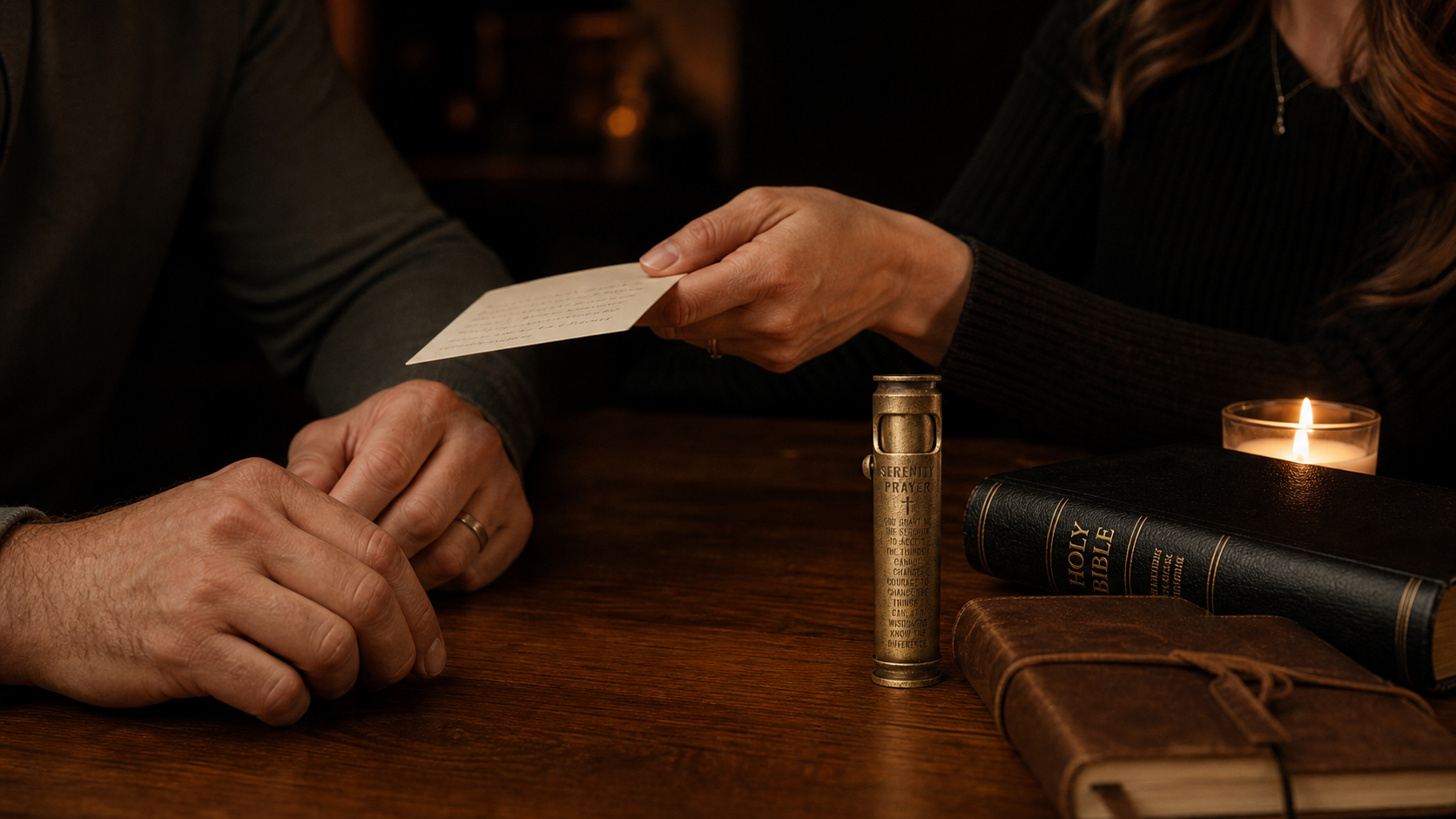
Replaceable formats are best for long prayers, many passages, sensitive context, or messages that should remain private. They are not lesser because they are not permanent. They preserve complete sentences, can be corrected, and let the recipient choose when to read.
Wall art and home objects
Use these only when you know the room, viewing distance, décor, household agreement, and comfort with display. A beautiful verse can still be intrusive when visitors repeatedly ask about a private loss or when one family member did not approve a shared statement.
Jewelry, wearables, and portable objects
These work for initials, a reference, or a compact symbol. They do not work for paragraphs. Check allergies, clothing style, workplace rules, loss risk, and whether visible faith language feels natural to the recipient.
Practical objects, services, and experiences
A practical object must pass the function test without engraving. Meals, childcare, travel help, a class, a retreat, or time together can also be personalized through timing and attention rather than permanent text. When you are unsure whether any object is needed, return to the recipient-first Christian gift guide.
Personalized Christian gift ideas by occasion
Baptism, dedication, or confirmation
Use the preferred name, verified ceremony date, and one approved reference or short blessing. A Bible, journal, card set, or modest keepsake can continue after the ceremony. Keep the longer family message in a letter so it remains readable and private.
Graduation, relocation, or a new chapter
Choose a portable format and a message that survives a change of city, job, or routine. A reference, initials, or short prayer often ages better than a slogan about success. Add the year only if the recipient values the milestone as a lasting identity marker.
Wedding or anniversary
Shared text requires shared approval. Confirm both names, date format, translation, and display preference. A family Bible, shared prayer journal, framed reference, meal, trip, or service may be more useful than a permanent object chosen by one partner for both.
Grief, illness, recovery, or remembrance
Do not use personalization to explain suffering or demand optimism. Offer a private card, small framed reference, journal, meal, or practical help. Use dates and names only when a close family member confirms them, and avoid turning a private experience into a public conversation piece.
Pastor, mentor, volunteer, or group thanks
Use accurate roles and dates rather than exaggerated titles. For a group, keep a shared element consistent while making names secondary. Confirm that logos, church names, symbols, and institutional language are approved and do not imply an endorsement the recipient did not give.
How much text should be permanent?
Use one primary detail and at most one supporting detail. A verse reference plus initials can work. A name plus date can work. A short prayer plus a discreet reference can work. A full verse, three names, a date, a title, two symbols, and a long dedication usually cannot share one small surface without becoming a document disguised as decoration.
Permanent text should be stable, accurate, welcome, and readable. Put the changing or explanatory layer in a card, letter, inside cover, removable insert, or digital message. This two-layer approach protects both meaning and design: the object remains clear while the relationship has room to speak.

Always judge at finished size. If the smallest line needs zoom, remove words. For more general layout examples, see the engraved gift ideas guide.
How should you handle symbols and Christian traditions?
“Christian” describes many traditions, not one universal visual vocabulary. Cross forms, saint imagery, ichthys symbols, denominational emblems, liturgical colors, and phrases may carry specific meanings. Use a symbol only when you know the recipient recognizes and welcomes it. When in doubt, a name, date, simple branch, or verified reference may be safer than an emblem.
Do not alter a church, ministry, military, school, or organizational mark to make it decorative. Ask whether it is authorized, whether the design is current, and whether its use implies endorsement. A generic symbol should not be presented as an official seal.
Privacy, consent, and surprise gifts
A surprise can still include a verification step. Ask a spouse, parent, adult child, close friend, or authorized organizer to confirm names, dates, translation, role, and comfort with display. Keep the creative form secret while verifying the facts that should not be guessed.
Health conditions, recovery dates, grief, deployment, adoption, infertility, private vows, and family conflict require special care. Even accurate information may not belong on a visible object. The right question is not only “Is this true?” but “Does this person want it made permanent and seen in this setting?”
For children, obtain parent or guardian approval and avoid public combinations of full name, birth date, school, address, or other identifying information. Personalization should not create unnecessary exposure.
How do you write a short prayer without overstepping?
Write from your position, not as an authority over the recipient. “May you find steadiness in the days ahead” leaves room for the person. “God will give you the result you want” promises an outcome you cannot guarantee. Avoid diagnosing faith, assigning a lesson to suffering, or using prayer language to make a request the person cannot comfortably refuse.
Keep the permanent version to one complete sentence or a few complete words. Read it aloud. Remove borrowed phrases you cannot source, clichés that do not fit the relationship, and anything that sounds like a public announcement. Put the full prayer in a letter and use a short title, reference, or closing line on the object.
How do you proof a personalized Christian gift before production?

- Confirm who has authority to approve the wording and visibility.
- Copy names, dates, references, and titles from a trusted source instead of memory.
- Confirm the Bible translation and current reproduction terms when full text is used.
- Print or view the design at finished size; never judge tiny type only on a zoomed screen.
- Check spelling, capitalization, punctuation, line breaks, symbol direction, and date format.
- Inspect margins around edges, curves, seams, windows, hinges, holes, and moving parts.
- Check contrast on the actual material or a representative sample.
- Stop before production when any fact, permission, or fit remains uncertain.
When does a personalized Christian lighter fit?
Only when the adult already uses a lighter for a real purpose or collects them and welcomes the object. Faith does not make a lighter appropriate by itself. Someone who has no use for one may be better served by a Bible, journal, card set, bookmark, wearable, meal, practical help, or experience.
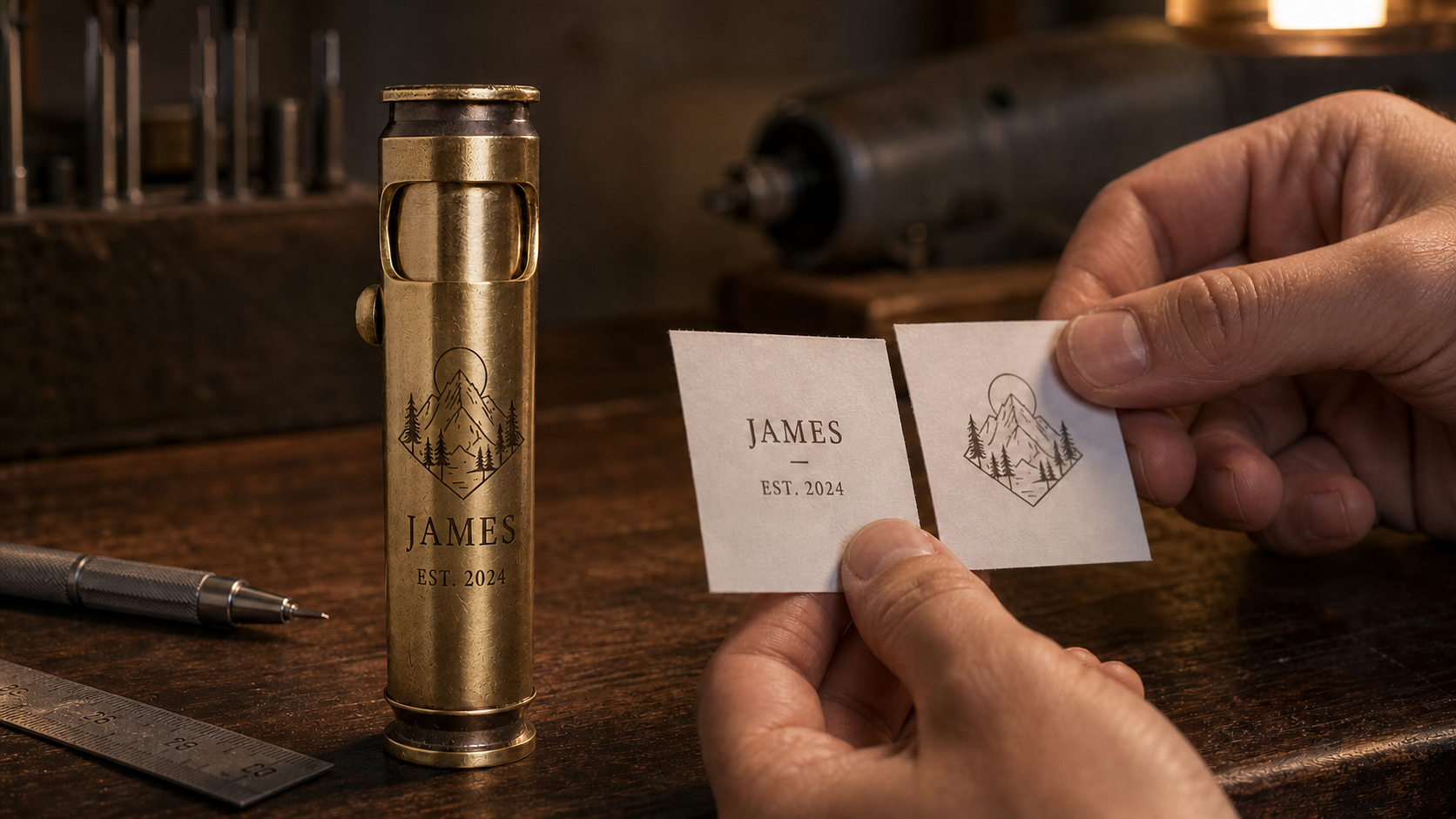
The verified Medium Classic Serenity uses a real repurposed .50 BMG brass cartridge. It measures 82 × 20 mm and weighs approximately 105 g, creating a balanced daily-carry size but a narrow permanent text area. That makes it suitable for one short prayer, name, date, initials, or verse reference—not a full long passage. The handmade item is made to order in 3–7 business days, ships without fuel, and uses replaceable working parts.

Medium Classic Serenity
Best for an adult who already uses or collects lighters and wants one restrained faith message in a balanced everyday-carry size. Confirm the recipient, wording, and finished-size proof first.
Check the Medium Serenity engraving optionsReview current usage and care guidance and route-specific restrictions before use or travel. If the object fits but the specific model does not, browse the WEDO faith collection only after the earlier recipient and message decisions are complete.
Common personalized Christian gift mistakes
Starting with a product field
A box labeled “name” does not mean a name is needed. Start with the recipient and purpose, then fill only the fields that serve them.
Making a private story public
Accuracy is not consent. A recovery date, loss, family role, or intimate prayer may be true and still belong inside a card.
Choosing a verse for appearance
A short line is not automatically safe when removed from context. Verify the passage, meaning, translation, and recipient preference.
Shrinking text instead of editing
More words do not compensate for unreadable type. Move the long message to a readable, replaceable layer.
Assuming every Christian wants visible symbols
Private practice, public display, denominational tradition, and personal style are different choices. Ask rather than rank them.
Recommending the object before confirming its use
A personalized object should still fit without its engraving. If it does not, choose another format or no object at all.
Final personalized Christian gift checklist
- What real practice, memory, or occasion should the gift support?
- Will the recipient read, write, display, carry, wear, share, or use the format?
- Should the message be private, shared, or public?
- Which single detail is primary?
- Is one supporting detail genuinely necessary?
- Are the name, date, title, reference, translation, prayer, and symbol verified?
- Has the right person approved sensitive wording and visibility?
- Is the permanent text stable and readable at finished size?
- Does the material preserve contrast around edges, curves, seams, and hardware?
- Does the underlying gift still fit if the personalization is removed?
- Can the longer story live in a card or letter?
- Is “do not personalize” or “choose another gift” still an honest result?
Frequently asked questions
What makes a Christian gift truly personalized?
It connects one verified detail—such as a name, meaningful date, short prayer, verse reference, or approved symbol—to the recipient’s real faith practice and the way the gift will be used. More fields do not make a gift more personal. Relevance, consent, and restraint do.
Should I put a name or a Bible verse on a Christian gift?
Choose the detail that carries the gift’s main purpose. Use a name when belonging or ownership matters; use a verse reference when the faith reminder matters. If both are necessary, make one clearly primary and the other smaller. Put a long explanation in a card.
Is a Bible verse reference enough on a personalized gift?
Yes. A reference is often the better permanent choice on a small surface, when the recipient’s translation is uncertain, or when a long passage would become unreadable. Pair it with a handwritten card containing the full context if the longer message matters.
What can I write on a personalized Christian gift?
Use one short, accurate line: a name, initials, an unambiguous date, a verified verse reference, or a prayer you wrote and the recipient would welcome. Avoid diagnosing the person, promising an outcome, assigning a religious identity, or turning private hardship into public text.
How do I personalize a baptism or confirmation gift?
Use the person’s preferred name, the verified ceremony date, and one approved reference or short blessing. Choose a Bible, journal, card set, or keepsake the person will continue using. Preserve the longer family message in a letter instead of filling the permanent surface.
How do I personalize a Christian wedding gift?
Confirm both names, the date format, the selected reference, and whether both partners want the message displayed. Shared gifts require shared approval. A family Bible, prayer journal, framed reference, service, or experience may fit better than a permanent object chosen by only one person.
Are personalized Christian gifts appropriate for grief?
They can be, but privacy and timing matter more than decoration. Choose a quiet, optional format such as a card, journal, small framed reference, meal, or practical help. Do not explain the loss, claim certainty about the person’s feelings, or require public display.
How much text should be engraved permanently?
Use one primary detail and at most one supporting detail. If the smallest line is not comfortable at finished size, remove text rather than shrinking it. Long prayers, stories, full passages, and explanations belong in a card, letter, inside cover, or other replaceable layer.
Who should approve a personalized faith gift?
The person who knows the sensitive facts and has authority to approve them. For private beliefs, grief, health, titles, public display, or shared marital text, that often means the recipient, a close family member, or both partners. A vendor should not guess.
When is a personalized Christian lighter appropriate?
Only for an adult who already uses a lighter for a real purpose or collects them and welcomes the object. Faith does not make a lighter suitable by itself. If there is no real use, choose a Bible, journal, card, wearable, service, meal, or experience instead.
Sources and method
This guide reviewed the current first-page patterns for “personalized Christian gifts,” official Bible translation and permission paths, and the verified WEDO Medium product page and approved product image. It does not replace the recipient’s preferences, denominational guidance, legal advice, route-specific transport rules, or a final production proof.

댓글 남기기
이 사이트는 hCaptcha에 의해 보호되며, hCaptcha의 개인 정보 보호 정책 과 서비스 약관 이 적용됩니다.