
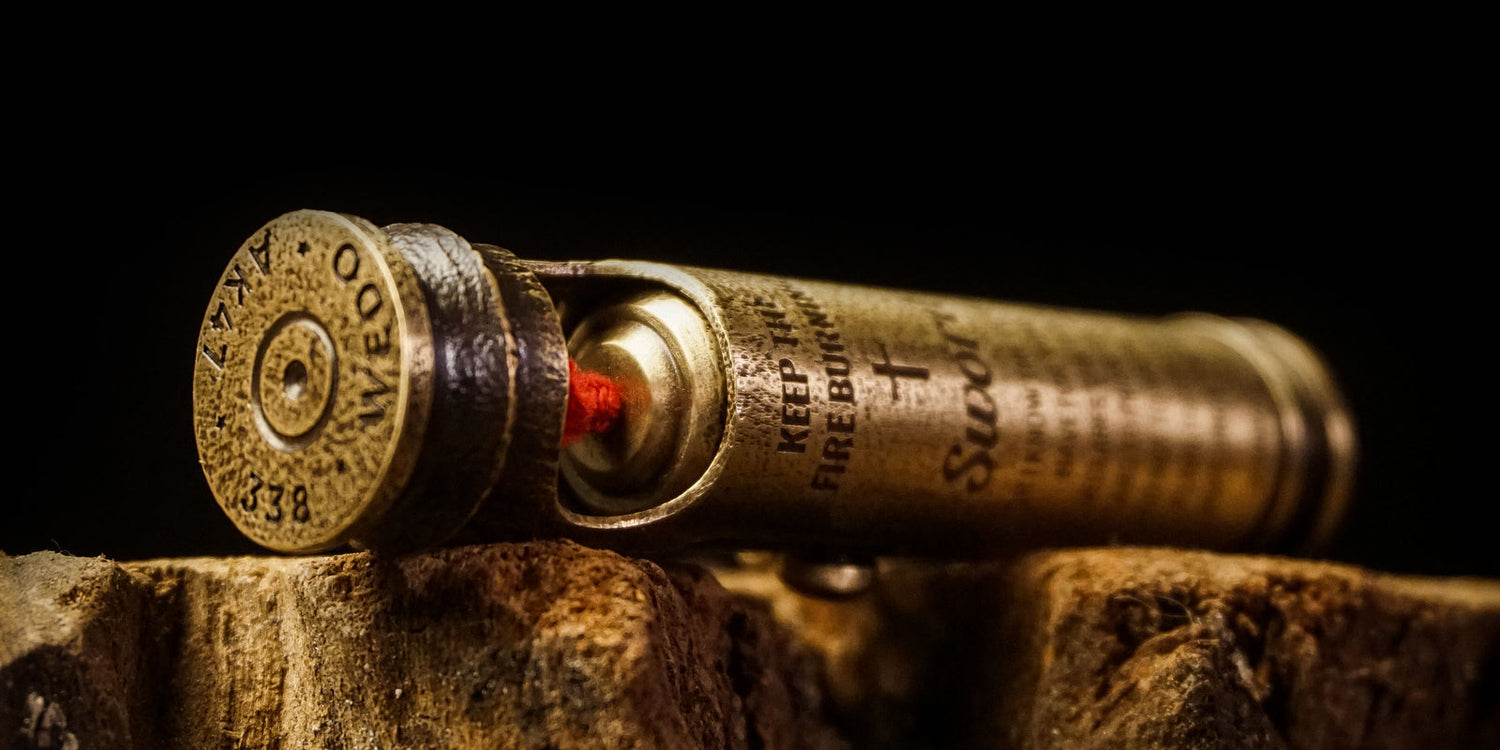
Useful engraved gift ideas do not begin with a quote. They begin with the one detail the gift needs to preserve for the recipient. The most reliable choices usually come from six directions: a name or initials, a date, a short message, scripture or a prayer, a symbol, or a photograph or piece of artwork. Choose one main detail first. Add one supporting detail only when the space and meaning both allow it.
If the same words could be placed on anyone’s gift, the message is probably not personal enough yet. Replacing “Best Dad” with his children’s names and a real year, or replacing “Always with you” with a place, date, or private phrase, makes the engraving harder to substitute. The goal is not to shrink a letter until it fits on metal. It is to keep the part of the story that cannot be replaced.
Choose what the engraving should preserve before choosing the words
Before writing the message, answer three questions:
- What detail would immediately tell the recipient that this gift belongs only to him?
- Will the object be carried every day, used occasionally, or kept mainly as a display or memorial piece?
- Five years from now, which detail will still be accurate, natural, and meaningful without an explanation?
The answer usually belongs to one of the six categories below. They can stand alone or work in pairs, but they do not all need to appear on the same object.

Six engraving directions and when each one works
1. Names, initials, and family names: the safest long-term choice
Names work well on everyday-carry objects, work accessories, and first-time personalized gifts. A full name feels formal. A first name or nickname feels closer. Initials are more restrained. For a partner, paired initials can mark the relationship. For a father or grandfather, a family name or children’s names can carry more meaning. For a colleague or mentor, a real name or professional title is usually the safest approach.
Do not repeat the same identity simply to fill the surface. One clear name is stronger than a full name, nickname, monogram, and signature competing for attention. Confirm spelling, capitalization, hyphens, and special characters. Never rely only on a social-media nickname when placing the order.
2. Dates, years, and places: anchor the meaning to a real moment
A birthday, first meeting, wedding anniversary, graduation year, promotion, retirement date, or service period can turn a general message into a specific event. A date is also an effective supporting detail. It does not need to be the largest element, but it should remain easy to read.
If the gift may be read across countries or languages, use an unambiguous format. “12 May 2026” is less likely to be misunderstood than “05/12/26.” Use coordinates only when you can verify the location again. Do not guess from an old message, a partial address, or memory.
3. Short messages, reminders, and private phrases: specific beats grand
A good short message is not a long letter with most of its words removed. It should make sense on its own. It might be a phrase the two of you already use, a family saying, a compact thank-you, or a few words tied to a real experience. A card can carry the full story. The engraving only needs to open the door to that story.
Online guides sometimes publish one fixed character limit, but different objects, fonts, curved surfaces, and engraving areas cannot share a universal number. Confirm the usable surface and layout before finalizing the message. If the type must become very small to fit, shorten the wording instead of shrinking it further.
4. Scripture, prayer, or a faith reminder: verify the source before choosing the layout
Faith-based engraving can use a short line, a scripture reference, a name with a verse number, or one simple symbol. On a small surface, the reference alone is often clearer than a full passage. A larger surface can carry more information, but it still needs hierarchy. A name, full verse, date, and several symbols should not all compete as equal elements.
Confirm the Bible translation, chapter and verse, punctuation, and capitalization before ordering. If the recipient’s family uses a particular translation, ask someone familiar with it to review the final copy. This guide covers layout principles only; later faith articles will address verse themes in depth so the pages do not compete for the same search intent.
5. Symbols, emblems, and simple artwork: let the image identify, not decorate
A clear symbol can represent a profession, service history, family, hobby, place, or shared project. Strong outlines and clear black-and-white contrast generally reproduce better than fine lines, gradients, complicated shadows, or dense small lettering. Small surfaces may require simplification.
For military branches, units, organizations, or family crests, confirm the name, abbreviation, and artwork. Make sure you have the right to supply and use the design. On a commemorative gift, one accurate emblem with one set of years is often stronger than several decorative elements.

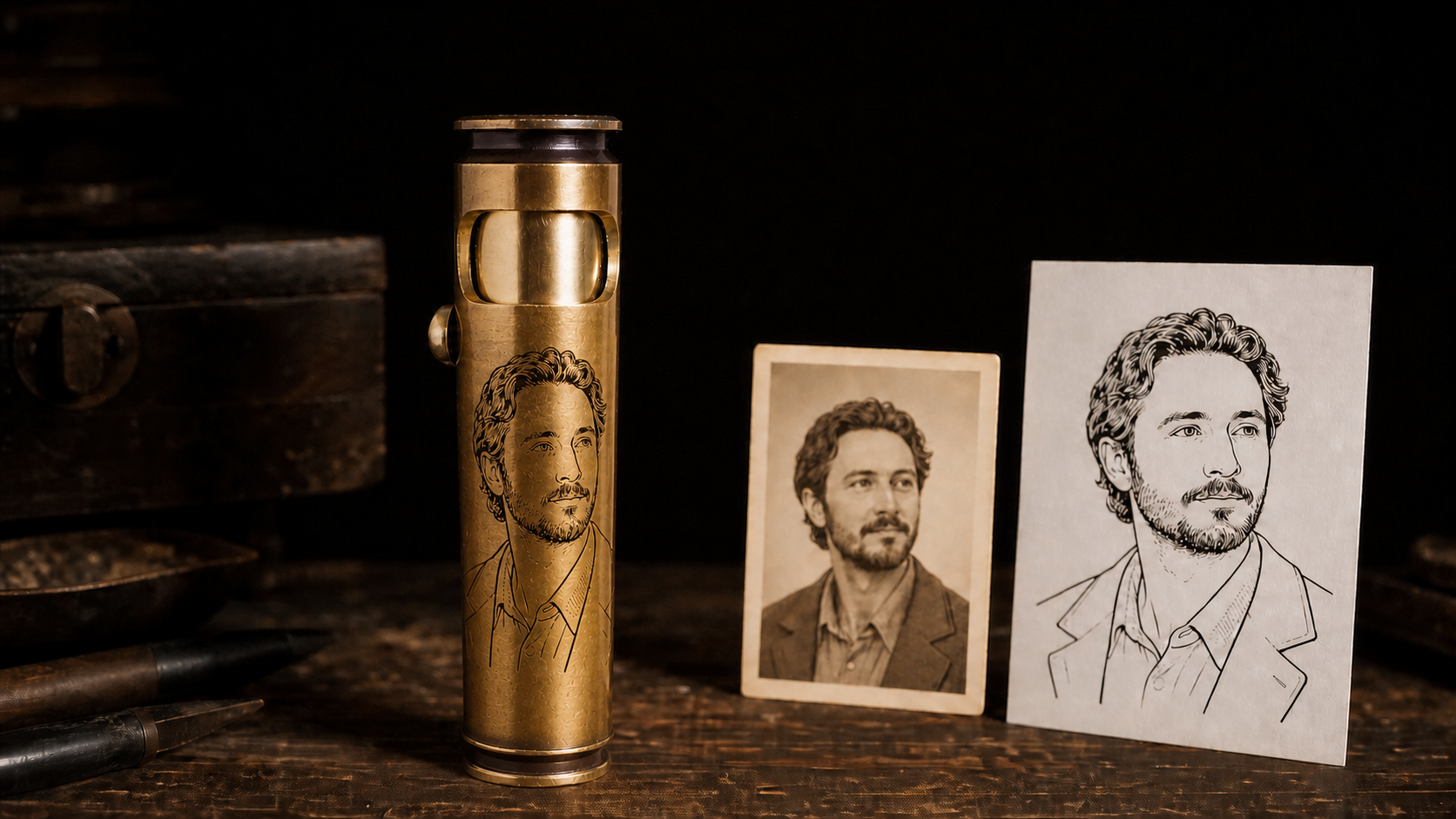
6. Photographs, handwriting, and customer artwork: decide whether it can become clear line art
Photographs and handwriting can be the most personal sources, but they depend heavily on the quality of the original. A photograph suitable for engraving usually has a clear subject, strong contrast, and a simple background. Group photographs, low-resolution screenshots, backlit images, and dense textures usually need more simplification. Handwriting should be photographed or scanned straight-on, without folds, shadows, or paper texture breaking the strokes.
If the source is not ready to engrave, it should be cleaned, redrawn, or converted into line art before the final details are approved. This article establishes the selection rule. The next guide on custom photo gifts will cover the complete process from original image to engraving-ready artwork.
The most reliable formula: one main detail plus one supporting detail
Information hierarchy matters more than raw word count. The main detail should be visible first. The supporting detail provides time, identity, or context. These combinations are easy to understand and can be adjusted for different surfaces:
- Name + date: birthdays, anniversaries, graduations, and family milestones.
- Initials + place: travel, a first meeting, or a shared location.
- Scripture reference + name: a restrained faith reminder.
- Symbol + service years: verified military service or retirement information.
- Short phrase + date: partners, friends, and milestone moments.

If you are still unsure, write down everything you want to include. Circle the one detail whose removal would make the gift lose its identity. That is the main detail. Keep other information only when it explains the main detail without weakening readability.
Find the personal detail through the relationship
Husband or boyfriend
A shared date, travel location, nickname, or phrase the two of you already use usually feels more natural than a general romantic quote. If he dislikes public sentiment, keep the engraving smaller and more restrained. Personal does not mean everyone else needs to understand it.
Father or grandfather
Consider a family name, children’s or grandchildren’s names, the year he became a father, a hometown, or a short thank-you. Do not force every family member onto one small surface. For a group gift, let one family detail lead and place the complete signatures on the accompanying card.
Brother or friend
A shared interest, team symbol, travel year, inside phrase, or meaningful place can work well. Humor is useful only when the line will still feel natural years later and will not embarrass the recipient when someone else sees it.
Colleague, mentor, or manager
A project name, role, service period, promotion, or retirement date is usually appropriate. Avoid unconfirmed religious, family, or health information, and do not use a nickname that only the giver considers intimate.
If you have not chosen the object yet, start with our guide to personalized gift ideas for men. Confirm the recipient’s routine and your relationship first, then decide whether engraving belongs on the gift.
Let the object and engraving area control the amount of information
The same message will not produce the same layout on a pendant, pen, wallet card, wood panel, or brass lighter. A wide flat object viewed from a distance can support more hierarchy. A narrow, curved, or frequently handled surface benefits from shorter copy, clear spacing, and room for the material to remain visible.
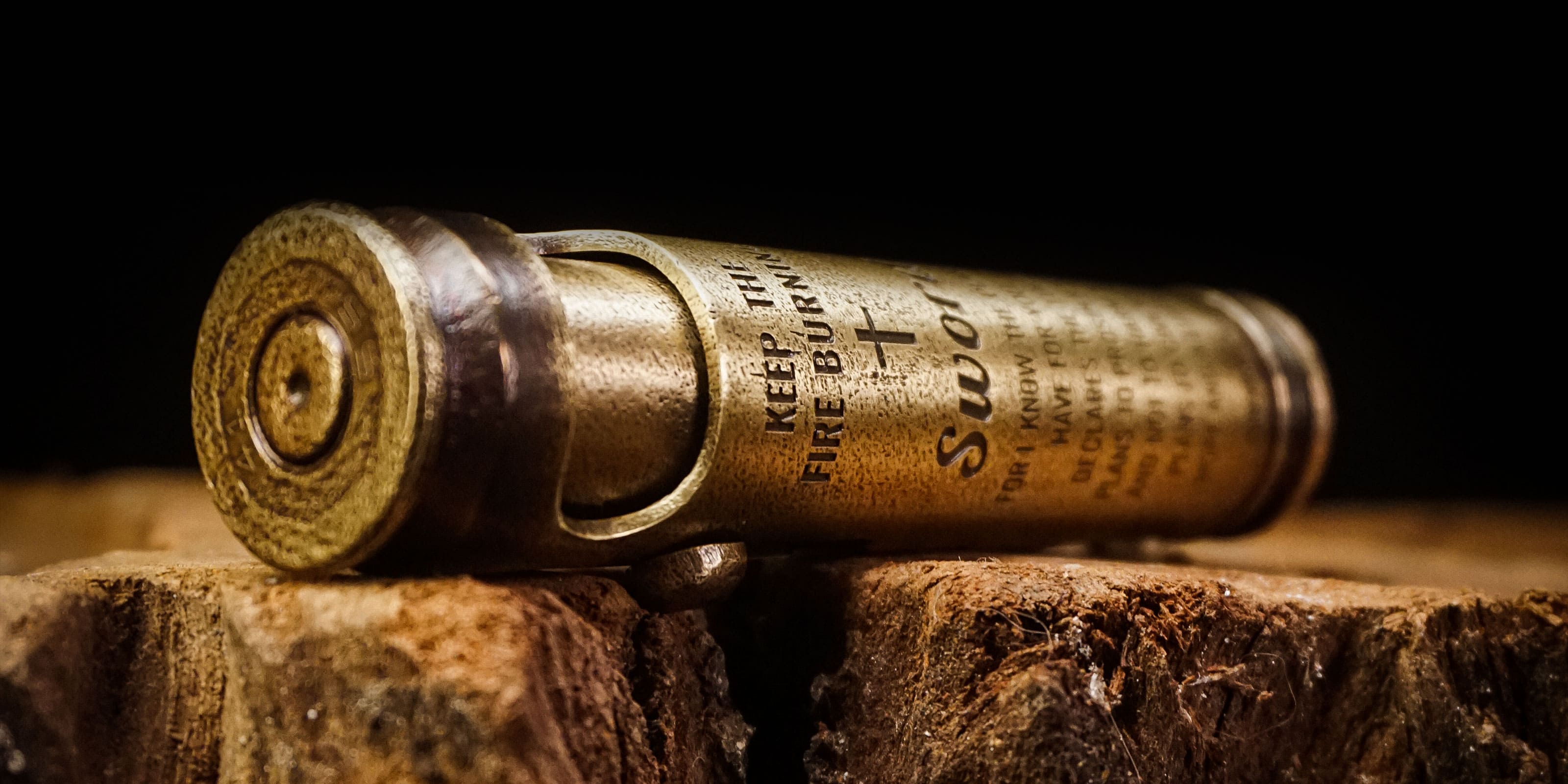
For a custom lighter, choose the size, finish, and intended use before choosing the engraving. WEDO can personalize names, dates, short messages, scripture, symbols, clean artwork, and suitable photo-based line art. You can compare each engravable engraved lighter after deciding whether the adult recipient genuinely uses or collects lighters. The ability to engrave an object is not, by itself, a reason to give it.
Match the message to the size and surface
These three options show why the object should come first: a compact name-and-date layout, a balanced scripture-and-name layout, and a larger frosted surface with more breathing room.


These sizes are not a simple ranking of how many words they can hold. The Small format rewards restraint. Medium supports a balanced two-level message. A larger frosted surface can give a short message more space. Choose the size the recipient will actually carry, then adapt the engraving to it. To compare every finish and format, browse WEDO’s handmade brass shell lighters.
Four checks before an engraved gift is made
1. Check every fact
Review every name, date, year, organization, scripture reference, coordinate, and abbreviation one character at a time. Copy the final text into a separate document and ask another person who knows the story to check it.
2. Check the hierarchy
Decide what should be read first and what should be discovered second. View the proof at close to the object’s real size. If the design becomes a dense block when reduced, remove copy or separate the information more clearly.
3. Check the source artwork
Confirm outlines and permission for symbols or logos. Check the subject and contrast of a photograph. Make sure handwriting has no shadows or broken strokes. If the maker needs to clean, redraw, or simplify the source, approve the revised artwork before production.
4. Check the process and timing
Confirm whether the maker reviews the layout, whether complex artwork needs additional approval, and how much time production and shipping require. WEDO currently reviews the layout before production and states that most custom lighters take about 3–7 business days to make. Complex artwork or delayed confirmation can take longer. Lighters ship without fuel; review the lighter care and maintenance guide before first use.

Five common engraving mistakes
- Finding a beautiful quote before thinking about the recipient. The result may sound correct but still be interchangeable.
- Making the name, long message, photograph, date, and several symbols equally important. When everything leads, nothing leads.
- Using one universal character limit instead of reviewing the real layout. Different materials, fonts, and surfaces cannot share one number.
- Skipping factual and spelling checks. A personalized item cannot always be exchanged like ordinary stock after production.
- Designing only for the gift-opening moment. An object that becomes part of the recipient’s routine is more likely to be kept than a complicated design admired once.
Final engraving checklist
- I have chosen one main detail rather than several equally important details.
- The words or artwork belong to this recipient and are not a template with the name changed.
- Another person has checked the name, date, scripture, coordinates, emblem, and abbreviations.
- The message length comes from the real engraving area and layout, not a universal character count.
- The photograph or artwork is clear, high-contrast, and suitable for simplification when necessary.
- The recipient will genuinely use, carry, collect, or preserve the object.
- The schedule includes time for artwork confirmation, production, and shipping.
An engraving does not need to say everything for you. The strongest result usually preserves one real person, one real relationship, or one real moment—and leaves enough space for that detail to be seen.
Frequently asked questions
What should I engrave on a personalized gift?
Start with one detail that belongs specifically to the recipient: a name, initials, date, short message, scripture reference, symbol, or simplified artwork. Add one supporting detail only if it strengthens the meaning without crowding the design.
Is a name, date, or short message best for an engraved gift?
A name is the safest long-term choice, a date anchors a real milestone, and a short message works best when it is specific to the relationship. The object and available engraving area should decide the final combination.
How long should an engraving message be?
There is no universal character limit. Readable length depends on the item, engraving area, font, curvature, and layout. If the text must become very small to fit, shorten the message instead.
How do I make an engraving feel personal instead of generic?
Replace a general greeting with a fact only the recipient owns—a real date, place, nickname, service year, family detail, or private phrase—and keep one detail visually dominant.
Can a photo, handwriting, logo, or symbol be engraved?
Often yes, but clean outlines and strong contrast work best. Complex backgrounds, fine lines, shadows, and tiny details may need to be simplified into clear line artwork. You should also have permission to use the design.
Should I engrave a full Bible verse or only the reference?
Use the reference or a very short excerpt on smaller surfaces. A larger surface may hold more text, but the translation, chapter, verse, spelling, and final layout should all be confirmed before production.
What can I engrave on a lighter?
Depending on the model and surface, suitable options can include names, dates, initials, service years, short messages, scripture, symbols, clean artwork, or photo-based line art. Choose the lighter size first, then fit the engraving to the actual surface.
What should I check before approving an engraving proof?
Check every name, date, year, coordinate, scripture reference, abbreviation, and symbol. Review the visual hierarchy at close to actual size, confirm the artwork is usable, and leave time for layout confirmation and production.

Laat een reactie achter
Deze site wordt beschermd door hCaptcha en het privacybeleid en de servicevoorwaarden van hCaptcha zijn van toepassing.