
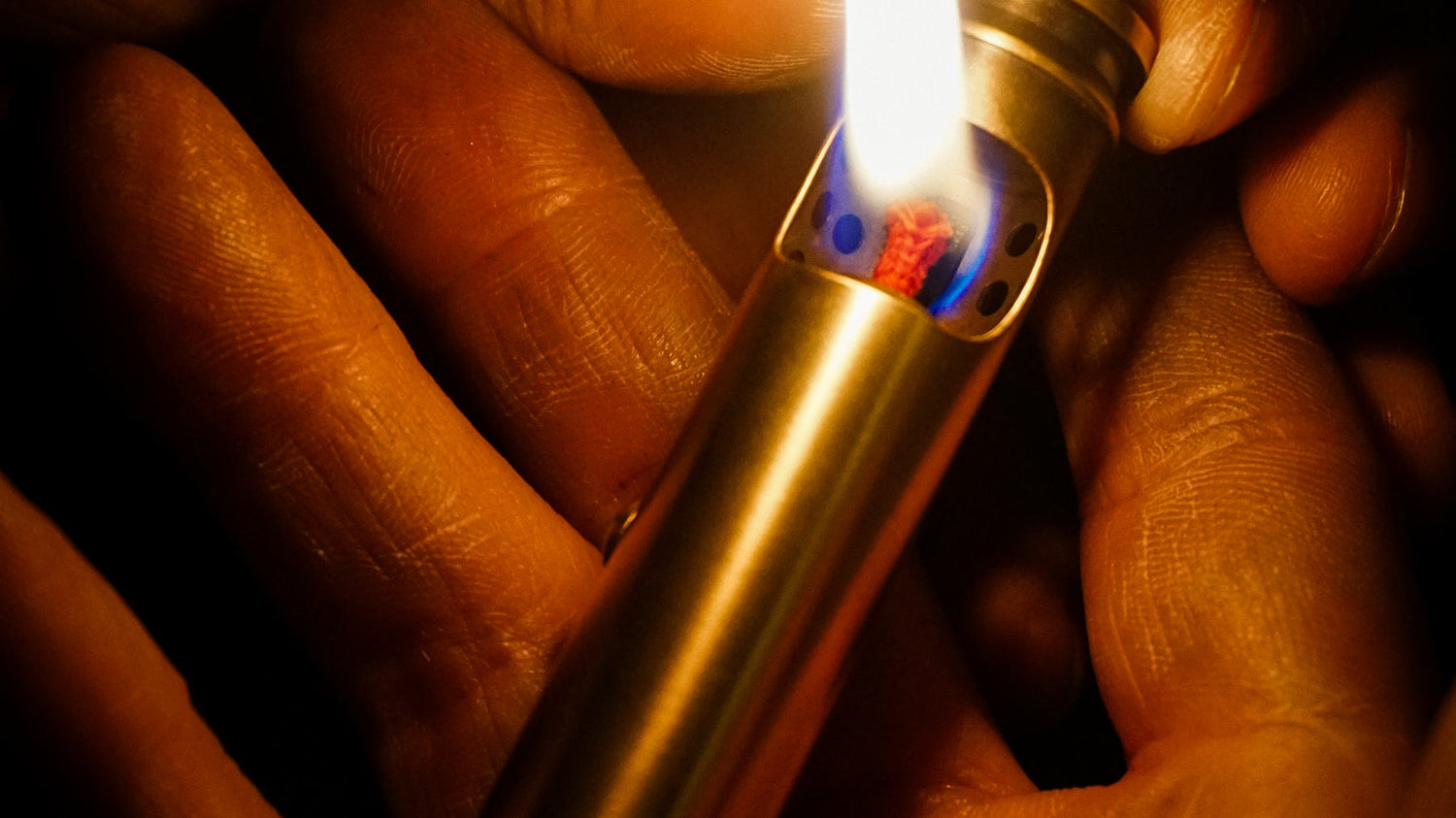
Before shopping, decide what “vintage lighter” means to you
People use vintage lighter for at least two different purchases. One is a genuinely old object with a maker, model, period, marks, condition, and ownership history that can be investigated. The other is a current lighter that borrows an older silhouette, material language, visible mechanism, or ritual. Both can be satisfying. They are not interchangeable, and the right questions are different.
If historical age, rarity, originality, or resale value matters, stop treating the listing title as proof and use the antique lighter identification guide. If what you really want is a strong old-school look with predictable parts and a current warranty or return route, say current vintage-style lighter. That one phrase prevents many expensive misunderstandings.
| What you want | Evidence to require | Main compromise | Best next step |
|---|---|---|---|
| Documented old lighter | Maker, exact model, marks, period references, provenance, original parts, condition. | Uncertain function, specialist repair, scarce parts, and preservation choices. | Identify before cleaning, fueling, restoring, or valuing. |
| Current replica or revival | Current maker page, exact model, fuel, dimensions, warranty, parts, and what historical design is being reproduced. | Historical styling without the age or provenance of an old object. | Judge it as a current product, not an antique. |
| Current vintage-inspired tool | Clear material, mechanism, size, weight, maintenance, replaceable parts, and honest design language. | It may evoke a period without copying one named historical model. | Choose by daily use and serviceability. |
| Decorative collectible only | Accurate description, display stability, material, dimensions, condition, and safe empty state. | May not be suitable or intended for ignition. | Keep display value separate from working value. |
What actually makes a vintage lighter look cool?
“Cool” becomes useful when you can name its source. A dramatic listing photograph can make almost anything look desirable; the design has to hold up in ordinary light and at real pocket scale. Evaluate five things: silhouette, visible motion, material and finish, sound and hand action, and scale.
- Silhouette: rounded flip-top, slim rectangle, exposed lift arm, compact cylinder, table form, or novelty figure. Choose the outline you would recognize without decoration.
- Visible motion: an exposed wheel, lever, lift arm, cap, chain, or sliding mechanism creates mechanical interest. More motion also means more joints and wear points.
- Material and finish: brass, chrome, plating, lacquer, enamel, brushed metal, darkened recesses, and wear tell different stories. Old-looking is not the same as old.
- Sound and action: a lid click, lever snap, wheel resistance, or cap-removal sequence can be part of the appeal. It should still be controllable, safe, and appropriate to the task.
- Scale: oversized looks impressive in photographs; compact often wins in a real pocket. Ask for millimeters and grams.
Decoration comes after these five tests. A skull, crest, pin-up, geometric engraving, or aged surface cannot rescue an awkward grip, unknown fuel, leaking seal, or unserviceable ignition. If brass surface change is your main interest, the narrower vintage brass lighter guide covers finish and patina without taking over this style-and-use question.
Six vintage lighter style families—and who each one suits
| Style family | Why people like it | Check before buying | Usually best for |
|---|---|---|---|
| Windproof flip-top or replica | Recognizable case, one-hand ritual, replaceable insert parts in supported systems. | Exact generation, insert fit, liquid-fuel routine, hinge play, chimney and parts support. | Buyers who want a familiar mechanical pocket format and accept fuel evaporation. |
| Automatic or lift-arm lighter | Visible linkage and a satisfying coordinated opening-and-ignition action. | Lever timing, spring condition, valve or wick system, repair access, and whether the piece is old or a current recreation. | Mechanism enthusiasts who value motion enough to maintain it. |
| Slim rectangular flint-and-gas lighter | Formal proportions, soft flame, controlled pocket profile, luxury finishing. | Correct gas and flint, valve seals, flame adjustment, service network, and weight. | People who prefer a dressier object and model-specific service. |
| Table lighter | Presence, weight, broad decoration area, and a stable place in a room. | Base stability, fuel condition, reach, ventilation, surface protection, and whether anyone actually needs to move it. | Known desks, bars, studies, or display settings—not casual pocket carry. |
| Novelty or figural lighter | Humor, sculpture, conversation, or theme collecting. | Maker, safe operation, hidden controls, heat path, damaged decorative parts, and whether the mechanism is secondary. | Collectors who accept that display appeal may exceed practical value. |
| Shell-, trench-, or tool-inspired current form | Industrial silhouette, brass weight, visible mechanism, and workshop character. | Whether material claims are literal or inspired, exact fuel system, dimensions, seals, wheel, wick, parts, and carry method. | Buyers who want a mechanical vintage mood in a current serviceable object. |

Match the vintage lighter mechanism to the job
Style does not tell you the fuel. A wheel can ignite vapor from a liquid-fuel wick or released butane. A lever can combine opening, fuel release, and ignition. An electric arc may appear in a retro case without any flint or flame. Identify the filler, reservoir, wick or burner, ignition assembly, air path, and shutoff before deciding what maintenance the lighter needs.
Liquid-fuel wick systems suit people who enjoy mechanical simplicity and replaceable consumables, but fuel can evaporate and odor may matter. Butane soft flames can be cleaner to refill and easier to adjust, but valves and seals are model-specific. Jet flames solve wind and heat tasks but usually do not feel historically faithful and can be excessive for close lighting. Electric systems remove liquid fuel but change the sound, flame, weather behavior, and charging routine.
For wheel, flint, wick, spring, and fuel symptoms, use the flint lighter troubleshooting guide. A vintage look is never permission to improvise with unknown fuel or parts.

Choose pocket size from measurements, not product photography
A lighter photographed alone can look compact even when it is heavy or tall. Get the height, width, thickness, and weight, then compare them with an object you already carry. Include any chain, cap, protruding lever, or case in the real footprint. A smooth cylinder can move differently in a pocket than a flat rectangle of the same weight.
Ask where it will live. A front pocket favors compact dimensions and controlled edges. A jacket can tolerate more height but not leakage. A bag needs a cap or control that cannot activate against other objects. A desk can support a heavier table piece. If the answer is “mostly display,” stop pretending carry is part of the requirement.
Also check grip. Small can be discreet but harder for large hands or limited dexterity. Heavy can feel substantial in a five-second demonstration and tiring after a day. A chain may prevent loss but adds movement and snag risk. There is no universally masculine, luxurious, or premium size; there is only a size that fits the owner and task.
Current vintage-style lighter examples from established makers
This is a map, not a winner list. Current availability, finishes, fuels, and service terms change, so the maker page must be checked again at purchase time.
- Zippo replica and vintage-case families: useful when you want a current windproof pocket lighter with explicit lineage and an established insert format. A current replica is still a new product, not a period antique.
- Ronson Nostalgia: a current maker-named retro direction for buyers attracted to classic Ronson styling. Confirm the live regional page, exact fuel, ignition, and service options.
- Thorens current mechanical recreations: relevant when lever motion and historic mechanical theater are the main appeal. Treat each recreation as a current model and verify its specific service route.
- S.T. Dupont Ligne 2: a continuing luxury mechanical family for buyers who prioritize formal proportions, finish, sound, and brand service. It represents a very different budget and ownership path from an unknown vintage-market find.
- Unbranded marketplace pieces: sometimes visually interesting, but the seller must supply fuel, ignition, dimensions, materials, parts, and return information. Low price does not compensate for an unidentified pressure system or misleading age claim.
Good recommendations include an exit. Choose an authenticated old object if provenance is the point. Choose a current replica or revival if named historical styling plus current support is the point. Choose a current original vintage-inspired form if daily use, parts, and honest construction matter more than copying a famous case.
What photos and answers should an online listing provide?
- Front, back, both sides, top, and base. One dramatic angle cannot show hinge play, filler, valve, markings, damage, or proportion.
- Open mechanism. Ask for the wheel, wick or burner, chimney, lever, valve, reservoir access, and any insert removed only when the maker permits it.
- Exact dimensions and weight. “Mini,” “pocket,” and “heavy-duty” are marketing words until measured.
- Fuel and ignition. Require plain language: liquid lighter fuel with wick and flint, butane with flint or piezo, electric arc, or display-only.
- Condition under neutral light. Distinguish patina from corrosion, finish variation from plating loss, and decorative distressing from structural cracks.
- Parts and repairs. Ask what was replaced, whether compatible consumables are available, who services it, and whether the listing includes tools or spares.
- Age evidence. For an old item, request maker, model, marks, date system, provenance, and comparable configurations—not “estate,” “rare,” or “WWII style” alone.
- Return and shipping terms. Confirm empty-fuel state, destination rules, inspection window, and what happens if the mechanism differs from the description.
Judge condition, repairability, and style as three separate things
A lighter can look excellent and be mechanically poor. It can look worn and work correctly. It can be original but unsafe, restored but usable, or beautifully styled yet impossible to service. Score these separately:
- Visual condition: finish, plating, dents, cracks, engraving, lacquer, enamel, patina, and corrosion.
- Mechanical condition: wheel, flint pressure, lever timing, hinge, cap, valve, wick, burner, shutoff, reservoir, and seals.
- Repairability: documented disassembly, standard consumables, model-specific parts, qualified service, and clear warranty or return path.
- Historical originality: period-correct parts, finish, marks, repairs, and provenance. This matters to collecting, not automatically to daily usefulness.
Do not polish an old brass lighter merely to make it look “cooler.” Cleaning can erase marks, plating, patina, and evidence. Conversely, do not romanticize active corrosion, fuel residue, or failing seals as character. Preservation and operation are different projects.
Use three questions to shorten a long vintage lighter shortlist
- Is this meant to be history, a tool, or both? History raises the evidence and conservation standard. A tool raises the reliability, fuel, parts, and carry standard.
- Which one action creates the appeal? Choose the lid click, exposed wheel, lift arm, soft flame, compact cylinder, table presence, or sculptural shape. Do not pay for five competing ideas if one defines the attraction.
- What maintenance will you actually do? Be honest about refilling, flints, wick, seals, charging, specialist service, and storage. The best-looking lighter is the wrong one if its routine will be ignored.
After these answers, compare no more than three exact models. Put dimensions, weight, fuel, ignition, replaceable parts, current support, and total cost in one small table. That is more useful than opening another hundred marketplace thumbnails.
When does a current compact brass vintage-style lighter fit?
A current compact brass model makes sense when the buyer wants the mood of an older mechanical object but not the provenance risk, scarce parts, or preservation choices of an antique. It should be described as current, with exact material, mechanism, dimensions, maintenance, included parts, and exclusions.
The broader WEDO Craft finishes collection is appropriate only after the finish-and-size direction is settled. It is not an authority on historical antiques, and the product below is not presented as one.

Current vintage-inspired form · 77 × 17 mm · About 80 g
Small Classic
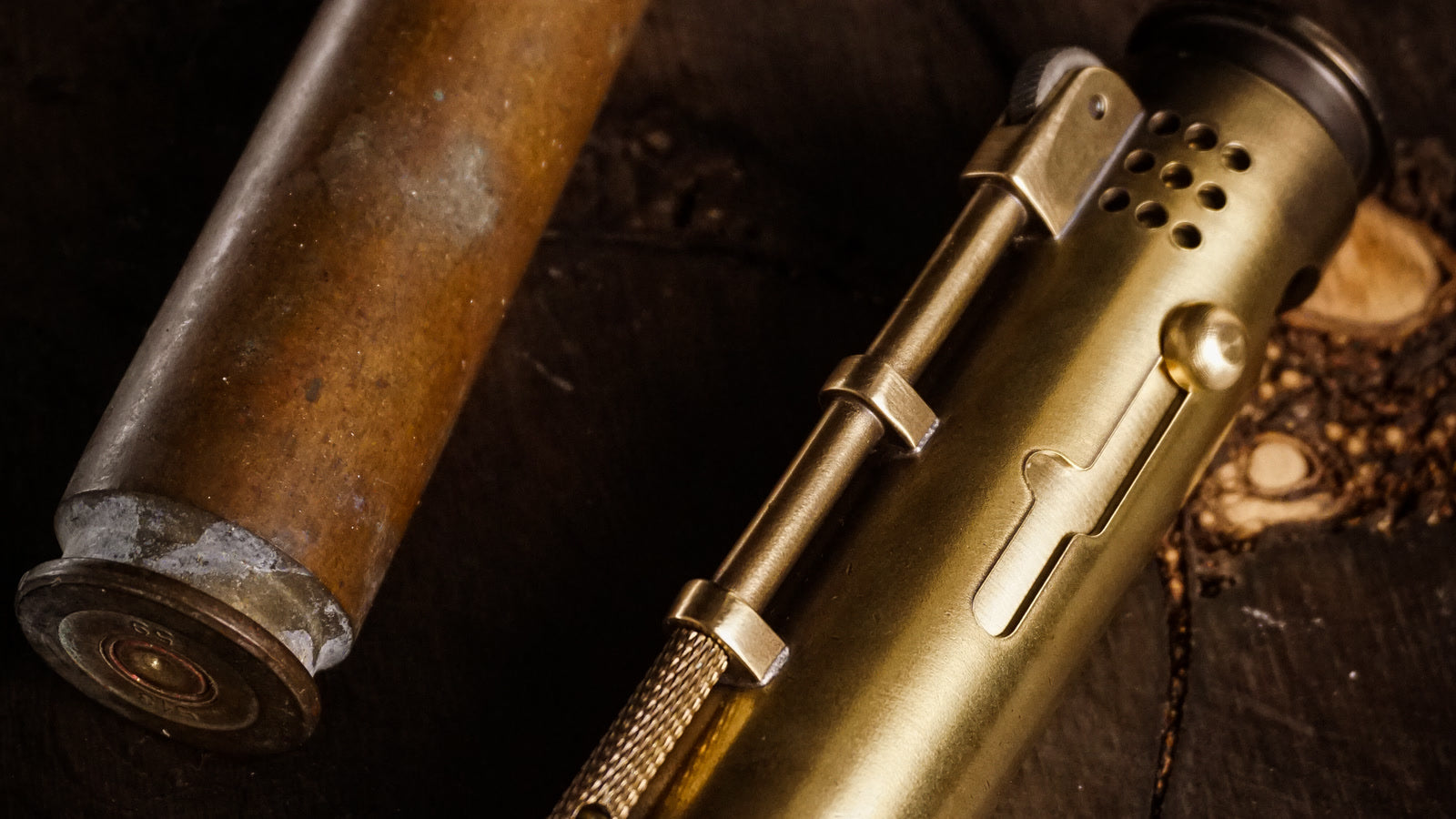
This current compact WEDO lighter uses a machined solid-brass body inspired by .338 cartridge proportions. The live page lists liquid lighter fuel, a replaceable wheel, flint, wick, cotton, O-ring, springs and chain, an accessory pack, and shipment without fuel.
Best for: an adult who has already chosen a compact current tool with a clean vintage silhouette, real brass feel, visible service parts, and a maintenance routine. It is not a documented antique, a replica of a named historical model, a butane torch, or a maintenance-free lighter.
Check the current size, mechanism, and included partsCool vintage lighter FAQ
What makes a lighter look vintage?
Usually a combination of silhouette, visible mechanical action, metal surface, restrained decoration, proportions, and the ritual of opening or striking it. None of those proves age. A current lighter can be vintage-inspired, while a genuinely old lighter may look plain. Describe style and date separately.
Is a vintage-style lighter the same as an antique lighter?
No. Vintage-style describes design language. Antique and vintage are age claims that need maker, model, marks, period records, and provenance. If historical authenticity matters, use the antique identification process before fueling, cleaning, restoring, or valuing the object.
Which vintage lighter style is best for everyday carry?
The best everyday-carry option is the one whose size, weight, fuel, ignition, leak control, and replacement parts match your routine. A compact serviceable current lighter is often easier to own than an unidentified old object. Measure a similar item and verify the exact model rather than trusting “pocket-size.”
Are old lighters safe to use?
Age alone cannot answer that. Unknown fuel, damaged seals, corrosion, seized parts, brittle packing, cracks, or incorrect repairs can make an old lighter unsafe. Do not fuel or ignite an unidentified example. Valuable, leaking, cracked, pressurized, or modified pieces should be inspected by a qualified specialist.
Are vintage lighter brands still making old-style designs?
Some makers currently sell replicas, revivals, or long-running mechanical families. Zippo markets replica and vintage-case designs, Ronson has used the Nostalgia name, Thorens sells current mechanical recreations, and S.T. Dupont continues the Ligne 2 family. Availability and specifications change, so verify the current maker page.
What should I ask before buying a vintage lighter online?
Ask for the exact maker and model, all-side and base photos, ignition and fuel type, dimensions, weight, leaks or odor, damage, replaced parts, working status, repair history, what is included, and return terms. For an old object, request provenance and sold-comparable evidence separately from the seller’s description.
Is brass always the best vintage-looking material?
No. Brass develops visible surface change, but plated steel, chrome, lacquer, silver finishes, enamel, and other materials define many authentic historical designs. Choose by corrosion behavior, maintenance, grip, weight, and the specific form you like—not by a rule that all vintage-looking lighters must be brass.
Can I take a vintage lighter on a plane?
Travel rules depend on fuel, design, route, carrier, and jurisdiction, and they change. Never assume that an empty or collectible lighter is automatically permitted. Check the current rules from the airline, departure airport, destination, and relevant transport authority before packing it.
Sources and verification notes
This guide checked the current first-page pattern for “cool vintage lighters,” current maker pages, the live WEDO product and collection pages, and separate WEDO guides for antique evidence and flint mechanisms. Exact inventory, price, travel rules, and service terms can change.
- WEDO — Small Classic — Current verified model, construction, dimensions, weight, fuel system, replaceable parts, accessory pack, and no-fuel shipment.
- WEDO — Craft Styles — Current finish, size, and handmade-surface options for the collection target.
- Zippo — Current Lighter Families — Current maker reference for replica and vintage-inspired case families; not evidence that a new item is antique.
- Ronson — Nostalgia — Current maker-named retro example; exact availability and specifications remain volatile.
- Thorens — Current Mechanical Lighters — Current mechanical-recreation example; verify the live model before purchase.
- S.T. Dupont — Ligne 2 — Current luxury mechanical family used only as a neutral category example.

Leave a comment
This site is protected by hCaptcha and the hCaptcha Privacy Policy and Terms of Service apply.