
What is a luxury lighter?
Luxury is a relationship between the object and the owner, not a finish swatch. A lighter can look impressive in a photograph yet become disappointing if it is awkward to carry, difficult to fuel, unsupported when a seal fails, or wrong for the flame the owner needs. The useful definition therefore begins with a resolved tool: ignition is predictable, shutoff is dependable, controls make sense, and the body supports the mechanism rather than merely covering it.
Then the object layer matters. Materials should be accurately named. Edges, joints, hinges, wheels, valves, inserts and surface transitions should look intentional. The visual language should continue around the object instead of concentrating on one camera-facing panel. Finally, ownership must be considered: instructions, consumables, parts, warranty or service, provenance and realistic wear behavior all affect whether a premium object remains satisfying.
If baseline quality is the unresolved question, use the high-quality lighter checklist first. Luxury begins only after the lighter is appropriate and competently made.
Luxury lighter vs premium, high-quality, collectible and vintage
| Term | What it describes | What it does not prove | Useful buying question |
|---|---|---|---|
| High quality | Reliable function, controlled construction and credible support. | Status, rarity, precious material or personal meaning. | Does it perform its intended job consistently? |
| Premium | A position above a maker’s standard range, often with added finish or features. | That the upgrade matters to this buyer. | What specifically improves over the standard model? |
| Luxury | A resolved combination of function, materials, craft, design, service and ownership experience. | Universal superiority or good value for every user. | Which qualities justify the premium over years of ownership? |
| Collectible | Demand linked to rarity, edition, condition, story or market interest. | Daily usability, serviceability or even working condition. | Am I buying an object to use, preserve or resell? |
| Vintage or antique | Age and historical context. | Authenticity, safety, restoration quality or luxury. | Who verified the model, condition and repairs? |
These categories overlap, but they are not synonyms. A simple lighter can be extremely well made without being luxurious. A precious-metal collectible can be expensive while being inconvenient to use. A vintage lighter can have important design history yet require specialist restoration. Clear terms prevent a buyer from paying for one kind of value while expecting another.
Start with the job before the brand
The phrase “best luxury lighter” is incomplete until the job is known. A pocket lighter, cigar torch, table object, gift and collectible face different constraints. Use determines flame, size, fuel, controls and maintenance; it should be settled before material and decoration.
| Intended job | Prioritize | Accept only deliberately | Common mismatch |
|---|---|---|---|
| Everyday pocket use | Comfort, reliable shutoff, accessible fuel, simple controls and durable finish. | Extra weight, large capacity or a finish that records wear. | Buying a heavy display piece because it looks substantial online. |
| Cigar lighting | Suitable flame width and heat, wind performance, capacity and heat management. | More maintenance or a larger body when the job requires it. | Choosing a soft flame for wind or an aggressive torch for delicate tasks. |
| Desk or table use | Stable base, satisfying controls, visual presence and safe placement. | Mass that would be uncomfortable in a pocket. | Paying for portability that will never be used. |
| Gift | Recipient’s habits, fuel access, maintenance tolerance, style and clear return/service path. | Personalization only after the model is confirmed. | Choosing symbolism or engraving before usability. |
| Collection | Documented model, condition, provenance, originality and storage needs. | Limited daily function if preservation is the goal. | Assuming rarity proves authenticity or working condition. |
If the ignition categories themselves are unfamiliar, the types of lighters guide provides the broader map. Do not let a luxury finish disguise a wrong mechanism.
The eight tests that make a luxury lighter credible
1. Function is resolved for the intended use
The lighter should ignite, control its output and shut off in the way its category requires. Luxury cannot compensate for unpredictable ignition, a confusing control sequence, poor heat management or a body that interferes with the mechanism. Ask to see the exact model in operation and read its instructions before treating cinematic product photography as evidence.
2. Materials are named honestly
“Metal,” “premium alloy” and “luxury finish” say little. Useful specifications identify the body, major working components and surface treatment. Solid brass, plated brass, lacquered metal and precious-metal work can all be legitimate, but they wear differently and have different repair implications. Ask what the visible surface is, what lies beneath it and how normal wear should appear.
3. Craftsmanship survives close inspection
Look where marketing images usually avoid: seams, insert fit, hinge movement, valve area, wheel alignment, base, corners and transitions between finishes. Handwork may create legitimate variation, but variation should be intelligible and controlled. It should not excuse sharp burrs, rubbing parts, unstable bases or inconsistent clearances. For a fuller production comparison, see handmade versus mass-produced lighters.
4. The design is coherent rather than decorated
A coherent lighter connects proportion, grip, control placement, sound, resistance and surface. Decoration should respect the available area and the moving parts. A crowded motif, oversized emblem or finish that makes the control slippery can reduce the object’s quality even when the decoration is expensive.
5. The tactile ritual is purposeful
Luxury often lives in repeated contact: the weight entering the hand, the resistance of a wheel, the sound of a cap, the visibility of a soft flame or the focused response of a jet. These are real ownership qualities, but they remain subjective. Test them against the recipient’s strength, dexterity, noise preference and routine instead of assuming heavier or louder is better.
6. Service and parts extend the ownership story
A refillable lighter is not automatically sustainable or luxurious. It gains long-term value when consumables and common wear parts can actually be identified, obtained and fitted. Instructions, a service contact, repair scope and realistic exclusions matter more than “built for life” language without a path for the next flint, wick, seal, valve or battery.
7. Provenance and authenticity are appropriate to the claim
A current production model needs a trustworthy seller, correct specifications and a support path. A limited edition or vintage object needs more: model references, serial conventions where applicable, condition disclosure, repair history and specialist inspection. The evidence should become stronger as scarcity and price claims increase.
8. The owner will use or value what the premium buys
The final test is personal. If the buyer dislikes refueling, avoids heavy pocket objects or wants a finish that never changes, a substantial brass wick lighter may be a poor match. If the buyer enjoys patina, routine maintenance, visible hand-finishing and mechanical replacement parts, the same traits can be central to the experience. Luxury without fit becomes storage.
Luxury cigar lighter vs soft flame, wick and electric designs
Choose the heat and operating behavior before the surface. A butane soft flame is visible and familiar, with a gentler heat profile for many routine tasks. A jet or torch concentrates heat and usually handles wind better, which can suit cigars and outdoor use, but it demands respect for heat, vents and adjustment. A liquid-fuel wick lighter has its own visible flame and mechanical ritual, while adding evaporation, odor, wick care and refueling. An electric arc avoids liquid fuel but introduces charging, battery aging, electrode cleaning and electronic service questions.
No type is inherently the luxury winner. The best luxury lighter for everyday use is the one whose operating demands are easy for that person to meet. Maximum flame power, fuel capacity or mechanical complexity is not a universal upgrade.
Luxury lighter materials: look beyond the label
Brass is popular because it machines well, can feel substantial and develops patina. Lacquer can create depth, color and fine surface effects. Plating expands finish options. Precious metals add intrinsic material value and rarity. None of these choices proves alignment, ignition or service. A thin decorative layer over a weak mechanism remains weak; a restrained material executed well can be more satisfying.
Ask five material questions: Is the material solid, plated, coated or inlaid? Which parts use it? How will it wear at edges and controls? Can the finish be repaired? Does the maker present natural variation as variation, or use it to excuse damage? Hammering, engraving, guilloche, lacquer and polishing should be evaluated as processes with visible consequences, not magic words.
How to inspect luxury lighter craftsmanship
Study straight-on and side views. The mechanism should sit cleanly in the body. Moving parts should clear adjacent surfaces. The base should be stable for its intended use. Hammer marks or other hand-finished textures should have an intentional rhythm; they need not be identical, but their depth and placement should make sense across the object. Raised areas may polish faster while recesses retain contrast—normal wear should be described before purchase.

Inspect functional zones more strictly than decorative zones. A surface variation can be desirable; a misaligned wheel, damaged seal, loose insert or rough control is not. If the seller cannot show the exact model, request clear photographs and specifications rather than inferring construction from brand reputation.
Size, weight and ownership fit
Luxury imagery often removes scale. Dimensions and weight restore it. Mark the stated measurements on paper, compare them with an object already carried, and decide where the lighter will live. A 175 g object can feel reassuring on a desk and burdensome in a pocket. A narrow body may fit the hand beautifully yet hold less fuel. The correct compromise depends on the routine.

Size also affects engraving, texture, control spacing and heat perception. Do not choose a larger model solely to create more decoration area. Choose it when capacity, grip, visual presence or table use justifies the extra volume and mass.
Refillable luxury lighter service, repair and ownership cost
The purchase price is only the first ownership cost. Add the correct fuel or charging routine, flints, wicks, seals, batteries, cleaning, shipping to service, specialist labor and the risk that proprietary parts disappear. A good seller states what the owner can replace, what requires service, and what misuse or finish wear is excluded.
Before fueling a new lighter, compare the received model with the listing and inspect for impact, cracks, sharp burrs, loose parts, damaged seals or blocked vents. Follow the exact maker procedure in a safe, ventilated area away from flammables. Stop if fuel is visible or smelled, the body heats abnormally, ignition continues unexpectedly, or shutoff fails. For WEDO-specific models, use the WEDO usage and care guide.
How to authenticate a luxury lighter without trusting packaging
Authentication is brand- and model-specific. Start with the maker’s reference images and documentation, then compare dimensions, mechanism, finish, markings, serial rules where they exist, packaging as secondary evidence, seller history and repair records. A copied box or card cannot validate the lighter inside it. For high-value vintage pieces, use an authorized or recognized specialist rather than a generic online checklist.
Also separate originality from condition. A genuine lighter may contain later service parts; an untouched lighter may be unsafe or nonfunctional; a restored lighter may be excellent but less original. The seller should disclose that distinction. This guide mentions vintage only to prevent category confusion; the dedicated antique-lighter guide should handle dating, restoration and collecting in depth.
How to choose a luxury lighter as a gift
Begin with the recipient’s existing behavior. Do they already carry a lighter, light cigars outdoors, use a desk object, enjoy patina, or maintain mechanical tools? Can they easily obtain the specified fuel? Would weight, smell, sound or a forceful control bother them? A gift should remove friction, not assign a new maintenance hobby.
Personalize only after the model is right. Confirm spelling, layout, available engraving area, permanence and approval before production. Keep important identifiers and working zones clear. If the recipient’s taste is uncertain, a returnable, unengraved model with a thoughtful note can be more considerate than an irreversible design chosen for them.
When the WEDO Extra Large Hammered model fits
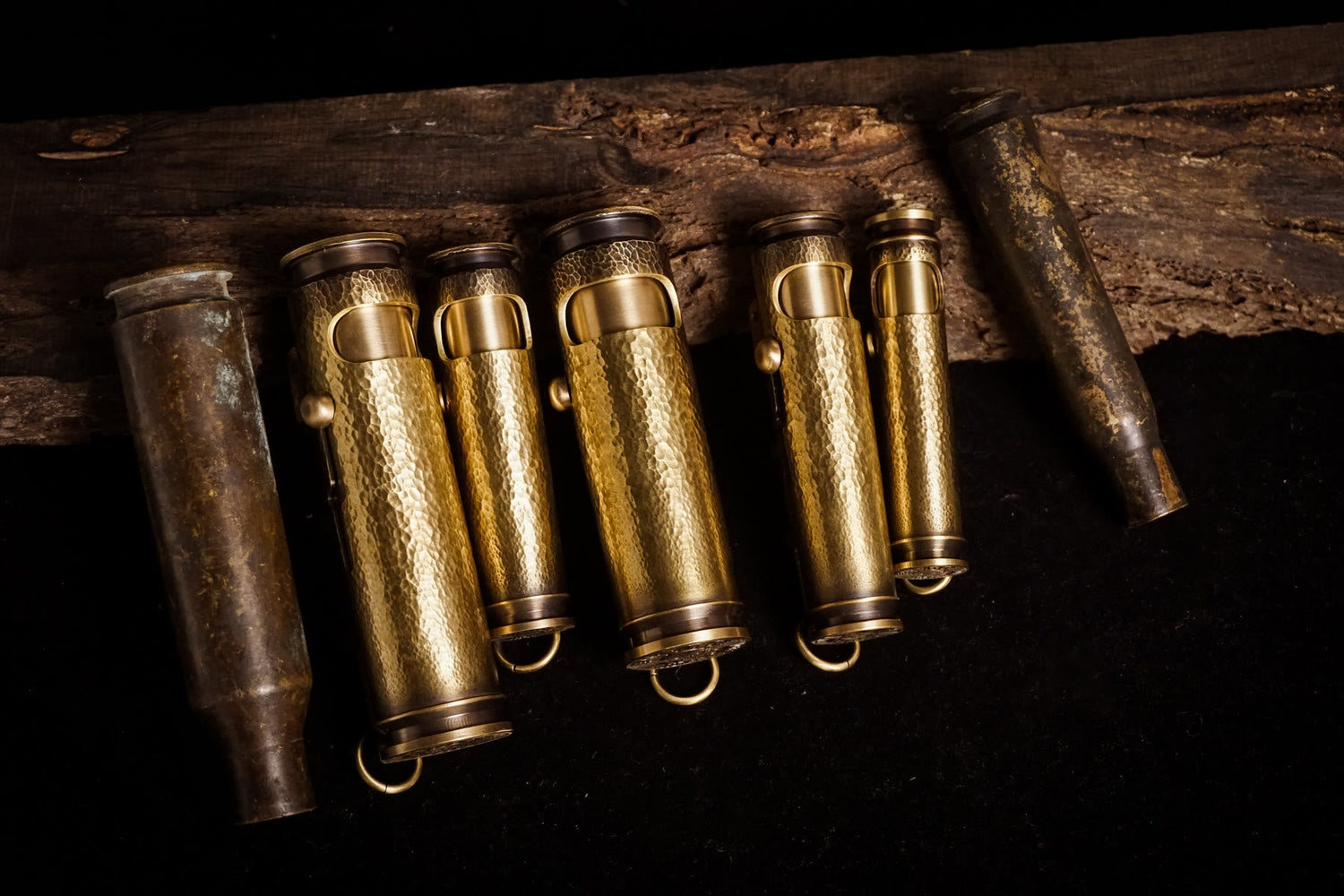
After the neutral checks, one WEDO model illustrates how concrete facts should support a decision. The Extra Large Hammered uses a repurposed 14.5 × 114 brass casing, measures 97 × 27 mm and weighs about 175 g. It ships without fuel. The current model information lists replaceable wheel, flint, wick, cotton, O-ring, flint spring, insert spring and chain. Its hammer marks are individually finished, so surface rhythm and depth vary while raised areas and recesses develop different contrast over time.
Those facts make it relevant for an adult who deliberately wants a substantial wick lighter, accepts lighter-fluid care and values visible material variation. They do not make it the best choice for a light pocket carry, zero-maintenance use, jet-flame task or perfectly uniform finish.

Extra Large · Hammered brass · Repairable wick system
Extra Large Hammered Brass Lighter
Real 14.5 × 114 brass casing · 97 × 27 mm · about 175 g · ships without fuel · replaceable working and wear parts listed on the verified model page.
Best for: a buyer who wants weight, tactile hammering, a wick-flame ritual and a maintenance path.
Check the verified model specificationsTwelve questions before you buy a luxury lighter
- What exact job must it perform?
- Which ignition and fuel system fits that job?
- Do the dimensions and weight fit its real storage and carry?
- What exact materials and surface treatments are used?
- Which details show controlled craftsmanship?
- How should the finish wear or develop patina?
- What consumables and wear parts are available?
- What repairs require a service center?
- Who supports warranty, returns and service?
- What evidence supports authenticity or rarity?
- What does the premium improve over a simpler model?
- Would I still choose it without the luxury label and packaging?
Frequently asked questions
What is a luxury lighter?
A luxury lighter is a well-resolved tool and object whose function, materials, construction, design, service and ownership experience support its premium position. Price or a famous name can be part of the story, but neither proves reliable ignition, thoughtful finishing, repair support or personal fit.
Are luxury lighters worth it?
They can be worth it when the buyer will use or appreciate the exact qualities being paid for: mechanism, finish, tactile ritual, repairability, provenance or design. They are poor value when the premium mainly buys packaging, status language or features that do not match the intended job.
Is every expensive lighter a luxury lighter?
No. Scarcity, precious materials, auction demand or branding can raise price without improving use, repair or finish. Treat price as a claim that needs evidence. Ask what becomes better, rarer, more maintainable or more meaningful, and whether that difference matters to you.
What is the best luxury lighter for everyday use?
The best everyday choice is the lightest, simplest model that still delivers the flame, wind resistance, capacity and service path you need. Pocket comfort, reliable shutoff, fuel availability and parts matter more than display value. A heavy statement piece may be luxurious yet wrong for daily carry.
Is a luxury cigar lighter different from a soft-flame lighter?
Usually. Cigar-focused jet lighters prioritize concentrated heat, wind performance and sometimes multiple flames. Soft-flame lighters prioritize visible flame, gentler heat and a different ritual. Luxury cannot erase that functional difference, so choose the ignition job before choosing the finish.
Which material is best for a luxury lighter?
There is no universal best material. Brass develops patina and can feel substantial; lacquer supports color and depth; plated metals offer finish options; precious metals add scarcity and material value. Construction, thickness, finishing, wear behavior and repair access matter more than the material label alone.
How do I authenticate a luxury lighter?
Use the maker or an authorized specialist for the exact brand and model. Compare model references, dimensions, mechanism, markings, serial conventions, packaging only as supporting evidence, seller history and available service records. No generic checklist can authenticate every brand, and packaging alone is easy to copy.
Does handmade automatically mean luxury?
No. Handwork becomes meaningful when it creates controlled detail, functional fit, identifiable variation or serviceable construction. Uneven alignment, rough moving parts or missing specifications are not elevated by the handmade label. Compare visible execution and ownership support, not the production adjective.
Sources and method
This guide reviewed ten different current organic results for “luxury lighter,” including best-of lists, brand collections, heritage pages, prestige retailers and collectible coverage. It also checked a general lighter-safety standard page, current WEDO model information and WEDO care guidance. It is a buying framework, not a certification, appraisal, authentication opinion or substitute for model instructions.
- ISO 9994:2018 — Lighters — Safety specification — general context only; no WEDO certification claim.
- S.T. Dupont Lighters — current luxury presentation, materials and mechanisms.
- Dunhill Lighter History — heritage and design context.
- WEDO Extra Large Hammered — verified current model facts.
- WEDO Usage and Care — fuel, first-use and maintenance path.

Leave a comment
เว็บไซต์นี้ได้รับการคุ้มครองโดย hCaptcha และมีการนำนโยบายความเป็นส่วนตัวของ hCaptcha และข้อกำหนดในการใช้บริการมาใช้