
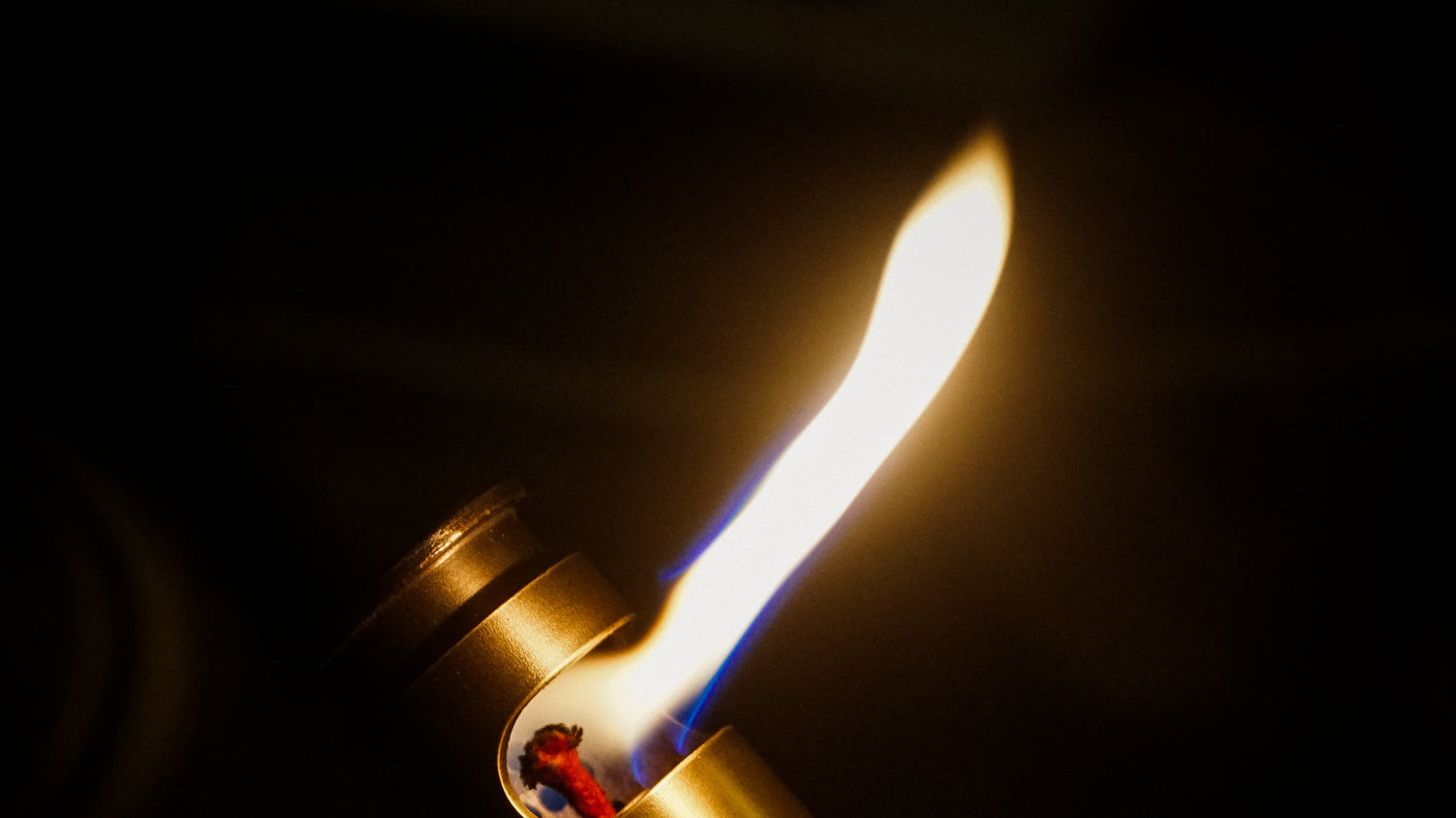
A lighter can last from days to decades because “last” can mean four different things: fuel per fill, ignitions per lighter, time in storage, or total service life. Disposable models end when their fixed fuel or igniter is spent. Refillable fuel and electric models can serve for years, but tanks, batteries, flints, wicks, seals, and valves wear at different rates. Estimate each clock separately and follow the exact model instructions.
People asking how long do lighters last are often comparing unlike numbers. One answer may describe a disposable lighter’s fixed fuel, another the days between wick-lighter refills, and another the years before a repairable body needs major service.
Start with four different lifespan clocks
A lighter does not move from “new” to “dead” on one schedule. Fuel, ignition parts, seals, and the body can reach their limits at different times. Use the following framework before accepting any quoted lifespan.
| Lifespan clock | What it measures | Best evidence | What can shorten it |
|---|---|---|---|
| Fuel or charge per fill | Total usable flame or arc before refilling or recharging | Maker capacity, tested burn time, fuel window, or charge indicator | High flame, long holds, leakage, cold starts, repeated failed attempts |
| Ignitions per lighter | How many normal lighting cycles a disposable model or consumable can produce | Model-specific maker testing and the user’s real cycle length | Dry striking, long flame duration, wind, oversized targets, rough wheel use |
| Storage reliability | Whether an unused lighter remains safe and ready after elapsed time | Inspection, storage conditions, seal condition, battery state, maker instructions | Heat, sunlight, moisture, impact, corrosion, fuel evaporation, self-discharge |
| Total service life | How long the body and mechanism remain safely usable with maintenance | Parts availability, serviceability, repair support, condition history | Valve or seal wear, battery aging, corrosion, deformation, unsafe modification |
This distinction prevents the common mistake of calling a refill “the lighter’s life.” A refillable body may outlast hundreds of fuel cycles, while a non-refillable body ends with its fixed reservoir. An electric lighter may have a short interval between charges but a much longer device life until battery capacity or electronics decline.
Estimate ignitions from real use, not a universal average
How long does a disposable lighter last with daily use?
Start with a claim for the exact model, then divide by your actual daily ignition count. BIC’s current U.S. FAQ says a full-size BIC lighter can provide up to 3,000 lights and also says its pocket and multi-purpose lighters are non-refillable. That model-specific claim is not universal.
If a model is rated for 3,000 normal lights and a person uses ten short ignitions per day, simple division gives 300 days. That arithmetic answers how long does a disposable lighter last only under the assumed test and behavior. Holding a flame for several seconds, relighting in wind, using it on damp tinder, or repeatedly striking without ignition can consume fuel or ignition life much faster. Losing or damaging the lighter can end its practical life earlier still.
How many lights can I get from one lighter or one refill?
For how many lights in a lighter, use maker-tested counts when the exact model publishes them. When no reliable count exists, estimate rather than invent precision:
- Measure or obtain the model’s usable lighter burn time per fill.
- Record the average seconds of flame actually required for your normal task.
- Divide total usable burn seconds by seconds per ignition.
- Reduce the result for failed starts, wind, high flame settings, leakage, and model-specific reserve limits.
A candle wick that catches in one second and a grill task that holds flame for eight seconds should not be counted as equivalent “lights.” The estimate is useful for planning, but safety limits and the exact maker instructions still control. Do not run a lighter continuously to discover its maximum; that can overheat the body and creates a result unlike normal use.

Compare fuel life and body life by lighter type
Disposable butane: fixed fuel and a fixed body
A disposable lighter lasts until its factory fuel, flint or electronic igniter, wheel, valve, or body reaches its limit. The days-to-empty result depends on ignition count and flame duration. A fuel window can show remaining liquid, but it cannot prove that the valve, spark, or child-resistant mechanism is healthy. A non-refillable body must not be drilled, punctured, heated, frozen, or fitted with an improvised valve when empty.
Refillable butane: short fill cycles inside a longer mechanism life
The answer to how long does a butane lighter last should separate one tank from the lighter body. A tank may provide days or weeks for one user and far less for another, depending on capacity, flame setting, jet count, task, temperature, and leakage. The body may serve for years if the valve, seals, ignition, burner, and controls stay sound and the correct fuel and service remain available.
Likewise, how long do refillable lighters last cannot be answered only by counting refills. A leaking valve, cracked reservoir, damaged burner, or control that will not shut off ends safe service even if the tank still accepts fuel. Follow the exact filling procedure in how to refill a lighter safely; repeated topping-off is not a repair.
Liquid-fuel wick lighters: evaporation, use, and replaceable parts
How long does lighter fluid last in a wick lighter between refills?
There is no honest universal interval. Liquid fuel is consumed while burning and can also leave the packing gradually through evaporation. Lid fit, insert fit, ambient temperature, pocket warmth, air movement, elapsed days, flame duration, and frequency of use all affect how long does lighter fluid last in a lighter. A user who lights it rarely may still need to refill because calendar time passed; another may consume the same fill through frequent short flames.
When people ask how long does a Zippo-style lighter last, they may mean the fuel interval or the metal body. Those are different. A serviceable flint-and-wick body can remain useful for years when compatible fuel, flints, wicks, packing, springs, seals, and skilled service remain available. Its open-wick fuel interval is normally much shorter than that body life. A tight fit can delay evaporation but does not make a wick system a sealed butane tank.
Electric arc lighters: charge life versus battery life
For how long do electric lighters last, separate activations per charge from battery service life. Arc duration, electrode spacing, safety timers, temperature, battery capacity, and task difficulty affect each charge. Rechargeable batteries also self-discharge and eventually lose the ability to retain a full charge. Current Zippo rechargeable candle-lighter guidance recommends charging before extended storage, refreshing the battery at least every three months, keeping electrodes clean with a non-metallic tool, and retiring a damaged or abnormally hot unit.
The body may be fine when one consumable has ended
Fuel is only one limiting component. A flint, wick, wheel, battery, valve, O-ring, spring, or electrode can set the next maintenance date. Parts do not share a universal replacement interval because materials, pressure, strike force, heat, contamination, and design vary.
How can I tell whether the fuel, flint, wick, valve, or battery has run out?
| Observation | Likely branch | Safe next step |
|---|---|---|
| Reliable spark but no flame | Fuel empty, fuel delivery blocked, temperature issue, or burner fault | Check the maker’s fuel indicator and instructions; do not keep releasing gas |
| No spark and the wheel turns normally | Flint may be consumed, stuck, or incorrectly installed | Let the lighter cool and follow the approved flint service path |
| Wheel binds or teeth are badly worn | Wheel, axle, flint tube, or debris problem | Stop forcing it; inspect only as the maker permits |
| Wick is deeply charred, short, loose, or will not feed fuel | Wick or packing maintenance | Extinguish, cool, and use the exact wick instructions |
| Hissing, fuel smell, wetness, bubbles, or rapid pressure loss | Valve, seal, overfill, or reservoir problem | Do not ignite; move away from ignition sources and remove from service |
| Low-charge indicator, weak arc, or sharply reduced cycles | Charge depleted, electrodes dirty, cable fault, or battery aging | Use the approved charger and cleaning method; retire abnormal batteries |
This is why how long does a lighter flint last cannot be reduced to months. A light striker and brief normal use may preserve it; repeated dry striking and high pressure consume it faster. Replace only with the specified size. The same applies to how long does a lighter wick last: a correctly fueled wick that is trimmed only when needed can serve far longer than one repeatedly burned dry, over-trimmed, or exposed to the wrong fuel.


Storage time is not the same as emergency readiness
For how long can a lighter be stored, condition matters more than a calendar promise. Sealed butane models may retain fuel for long periods, yet seals, wheels, valves, and child-resistant parts can still age or corrode. Wick fuel may evaporate. Rechargeable batteries self-discharge and lose capacity, especially with heat. Moisture can affect flints, steel parts, electrodes, and contacts.
Store the exact product as its maker directs, away from heat, intense sunlight, flames, pilot lights, children, impact, and inappropriate fuel containers. Never leave a lighter in a hot vehicle as an “emergency” plan. Before relying on an old lighter, inspect it without puncturing or disassembling a sealed body. Strong fuel odor, wetness, swelling, cracks, corrosion, a stuck control, or abnormal heat is a stop signal, not a reason for repeated test strikes.
How to make a lighter last longer without unsafe shortcuts
The safe version of how to make a lighter last longer is mostly ordinary control and maintenance:
- Use the correct lighter type and reach for the task, so the flame stays brief.
- Keep the flame at the lowest effective maker-approved setting.
- Do not fidget with the wheel, trigger, arc, or lid; every cycle adds wear or consumes fuel.
- Refill or recharge only as directed, with the correct fuel, nozzle, cable, and stop conditions.
- Keep burner openings, wheels, and electrodes clean only by approved non-damaging methods.
- Replace compatible flints, wicks, packing, or seals before secondary damage occurs.
- Protect the lighter from heat, moisture, dirt, impact, pocket lint, and corrosive storage.
- Record refill, charge, and service dates if dependable readiness matters.
Do not stretch lifespan by bypassing a safety lock, forcing a valve, drilling a disposable body, overfilling, installing the wrong flint, scraping electrodes with metal, or continuing after leakage. These actions may create a few more ignitions at the cost of the safe mechanism life.
Replace, refill, recharge, or service: choose by the failed clock
Refill when the exact model is refillable, the fuel is known, and the body, valve, seals, and burner are sound. Recharge when the battery and cable are undamaged and the maker permits it. Replace a specified consumable when the approved diagnosis points to it. Seek qualified service when a repairable mechanism has a valve, seal, wheel, spring, or alignment problem.
Replace the entire lighter when it is disposable and empty, structurally damaged, leaking, swollen, corroded in a critical area, abnormally hot, unable to extinguish, or unsupported by safe parts and instructions. The goal is not the oldest possible lighter. It is the longest period of reliable operation inside the intended safety design.
A serviceable wick-lighter example after the neutral framework

Serviceable liquid-fuel flint-and-wick system · 92 × 21.5 mm · About 130 g
Large Classic
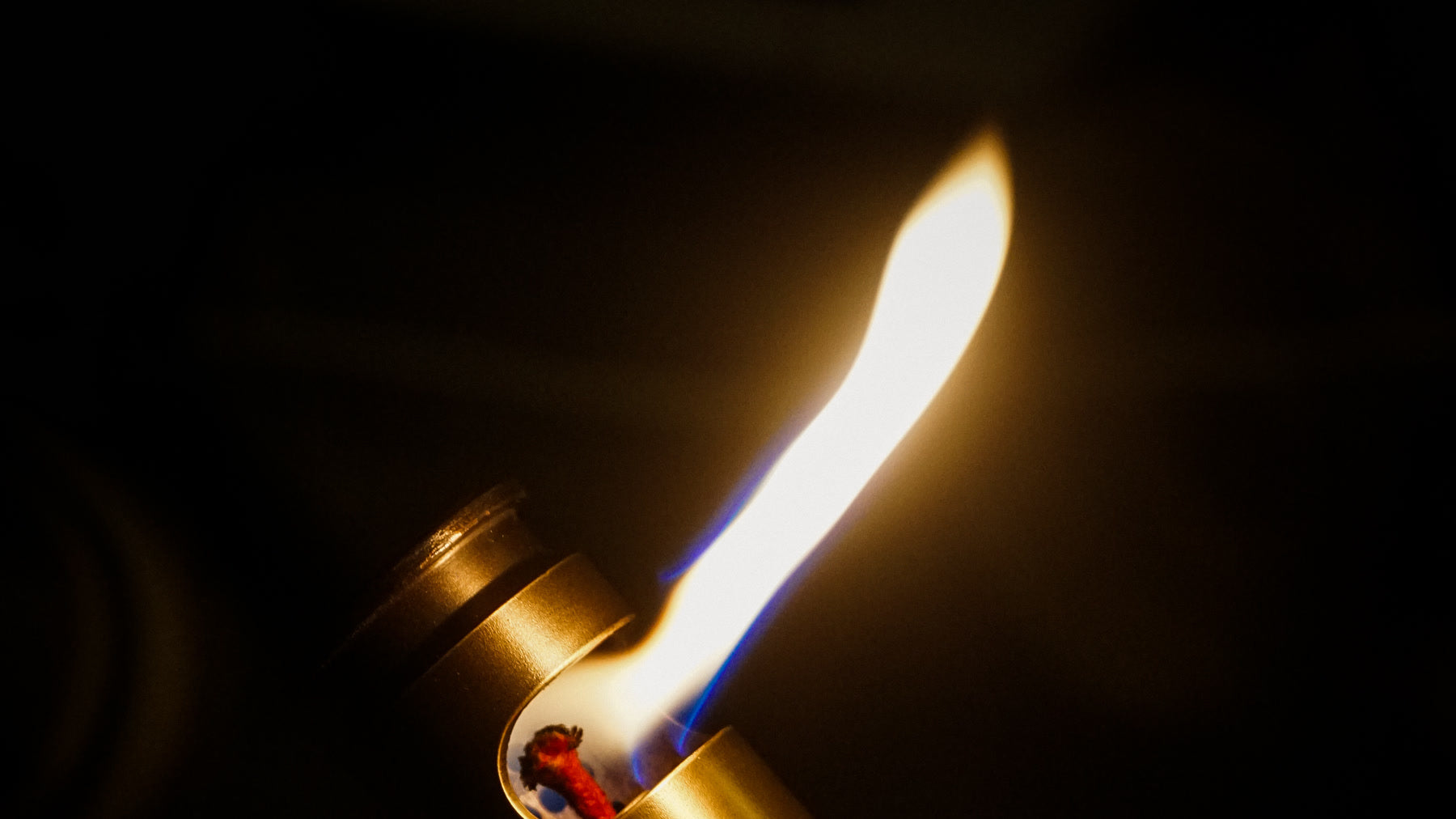
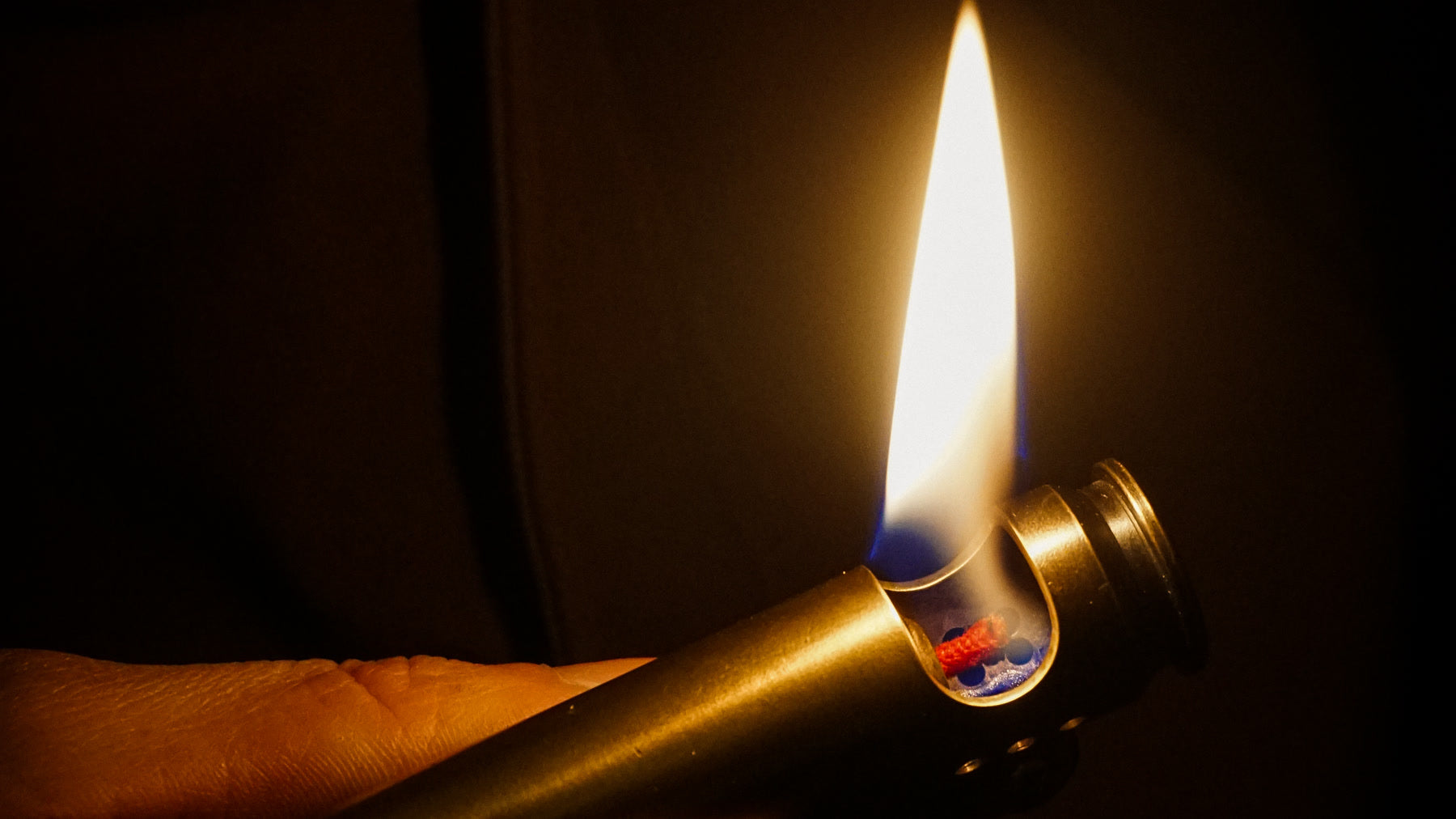
A current serviceable WEDO wick lighter made from a real repurposed 12.7 × 10⁸ brass shell. The current product record lists 92 × 21.5 mm, approximately 130 g, replaceable flint wheel, flint, wick, cotton, O-ring, springs and chain, plus an accessory pack. It ships without fuel and uses standard lighter fluid.
Best fit: An adult who values a repairable liquid-fuel flint-and-wick system and accepts recurring fuel, flint, wheel, wick, cotton, seal, and cleaning work. It is not the right answer for disposable convenience, a sealed butane tank, an electric arc, or guaranteed maintenance-free storage.
Use this branch only when: Serviceability is the relevant lifespan measure and you accept the maintenance cycle.
Check the current mechanism, dimensions, and service partsThis example shows separate fuel, consumable, and body clocks; it does not promise fixed years.
Frequently Asked Questions
Can I store a lighter for emergencies for several years?
Calendar age is not a guarantee of readiness. Store only as the maker directs, in a cool, dry location away from heat, sunlight, flames, children, and impact. Inspect the body, valve, fuel area, wheel, electrodes, and charge state periodically without unsafe disassembly. A lighter that leaks, smells strongly of fuel, is corroded, swollen, cracked, unusually hot, or behaves abnormally should leave service. Keep an approved backup ignition method instead of trusting one forgotten lighter.
Which type of lighter lasts the longest overall?
There is no universal winner. A serviceable metal lighter can outlast many disposable bodies because fuel, flint, wick, packing, seals, or other parts can be maintained. A refillable butane lighter may also serve for years while its valve and seals remain sound. An electric lighter avoids fuel but its battery eventually loses capacity. The longest-lived choice is the mechanism whose correct consumables, parts, instructions, and repair support remain available for your actual use.
Does a lighter expire even if it has never been used?
A lighter may have no simple printed expiration date (see does lighter fluid expire), yet storage still changes it. Fuel can escape, volatile liquid can evaporate, elastomer seals can age, batteries self-discharge and lose capacity, flints can deteriorate, and corrosion or impact can affect operation. Treat condition and maker guidance as controlling. Article 34 separately addresses whether lighter fluid itself expires; this article focuses on the complete lighter.
Should I keep striking a lighter to see how much life is left?
No. Repeated dry striking consumes flint and wheel life, while repeated gas attempts can release fuel and repeated electric arcs consume charge. Use the fuel window, charge indicator, maintenance record, known refill date, and one normal test only when the area and model instructions permit. Stop immediately for fuel odor, wetness, hissing, heat, deformation, or failure to extinguish.
A practical lifespan checklist
- Define whether you mean one fill, ignition count, storage readiness, consumable life, or total service life.
- Use the exact maker’s count or capacity before applying a user-specific estimate.
- Track real flame or arc duration, not just the number of button presses.
- Inspect fuel delivery, spark, wick, valve, seals, battery, and body as separate limits.
- Use short controlled activations and the correct tool for the task.
- Store in the approved cool, dry location and recheck condition before reliance.
- Refill, recharge, replace a consumable, service, or retire the lighter according to the failed clock.
- Stop for leakage, fuel odor, wetness, deformation, abnormal heat, persistent gas, or failure to extinguish.
Model-specific instructions control. Lifespan estimates never override a manufacturer’s fuel, charging, storage, service, or retirement rule. If the mechanism or condition is uncertain, do not test it by repeated ignition.

Leave a comment
Trang web này được bảo vệ bằng hCaptcha. Ngoài ra, cũng áp dụng Chính sách quyền riêng tư và Điều khoản dịch vụ của hCaptcha.