
How to refill a vintage lighter: To refill a vintage lighter safely, identify the exact fuel system before adding anything: a wick and absorbent packing usually indicate liquid lighter fuel, while a refill valve without a wick usually indicates butane. Inspect the lighter unfueled for cracks, corrosion, hardened seals, seized controls, odor, or an unknown prior fuel. If the model, fuel, valve condition, or shutoff is uncertain, do not refill it—preserve it dry and use a qualified lighter technician or manufacturer service.
Old fuel may be unknown, absorbent packing may have degraded, and seals can harden while a vintage case still looks attractive. Begin with identification and condition screening, not fuel.
Stop for an unknown model or old liquid, cracked reservoir, active corrosion near a seam, damaged valve, failed shutoff, seized mechanism, heat damage, wetness or persistent gas odor. Keep it away from ignition sources and children. Never puncture, drill, heat or pressure-test it. A collectible need not work to remain valuable.
Identify the fuel system before the fuel
How do I know what fuel my vintage lighter uses?
Look for the complete mechanism, not one attractive exterior feature. A visible wick surrounded by a chimney, with absorbent cotton or felt inside a removable insert, usually indicates a liquid-fuel wick lighter. A dedicated vintage lighter refill valve on a sealed metal reservoir, combined with a burner and no wick, usually indicates butane. A table lighter may hide either kind of removable insert inside a decorative shell.
That is the practical answer to how to identify vintage lighter fuel, but visual evidence is only a starting point. Search the maker, model, patent number and markings; compare the mechanism with a reliable manual. The vintage lighter fuel type cannot be chosen from the case color, decade, country, flame guard or seller description alone. Never pour liquid wick fuel into a gas valve, and never press butane into absorbent packing. See lighter fuel compatibility for the boundary between those fuels.
| What you can verify | Likely system | Next safe step | Reason to stop |
|---|---|---|---|
| Wick, chimney and absorbent packing in a removable insert | Liquid-fuel wick lighter | Find exact model guidance and inspect packing, wick and chamber | Unknown old liquid, cracked insert, severe corrosion or fuel odor |
| Gas burner, no wick and documented refill valve | Refillable butane | Verify valve type, adapter, shutoff and seal condition | Loose valve, wrong adapter, persistent hiss, damaged seal or seized control |
| Decorative table body with removable working unit | Wick or butane insert | Remove only as the maker intended and identify the insert separately | Unknown fastener, fixed reservoir, damage or resistance |
| No refill access and a crimped or sealed body | Possibly disposable or non-serviceable | Preserve dry or follow a documented service route | Any attempt would require puncturing or opening a pressure vessel |
Unknown model means no fuel
Can I refill a vintage lighter without knowing the model?
No—not when you cannot verify the system, fuel, refill access, shutoff or previous contents. Keep the lighter cool and dry, photograph every side and marking, and look for a model-specific manual or a specialist who can identify the insert. This is especially important when an apparent bottom screw could be a flint spring, a case fastener or a pressure adjustment rather than a fuel port.
There is no universal shortcut for how to refill an old lighter. Do not explore openings with a syringe, funnel, paperclip, screwdriver or universal adapter, and do not “test” an unknown vintage lighter fuel chamber. If identification remains uncertain, preserve it dry.
Inspect the old mechanism while it is unfueled
In bright light, with the lighter cool and away from flames, check that the lid, snuffer and control move without force and return fully to off. Inspect seams and the valve for cracks, solder failure, impact damage, active corrosion, swollen packing, loose fittings and residue. Persistent solvent or gas odor means stop and ventilate safely.

Wick packing should be contained, not powdery or oily, and the wick should not be loose. A butane valve must sit square, close fully and have an intact burner. Do not probe a seal: old elastomer can fail as soon as pressure returns.
Stable patina may belong to the object’s history; active corrosion near a seam can undermine safety. Clean only enough to inspect, using vintage brass lighter care. Abrasive polishing can erase markings.
A verified vintage wick lighter: add fuel to the packing, not the case
How do I refill a vintage wick lighter safely?
How to refill a vintage wick lighter safely begins only after exact identification and an unfueled inspection. Work in a ventilated area away from ignition sources, use only the maker-specified liquid fuel, and open only the approved fill access. Lift a felt pad only when the model instructions require it.
Expose the absorbent packing and add small amounts, allowing each addition to soak in. The aim is evenly damp or maker-specified saturation, not a pool in the vintage lighter fuel chamber, liquid running from the wick or fuel on the case. Stop if the packing rejects fuel, a seam becomes wet or an unfamiliar odor appears. Refit the pad, close the chamber and return the insert without forcing it.
Wipe the exterior and your hands, cap and move the fuel container, then wait the stated interval. This vintage-specific gate precedes the general safe lighter refill procedure; one wick insert’s manual does not govern every vintage mechanism.
A verified vintage butane lighter: the seal decides
How to refill a vintage butane lighter begins with documentation that the model was designed to be refilled. Obtain the fuel purity, can orientation and exact adapter specified for its valve. Let the lighter reach room temperature naturally. Turn the flame setting only to the documented refill position, hold the lighter and can in the manufacturer’s stated orientation, align the adapter squarely and use short controlled fills rather than forcing a long charge.
Stop immediately if fuel sprays around the adapter, the valve stays wet, the body hisses after the can is removed, the control does not shut off or the lighter becomes unusually cold beyond the normal brief refill chill. Move away from ignition sources and let the area ventilate. Do not press the valve with a screwdriver or paperclip as a generic purge. Some modern makers publish model-specific air-removal steps, but transferring that procedure to an unknown old valve can damage its seal or release fuel.
After a clean refill, move away and wait the exact stated interval before one test. Never improvise an adapter: a mismatch can hold the valve open or damage its seat. Professional seal and valve service is normal for old pressure systems.
Treat a table lighter as a shell plus an insert
How to refill a vintage table lighter depends on the removable working unit, not the decorative body. Many table lighters contain a lift-out wick or butane insert, but some have integrated reservoirs. Follow the maker’s removal path and support the heavy base so it cannot fall. Identify the insert as if it were a separate lighter, then apply the correct wick or butane gate.

Do not assume every base screw opens fuel access; it may retain an insert, compress a flint spring or adjust a valve. Stop at resistance. Keep liquid fuel away from porous decorative bodies that can stain.
A lighter that leaks or will not hold fuel needs service
Why does my vintage lighter leak after refilling?
With a wick lighter, immediate wetness can mean overfilling, a displaced pad, degraded packing, a cracked insert or fuel trapped on the exterior. Do not ignite it. Cap and remove the fuel container, ventilate safely and follow the maker’s spill instructions. Repeated seepage after the exterior is dry is a condition fault, not a cue to add less and hope.
With butane, bubbles, spray, odor or hissing after the refill can is removed suggest a poor adapter seal, a damaged valve seat or an aged O-ring. A vintage lighter leaks after refill when restored pressure exposes a weakness that an empty reservoir concealed. Do not keep pressing the valve, cycling the control or striking a flame to “burn off” the gas. Isolate it as the manufacturer directs and arrange service.
If a vintage lighter won't hold fuel, distinguish gradual wick-system evaporation from rapid loss, wetness or gas leakage. It should not wet the case in storage. Rapid emptying, persistent odor or repeated failure calls for qualified inspection of the seal, packing, reservoir or closure.
Flint and wick service are separate from refilling
A lighter can accept fuel and still fail because its ignition consumable is worn. The phrase replace flint before refilling vintage lighter is not a universal sequence; inspect first. If the wheel turns but produces no useful spark, and the maker provides a serviceable flint path, replace the flint with the correct diameter and length while the lighter is cool and away from fuel. Control the spring cap and never force a seized screw.

A dark wick tip alone does not prove exhaustion. A short, hard, frayed or poorly routed wick may need approved service, but pulling can disturb the packing. Confirm spark, wick height and packing separately. A new flint will not repair a leak, and more fuel will not repair a wheel.
Make one controlled test after the waiting period
Move fuel and absorbent materials away, verify that the case and hands are dry, and test in a clear ventilated area as directed. Keep the lighter upright and away from your face, clothing and flammable surfaces. Use one ignition cycle; the flame must remain controllable and extinguish fully.
Stop if the flame runs along the case, surges, continues after shutoff, produces unusual smoke, heats the body rapidly or is accompanied by odor or hissing. Do not repeat the test to gather more evidence. Use the lighter troubleshooting guide only for safe non-invasive checks; valves, seals, reservoirs and seized controls belong to service.
Decide whether the goal is refill, restoration or preservation
Function is only one kind of value. A common, documented, sound lighter may be serviceable; a rare, inscribed or historically important object may be better photographed and kept dry. Polishing or non-original parts can reduce historical evidence.
The search phrase restore vintage lighter before use should lead to a decision, not an automatic restoration. Ask whether the old fuel is known, whether active corrosion threatens the reservoir, whether original parts can be retained, whether the work is reversible and whether a qualified specialist can document it. For long display, an unfueled lighter is normally safer and places less stress on old seals and nearby materials.
The WEDO Usage & Care hub covers known current mechanisms. It cannot certify an unrelated antique from photographs. When a vintage object is significant or its pressure system is uncertain, preservation or specialist service is a complete and responsible answer.
If you want aged brass without an unknown antique mechanism
A current product can combine aged material with a known modern mechanism. It does not make an unidentified collectible safe to operate.

Medium Military (Antique)
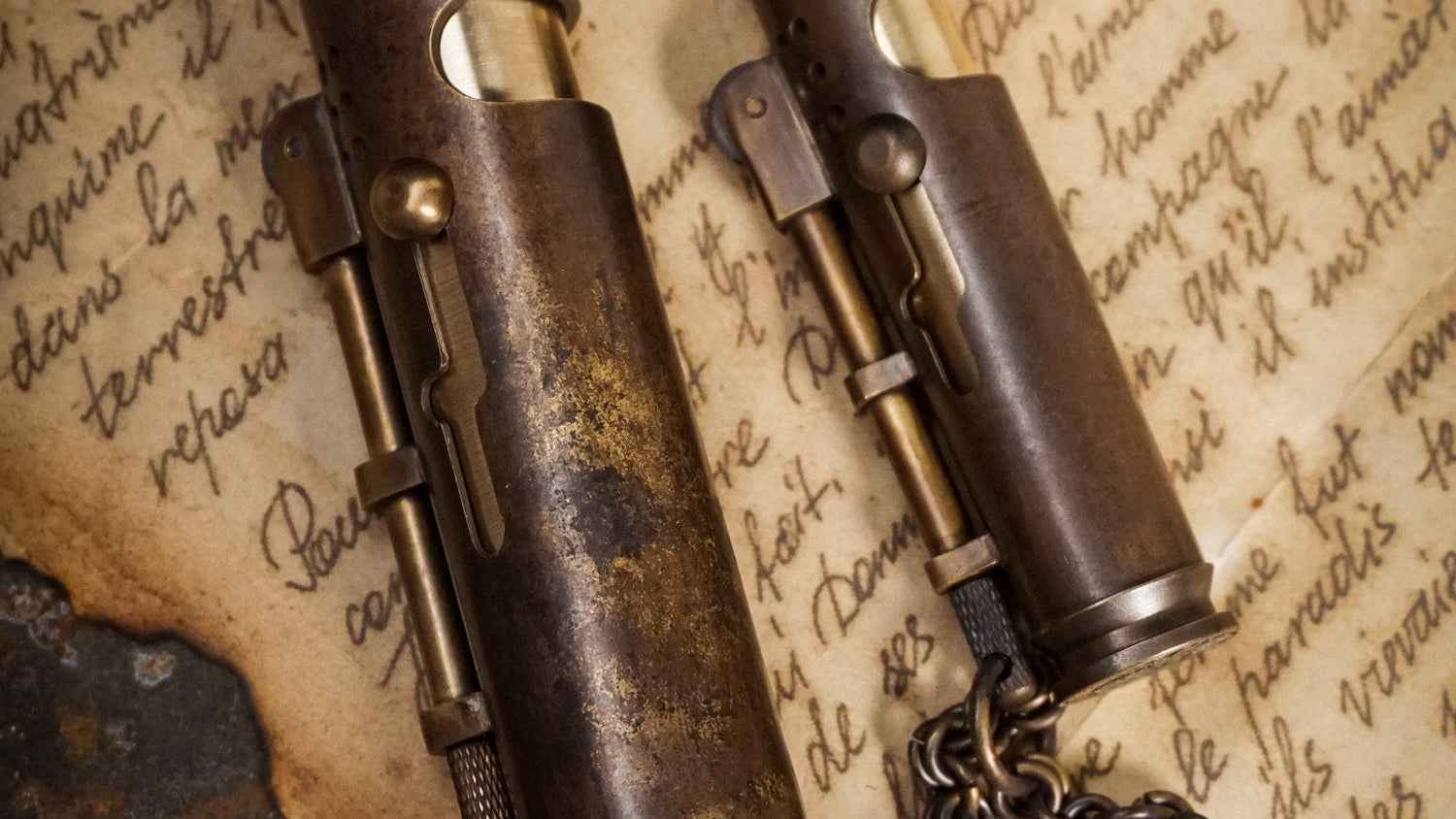
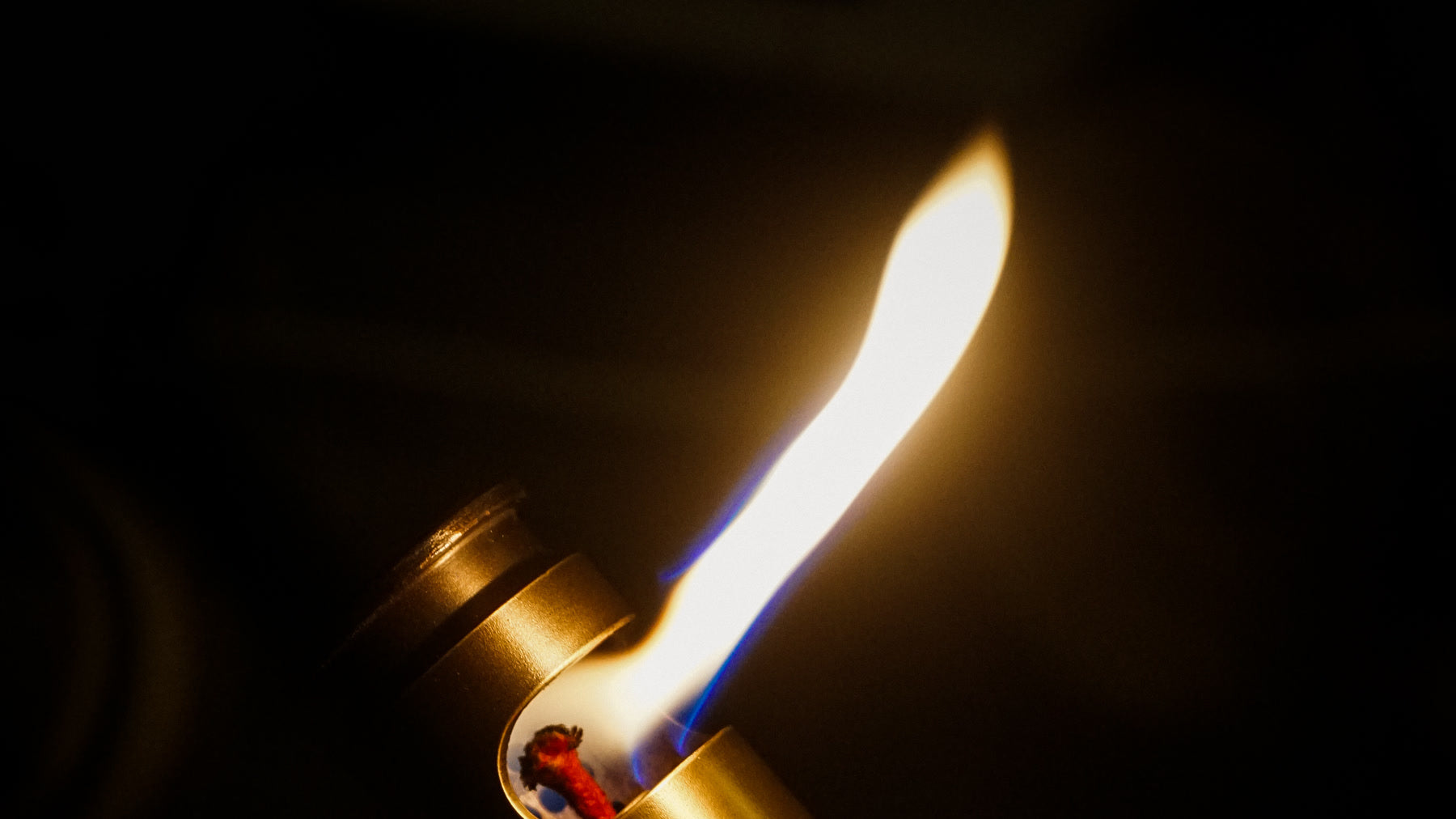
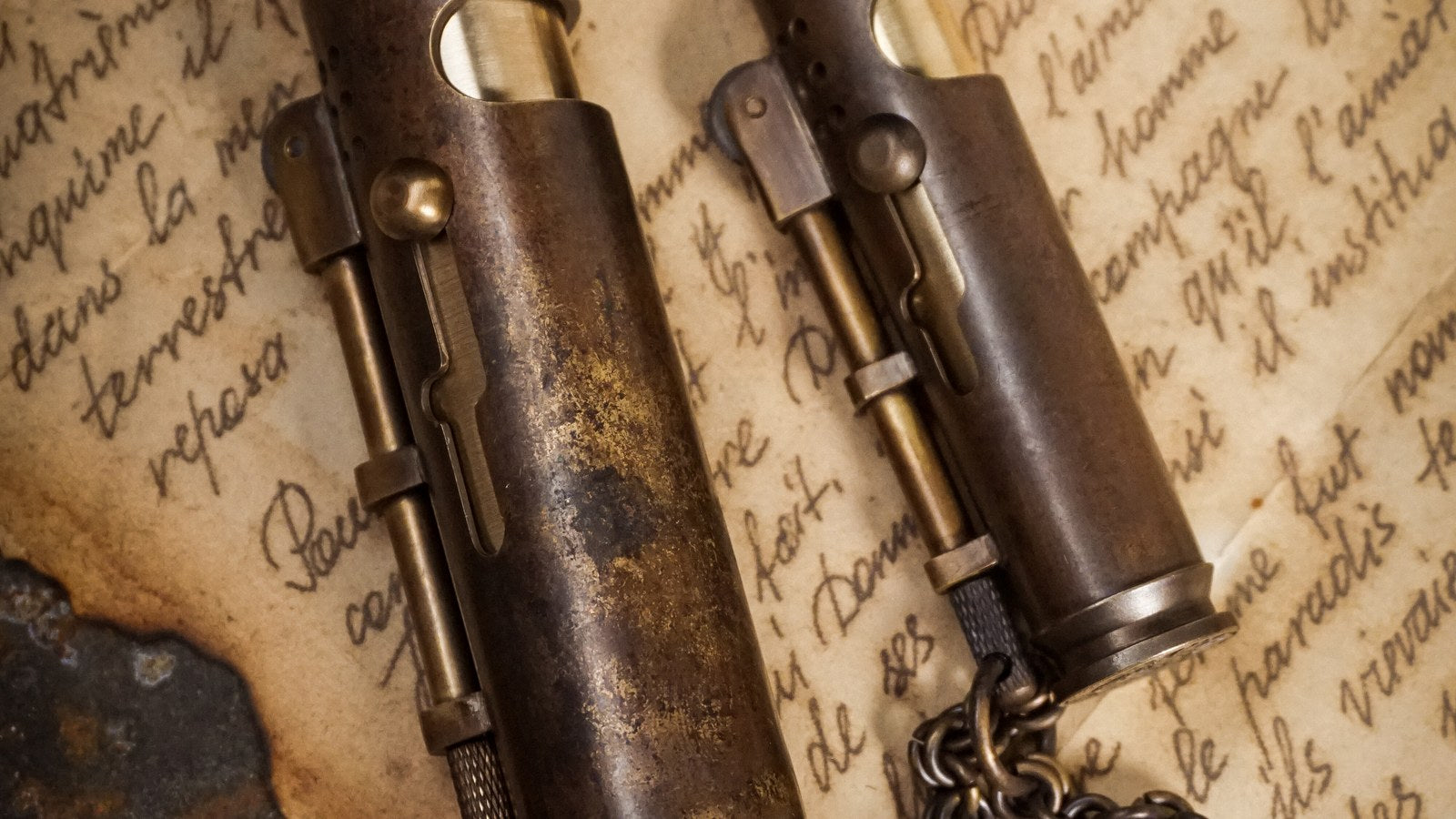
This current WEDO wick lighter uses a real repurposed aged-brass cartridge case; it is not a documented period antique. It measures 82 × 20 mm and weighs about 105 g. Its flint wheel, flint, wick, cotton, O-ring, springs and chain are replaceable, an accessory pack is included, and it ships without fuel.
Best for: an adult who wants aged-brass character in a known modern, serviceable wick mechanism. It is not evidence that an unidentified collectible is safe to fuel.
Check the Medium Military mechanism and included partsFrequently asked questions
Some can, but only when the exact model is documented as refillable, the specified adapter exists and the cool, unfueled valve passes inspection. A loose, corroded, wet or damaged valve, a missing adapter or hissing after release means stop. A hardened seal needs service—not repeated filling or an improvised tool.
Assess significance and condition first. Cleaning, polishing and new parts can remove patina or provenance. Photograph markings and consult a qualified specialist for a rare, signed or documented lighter. Dry display may preserve more value. If functional restoration is chosen, document every change and retain original parts where safe and practical.
No. A dark tip can be normal carbon. A short, hard, frayed or non-feeding wick may need model-correct service, but do not pull it blindly. Diagnose spark and delivery separately.
Dry display is safer, especially with unknown seals or long storage. Fuel adds vapor, odor, leak, ignition and staining risks. Unknown old fuel may require specialist removal.
Sources and safety limits
This guide follows manufacturer instructions for documented wick and butane systems, public safety context and WEDO care guidance. Exact model instructions override every model-neutral step because valve shapes, adapters, packing, shutoffs and approved service access differ. A remote article cannot inspect hidden corrosion, reservoir integrity or seal elasticity.
- Zippo: fill a windproof lighter
- Zippo: use and maintain
- Colibri: lighter care
- Zippo: windproof lighter repair
- U.S. CPSC: lighters FAQ
- WEDO Usage & Care
Final vintage-lighter refill checklist
- Identify the maker, model and complete fuel system before buying fuel.
- Keep an unknown model, unknown old contents or an uncertain pressure system dry.
- Inspect the unfueled case, reservoir, insert, packing, valve, seal, control and shutoff.
- Stop for cracks, active corrosion, seized parts, wetness, odor, loose fittings or heat damage.
- Use only the specified fuel, valve adapter and model procedure.
- Add liquid fuel to approved packing in small amounts; never leave a pool or wet case.
- Use short, square butane fills and stop for spray, wetness, odor or hissing after release.
- Do not guess at table-lighter screws, flint springs or decorative fasteners.
- Treat rapid fuel loss and repeated leakage as service problems.
- Keep flint and wick maintenance separate from fuel diagnosis.
- Move fuel away, wipe dry, wait the stated interval and make one controlled test.
- Choose dry preservation when history, condition or safe function is uncertain.

Leave a comment
Trang web này được bảo vệ bằng hCaptcha. Ngoài ra, cũng áp dụng Chính sách quyền riêng tư và Điều khoản dịch vụ của hCaptcha.