
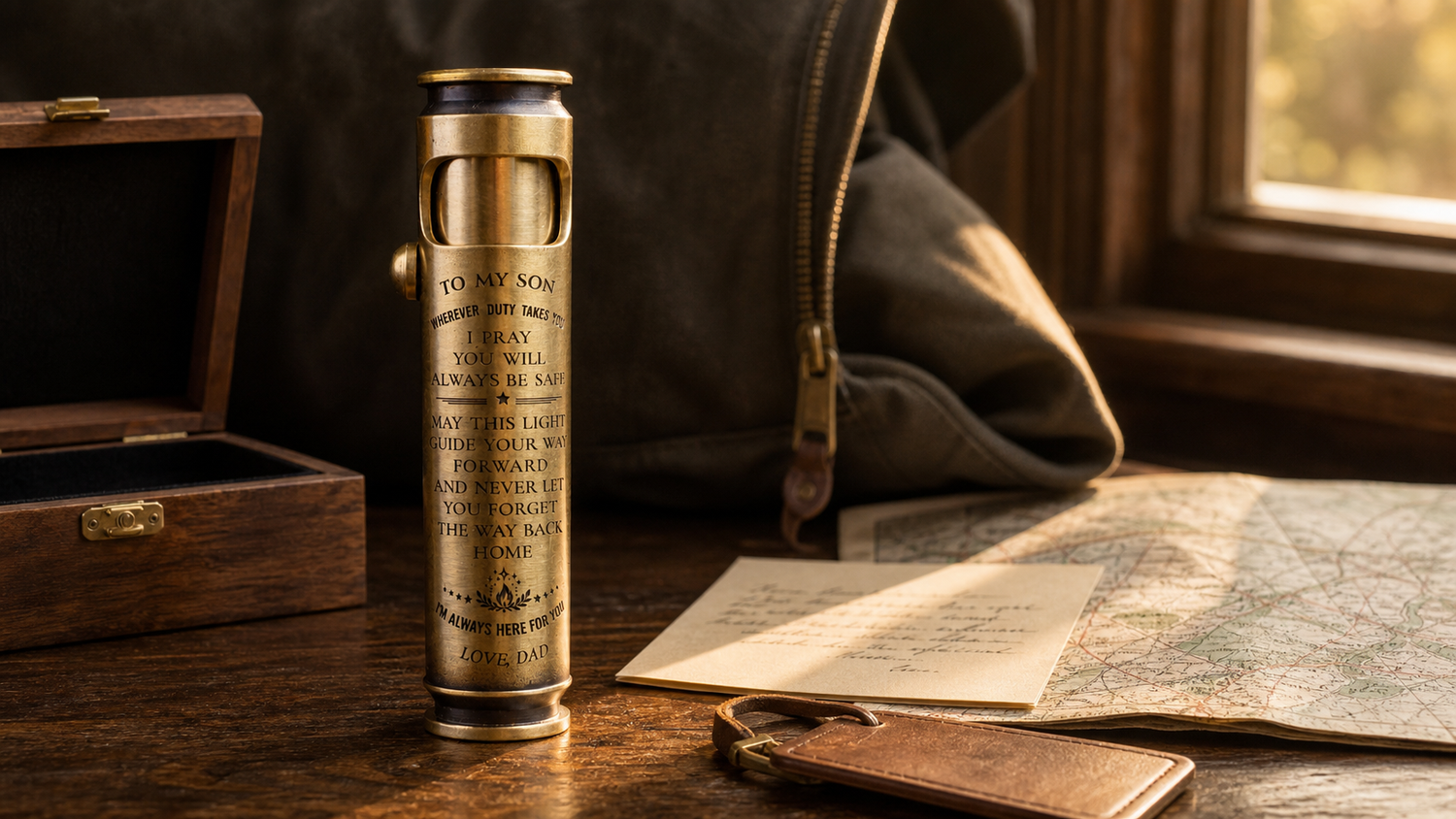
You can sometimes fly with one common disposable or absorbed-liquid wick lighter, but the rule depends on the lighter, baggage location, airport, airline, and country. In the United States, FAA and TSA guidance generally permits one common lighter in the cabin; torch, gun-shaped, unabsorbed-liquid lighters and fuel refills are prohibited. Battery arc lighters are carry-on only with activation protected. Recheck every departure, connection, and return airport before packing.
The answer to can you fly with a lighter changes when any of three facts changes: the lighter type, where it will be carried, or which rules govern the flight. A common soft-flame disposable lighter is not the same category as a torch. An absorbed-liquid wick lighter is not the same as an antique desk lighter with free liquid. A battery arc lighter creates no fuel flame, yet its lithium battery creates a different restriction.
This guide uses current U.S. FAA and TSA rules as the main example, then shows why international travelers must recheck the entire itinerary. Rules can change, and security staff or an airline may reject an item that is normally permitted if it appears altered, triggers an alarm, cannot be identified, or presents another concern.
Answer three questions before packing
- What exactly is it? Common disposable soft flame, absorbed-liquid wick, torch or blue flame, gun-shaped or novelty, unabsorbed-liquid, or lithium-battery arc lighter?
- Where will it be? On your person, inside carry-on baggage, inside checked baggage, or in a carry-on that may be checked at the gate?
- Who controls the route? Departure security, aviation dangerous-goods authority, airline, connection airport, arrival jurisdiction, and return airport can all matter.
A brand name alone cannot answer those questions. “Zippo” can describe a familiar wick lighter, but a brand may also sell other mechanisms. “Butane” can describe a common soft-flame disposable lighter or a prohibited torch. Examine the actual flame and fuel-delivery design, then verify the exact current rule.
Current U.S. lighter rules at a glance
| Item | U.S. cabin / carry-on | U.S. checked baggage | Key condition |
|---|---|---|---|
| One common disposable soft-flame lighter | Generally permitted | Unfueled generally permitted; fueled only in a DOT-approved case under the narrow exception | Not a torch or gun lighter |
| One absorbed-liquid wick lighter | Generally permitted | Unfueled generally permitted; fueled only in a DOT-approved case under the narrow exception | No free unabsorbed liquid reservoir |
| Torch, blue-flame or jet-flame lighter | Prohibited | Prohibited | Thin, hot, air-propelled flame remains a torch regardless of brand |
| Gun-shaped lighter | Prohibited | Prohibited | Imitation-weapon concern |
| Unabsorbed-liquid lighter | Prohibited | Prohibited | Includes designs holding free flammable liquid |
| Lithium-battery arc or plasma lighter | Permitted with special conditions | Prohibited | Protect against activation; battery limits; no onboard charging |
| Lighter fluid, butane refill or spare fuel | Prohibited | Prohibited | A permitted lighter does not permit its refill container |
This matrix summarizes current published U.S. guidance, not a guarantee at the checkpoint. TSA says the final screening decision rests with the officer. FAA hazardous-material rules and TSA security rules overlap but are not identical, so a traveler must satisfy both.
For can you bring an electric lighter on a plane, current U.S. guidance is carry-on only, with accidental activation prevented.
Common disposable and absorbed-liquid wick lighters
Can you fly with a lighter in your carry-on?
In the United States, current FAA guidance limits absorbed-liquid and common butane lighters to one lighter per passenger in carry-on baggage or on the person, while TSA lists disposable and Zippo-style lighters as allowed in carry-on. That is the usual “yes” behind searches for can you take a lighter in carry on. It does not include a torch, gun lighter, unabsorbed-liquid design, fuel bottle, or refill can.
Can you bring a Zippo lighter on a plane?
A familiar Zippo-style wick lighter uses liquid absorbed in packing, so it fits the U.S. common-lighter category when its actual design and condition match the rule. The question can you bring a Zippo on a plane still cannot be answered from the logo alone. Confirm that it is not a torch variant, contains no free unabsorbed liquid, is within the allowed quantity, and is placed where every rule for the route permits.

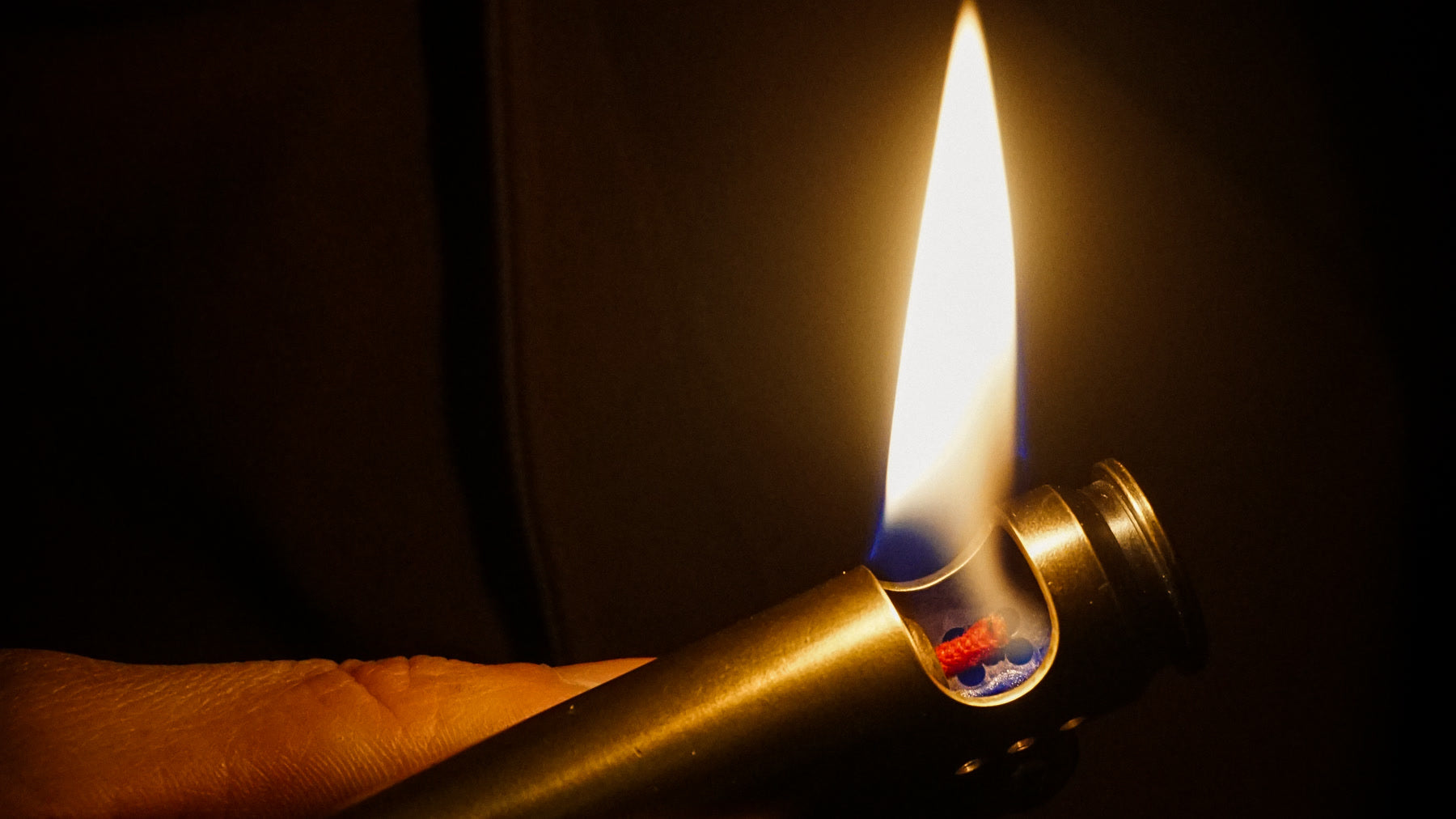
The cotton matters because aviation rules distinguish absorbed liquid from a free-liquid reservoir. If you need a deeper chemistry explanation, see what lighter fluid is made of. Do not open, drain, refill, or disassemble a lighter in the terminal to try to change its category.
The same careful reading answers can you bring a Bic lighter on a plane: a normal disposable soft-flame lighter is generally in the permitted U.S. cabin category, but a torch-style product is not. Product shape, brand, and fuel word do not override the actual flame type.

Checked baggage has a narrow U.S. exception, not a global yes
Can you put a lighter in checked baggage?
Under current TSA guidance, disposable and Zippo-style lighters without fuel are allowed in checked baggage. Fueled common lighters are prohibited unless up to two are properly enclosed in a DOT-approved case. This is a narrow U.S. exception with specific packaging; an ordinary box, plastic bag, metal tin, or homemade seal is not a DOT-approved lighter case.
Many international rules are stricter and prohibit lighters in hold baggage entirely. Therefore, can you put a lighter in checked baggage must be answered for the exact route and carrier. If the approved case, fuel status, or jurisdiction is uncertain, do not check the lighter.
For can you fly with an empty lighter, “empty” is not a casual visual judgment. Residual fuel, vapor, absorbent packing, and a fuel odor can still matter. Do not purge a lighter at the airport or claim it is unfueled unless it meets the exact authority and airline definition. A valuable lighter is often better left at home than exposed to rejection, loss, or baggage handling.
What happens if your carry-on is checked at the gate?
FAA guidance says any lighter in a carry-on that is checked at the gate or planeside must be removed and kept with the passenger in the aircraft cabin, assuming that lighter is otherwise permitted. Power banks and other cabin-only battery items create similar repacking needs. Before handing over the bag, stop and remove every item that cannot enter checked baggage. Do not assume the gate agent will inventory it for you.
Torch lighters, fuel refills, and misleading designs do not fly
Can you bring a torch lighter on a plane?
No under current U.S. rules. FAA and TSA prohibit torch, blue-flame, and jet-flame lighters in the cabin and checked baggage. The answer to are torch lighters allowed on planes does not change because the lighter is empty, expensive, compact, or made by a brand that also produces permitted wick lighters. A thin, needle-like, high-temperature, air-propelled flame is the relevant design.
This also resolves the ambiguous search can you bring a butane lighter on a plane. A normal disposable soft-flame butane lighter can fall within the U.S. one-lighter cabin exception. A butane torch cannot. Identify flame behavior rather than assuming all butane devices share one rule.
Gun-shaped lighters are prohibited in carry-on and checked baggage. Novelty designs can also trigger security concerns even when their fuel mechanism would otherwise appear ordinary. A disguised blade, altered shell, replica weapon, or tampered item belongs to another security category and should be left out.
Separate fuel is simpler: can you bring lighter fluid on a plane is no under current U.S. guidance for carry-on and checked baggage. The same no-pack rule applies to butane refill cans and spare fuel cartridges. Buy compatible fuel after arrival when lawful; never drain, vent, mail, or abandon flammable fuel without following the exact authority and disposal instructions.
International flight lighter rules can be stricter
U.S. rules do not control a checkpoint in London, Sydney, Auckland, Toronto, Singapore, or another jurisdiction. The return flight also begins under the rules of its departure airport, not the rules that allowed the outbound trip. A connection can add a third set of controls.
| Current published example | Common-lighter treatment | Practical lesson |
|---|---|---|
| United Kingdom | One lighter in a resealable plastic bag, kept on the person; not in hold luggage or hand luggage after screening | “Cabin” does not always mean “inside the carry-on bag” |
| Australia CASA | One cigarette lighter on the person, not in baggage | Person-only language controls |
| New Zealand CAA | One permitted lighter kept on the person | Do not leave it in a bag |
| Canada CATSA | Disposable and non-torch lighters permitted in carry-on; checked baggage: check with carrier | Security and carrier answers can divide |
| Singapore Airlines | Subject to local rules, one small qualifying lighter may be allowed only on the person; several lighter types and refills are prohibited | Airline and local authority can both narrow the exception |
For a multi-country trip, write the departure, connection, arrival, airline, and return checkpoints in one list. Check each official page close to travel, save the current link, and follow the strictest applicable rule. A screenshot or printout may help you explain what you checked, but it cannot compel an officer to accept an item.
Prepare for screening without improvising at the airport
- Identify the actual mechanism and flame before leaving home.
- Count permitted lighters per passenger, not per bag. In the current U.S. cabin rule, that is one common lighter.
- Keep separate fuel, butane refills, torches, gun lighters, unabsorbed-liquid designs, and unidentified novelty items at home.
- Protect permitted electric lighters from accidental activation and do not plan to charge them aboard.
- Know which items must be removed if a carry-on is gate checked.
- Do not empty, vent, refill, dismantle, or test a lighter in an airport, aircraft, restroom, vehicle queue, or smoking area.
- Have a leave-it-home plan for anything costly, irreplaceable, or difficult to classify.
If an item is refused, follow the officer and airport’s options. Do not hide it in another bag, pass it secretly to another passenger, discard fuel into a drain, or leave it in an unsafe location. Airport disposal, return-to-vehicle, mailing, or surrender options vary and may not be available.
A six-step route decision
- Name the type: Common disposable, absorbed-liquid wick, torch, gun, unabsorbed liquid, electric arc, or refill.
- Check the U.S. or local authority: Use current primary guidance, not a travel anecdote.
- Check the airline: A carrier may be stricter or require approval.
- Check every airport: Departure, connection, and return rules can differ.
- Choose the location: On person, carry-on, approved checked case, or not traveling at all.
- Repack at the gate: Remove cabin-only items before surrendering a carry-on.
This sequence gives a durable answer to can you bring a lighter on a plane and how many lighters can you bring on a plane without pretending one blog controls every itinerary. The allowed quantity is rule-specific; never multiply a personal allowance across bags.
A wick-lighter example only after the route decision

Absorbed-liquid wick system · 82 × 20 mm · About 105 g
Medium Classic
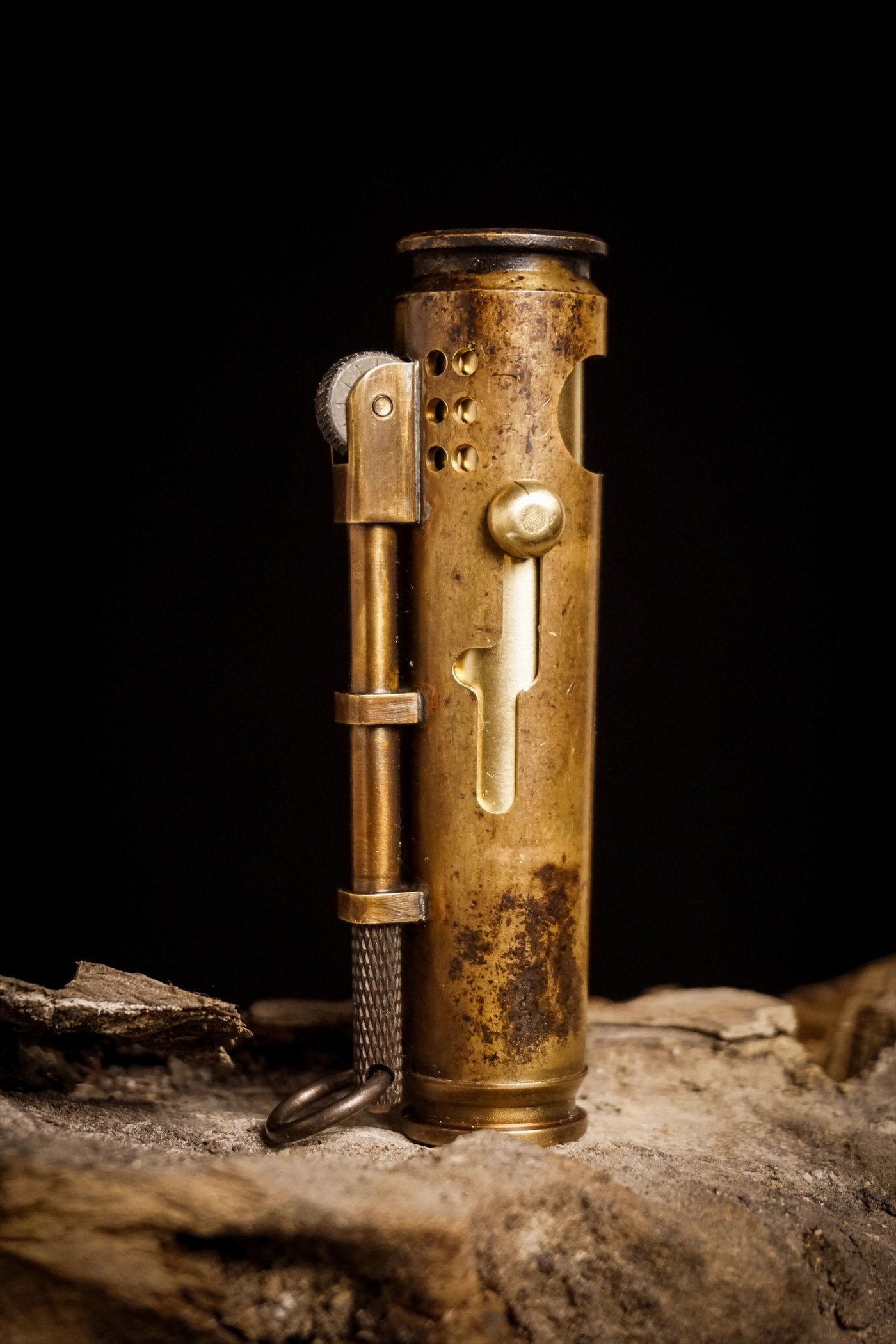
A current WEDO wick lighter made from a real repurposed .50 BMG brass casing. The verified record lists 82 × 20 mm, approximately 105 g, and replaceable wheel, flint, wick, lighter cotton, O-ring, springs and chain. It ships without fuel.
Best fit: An adult who wants a serviceable wick lighter for home or ground travel and will verify every air route before packing. Unfueled shipping does not guarantee airport acceptance, and a valuable or sentimental lighter is often safer left at home.
Check the Medium Classic mechanism and partsThe product card is not a travel approval. Product value, engraved meaning, altered appearance, residual fuel, route, security judgment, and local rules can all affect the decision. Use WEDO Usage & Care instructions to identify the current mechanism, and wait until after arrival to follow how to refill a lighter safely.
Frequently Asked Questions
Can you bring an electric arc lighter on a plane?
Under current U.S. FAA guidance, a lithium-battery arc, plasma, electronic, or e-lighter is carry-on only. Protect it against accidental activation with a case, cover, latch, lock, or removed battery where the design permits. Do not recharge it aboard. The lithium-ion battery must not exceed 100 Wh, or a lithium-metal battery must not exceed 2 grams of lithium. Other countries and airlines may be stricter.
Do international flights have different lighter rules?
Yes. Departure, every connection, arrival, airline, and return airport can apply different or stricter rules. The UK and Australia use person-only language for one lighter; Canada permits common disposable and non-torch lighters in carry-on but directs checked-bag questions to the carrier; Singapore Airlines applies a person-only exception subject to local rules. Follow the strictest applicable rule for the complete itinerary.
Can you bring lighter fuel or butane refills on a plane?
No under current U.S. guidance. TSA lists lighter fluid as prohibited in carry-on and checked baggage, and FAA distinguishes a permitted personal lighter from separate fuel or refills. Buy exact compatible fuel after arrival if lawful and available. Never drain or vent a fuel container at the airport.
Should I fly with a collectible or sentimental lighter?
Usually leave it at home unless travel is necessary and every authority confirms the exact item. A normally permitted item can still require extra screening or be refused if it appears altered, cannot be identified, triggers an alarm, or falls under a stricter local rule. Do not risk an irreplaceable lighter on an informal interpretation.
Current official sources and limits
- FAA PackSafe — Lighters for current U.S. dangerous-goods categories, quantity, gate-check, torch, battery, and checked-case rules.
- TSA What Can I Bring for current U.S. screening treatment of disposable, Zippo-style, torch, gun, electronic, fuel, and checked items.
- GOV.UK, Canada CATSA, Australia CASA, and New Zealand CAA for current examples of person-only, carry-on, and carrier-check differences.
- Singapore Airlines baggage restrictions for a current carrier example subject to local rules.
Rules, pages, terminology, and screening judgments can change. These examples do not approve a specific item or itinerary. Recheck the exact route close to departure and ask the relevant authority or airline when the item is not clearly listed.
Final lighter flight checklist
- Identify common soft flame, absorbed-liquid wick, torch, gun, unabsorbed liquid, electric arc, or refill.
- Check current departure authority, airline, connections, arrival, and return rules.
- Keep torch, gun, unabsorbed-liquid, fuel, and refill items out when prohibited.
- Use person-only or carry-on placement exactly as the route specifies.
- Protect electric lighters against activation; never check or recharge them under current U.S. rules.
- Remove permitted cabin lighters before a carry-on is gate checked.
- Do not purge, vent, refill, dismantle, test, conceal, or improvise at the airport.
- Leave costly, sentimental, altered, or uncertain lighters at home.
Permission belongs to the exact lighter and itinerary, not the product category in isolation. When type, placement, connection, or return rules are unclear, the safe packing decision is to leave the lighter out.

Leave a comment
Този сайт е защитен чрез hCaptcha и се прилагат Правилата за поверителност и Условията за използване на услугата на hCaptcha.