
Collector guide · evidence before adjectives
Start with a collection thesis, not a shopping feed
A collection is more than several objects in the same drawer. It has a sentence that explains inclusion. Try: “mechanically unusual pocket lighters from one maker,” “documented aviation-related brass objects,” “numbered annual editions with matching packaging,” or “repairable current lighters I actually use.” The sentence becomes a filter.
Choose one primary axis—maker, mechanism, period, material, scale, industrial origin, design movement, or personal story—and one secondary limit such as budget, condition, or size. A thesis can evolve, but each purchase should make the collection clearer rather than merely larger.

Separate collectible, desirable, and valuable
These words overlap, but they are not interchangeable. A lighter can be beautiful and common, historically interesting but damaged, personally important but unwanted by the market, or expensive because two bidders happened to compete. Write the value type beside every candidate.
| Value type | Question | Evidence | Common mistake |
|---|---|---|---|
| Personal | Why does it matter to me? | Gift, memory, use history, family connection | Assuming sentiment transfers to resale |
| Collector | Why does it belong in this collection? | Identity, mechanism, theme, originality, edition records | Buying outside the thesis because it looks “cool” |
| Market | Will informed buyers pay for this exact condition? | Recent sold comparables, demand, scarcity, completeness | Using asking prices or “rare” labels as proof |
Build an evidence ladder
Start with the object, then climb outward. The strongest evidence is specific and reproducible: marks and construction on the lighter; maker catalogs or official date-code systems; period advertisements, patents, manuals, or packaging; specialist references; and several comparable examples with matching details. A seller’s story is a lead, not a conclusion.
Photograph every side, base, insert, mark, mechanism, and accessory before cleaning. Record dimensions and weight. If the object is old or unknown, use the antique lighter identification guide before fueling, polishing, or assigning a value.
Use an eight-factor scorecard
| Factor | Strong signal | Weak signal or warning |
|---|---|---|
| Identity | Maker, model, period, and marks agree | Generic resemblance or missing base photos |
| Originality | Finish, parts, engraving, and insert are consistent | Unexplained refinishing or mixed components |
| Condition | Wear matches age and role; faults disclosed | Hidden corrosion, cracks, leaks, or seized parts |
| Scarcity | Production data or repeated research supports it | “Rare” with no count or comparison |
| Demand | Several informed buyers and sold examples exist | Only high asking prices |
| Provenance | Receipts, records, or traceable ownership | An unverifiable dramatic story |
| Design or mechanism | A distinct, explainable contribution to the theme | Decoration without identity |
| Completeness | Correct box, papers, tools, and matching numbers | Replacement packaging presented as original |
Do not turn the table into fake precision. Score each factor as strong, uncertain, or weak, then write the missing proof. One serious safety or authenticity problem can outweigh several attractive features.
Build without random buying
- Write the one-sentence thesis and a maximum annual budget.
- List three “must have” traits and three rejection conditions.
- Create an acquisition record before purchase: seller, date, price, claims, photos, marks, dimensions, references, and return terms.
- Ask what the candidate adds that the collection does not already show.
- Wait twenty-four hours unless verifiable scarcity makes delay genuinely costly.
- Review duplicates quarterly; keep the clearer example, not automatically the more expensive one.
A small documented collection teaches more than a crowded drawer. Packaging and receipts belong with the object, while digital copies should be backed up.
Choose use, display, or preservation
Use a verified serviceable lighter when function is part of the collection and normal wear is acceptable. Display a stable object when handling adds little but visual access matters. Preserve an uncertain, historically important, unsafe, unusually complete, or condition-sensitive piece. These roles can differ across one collection.

Before cleaning brass, read the vintage brass lighter care guide. Polishing can erase surface history. For a current flint lighter used regularly, the flint lighter troubleshooting guide covers ordinary service faults; it is not a restoration guide for valuable old pieces.
Buy online without trusting “rare”
Request sharp photos of every side, base, insert, marks, damage, packaging, and accessories. Ask for exact dimensions, weight, fuel and ignition type, working status, leaks or odor, repairs, replaced parts, provenance, and return terms. Search sold comparables by exact maker and model, then match condition and completeness.
Understand current limited editions and functional keepers
Current manufacture does not prevent collectibility. A maker-issued collectible may have a declared production count, individual numbering, distinctive stamp, matching package, and documented theme. Official Zippo collectible pages provide examples of these signals. They still do not guarantee future price.
A current functional keeper follows another logic: it belongs because its scale, mechanism, material, repairability, or use history advances the thesis. Do not relabel it “limited” or “investment grade.” If style and daily carry matter more than evidence, use the vintage-style lighter selection guide instead.

Current functional keeper · 107.5 × 27.5 mm · About 216 g
Collector Size Classic
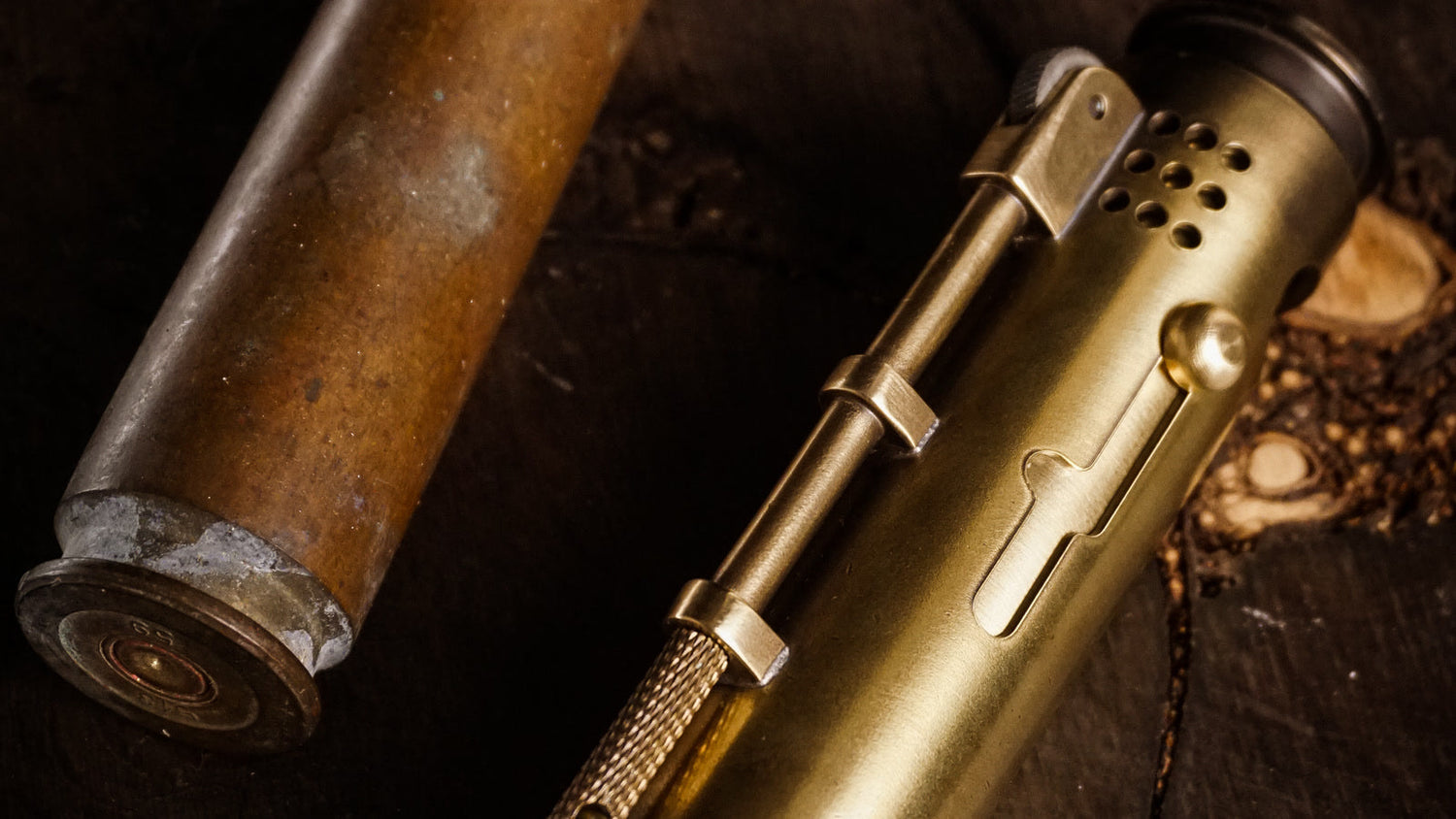
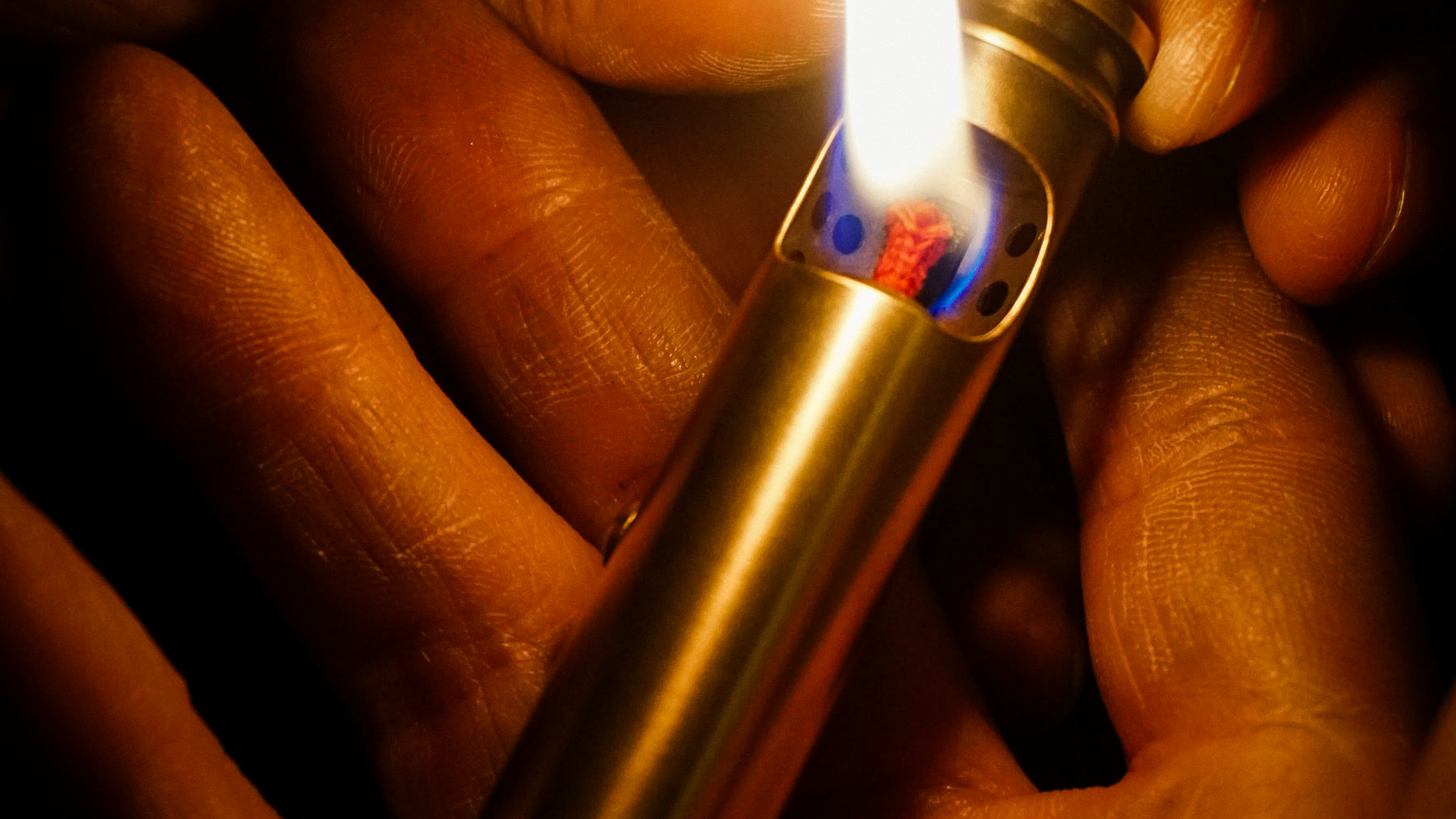
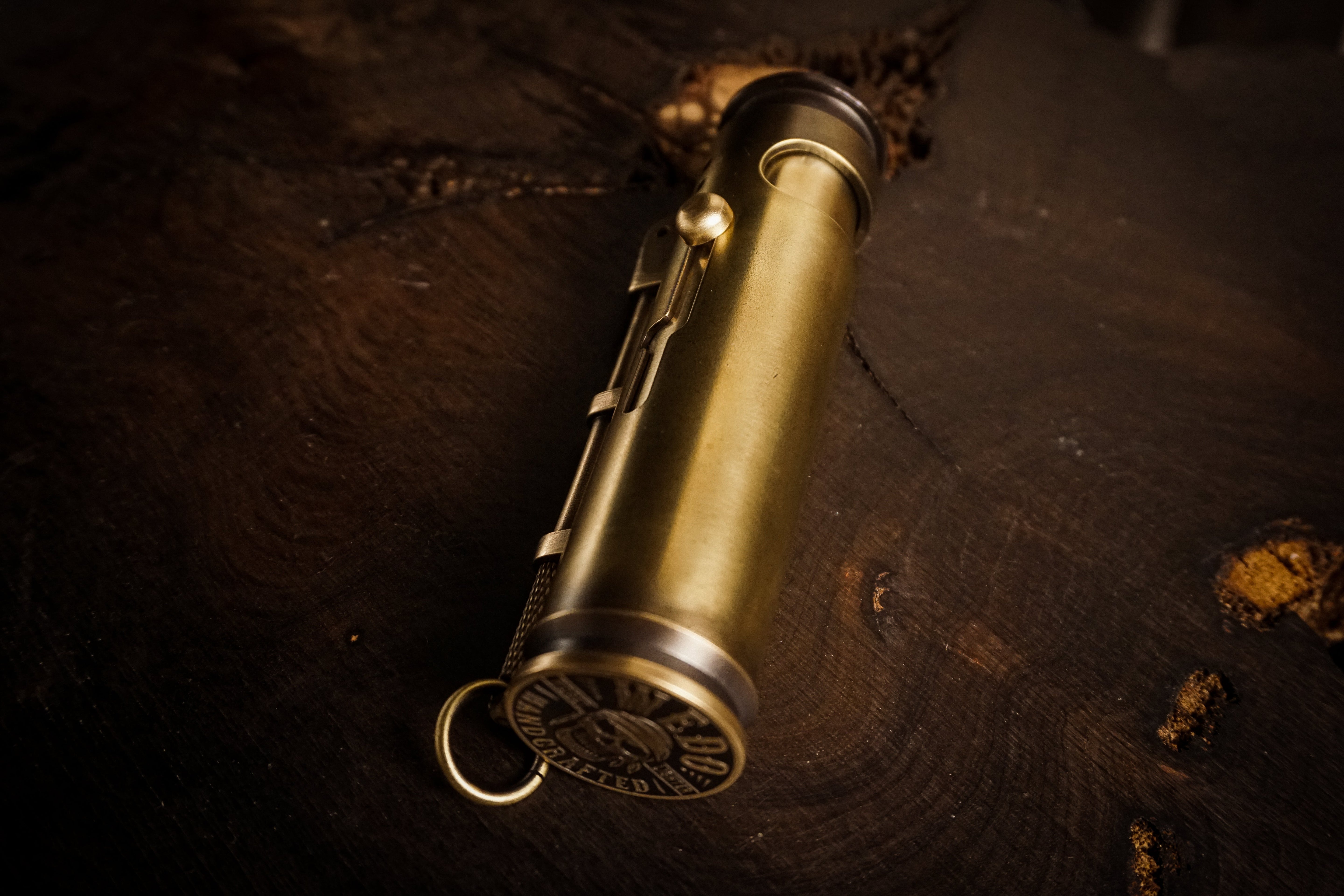
A current WEDO lighter made from a repurposed NR-23 aircraft-cannon brass casing. The live product page lists liquid lighter fuel, replaceable service parts, an accessory pack, and shipment without fuel. Its role is a substantial, repairable brass object for use and display—not a numbered edition, documented antique, or investment claim.
Best for: a collector deliberately building a current functional brass collection and comfortable with the large 216 g format.
Check the current dimensions, mechanism, and included partsFrequently asked questions
What makes a lighter collectible?
Collectibility comes from explainable significance: identifiable maker or model, coherent design or mechanism, originality, condition appropriate to age, credible scarcity or provenance, completeness, and sustained collector interest. Personal meaning can justify keeping a lighter, but it should not be confused with market demand.
Does old automatically mean valuable?
No. Age without identity, demand, originality, usable condition, or evidence may add little market value. A younger numbered edition with documented production can be more legible to collectors than an unidentified older lighter.
Is every limited-edition lighter collectible?
No. Verify who limited it, the actual production count, numbering method, matching packaging, and whether collectors care about that maker or subject. “Limited” can be a marketing label unless the edition is specific and documented.
Should a collectible lighter be restored?
Only after the collection goal is clear. Stabilizing corrosion or replacing a normal wear part may be reasonable for a user piece; polishing, refinishing, re-engraving, or replacing original components can reduce historical integrity. Document the before state and get specialist advice for valuable pieces.
Can I use a collectible lighter?
Sometimes. Use a verified serviceable piece only when use is part of its role, the fuel and mechanism are known, and damage would be acceptable. Preserve rather than use when identity is uncertain, value depends on untouched condition, seals are unsafe, or replacement would be difficult.
What records should a lighter collector keep?
Keep maker, model, marks, dimensions, weight, mechanism, fuel, materials, acquisition date and source, price, seller claims, original photos, receipts, packaging, service history, replaced parts, and links to reliable references. Record personal significance separately from market evidence.
Sources and method
Current Google results for “collectible lighters” were checked across ten different organic URLs. The evidence framework was compared with maker documentation, collector-oriented condition guidance, and the live WEDO product page. Marketplace asking prices were not treated as proof of value.
- WEDO Collector Size Classic specifications — Current dimensions, weight, material source, fuel, service parts, accessory pack, and no-fuel shipping.
- Zippo official date-code guide — Official example of maker-specific production evidence.
- Zippo official numbered collectible example — Official example of declared production quantity, numbering, and presentation materials.
- iGuide lighter condition grading overview — Collector-oriented condition vocabulary and the importance of grading consistency.

Efterlad en kommentar
Denne side er beskyttet af hCaptcha, og hCaptchas Politik om beskyttelse af persondata og Servicevilkår er gældende.