
Lighter fluid does not always have a universal expiration date, but an old container is not automatically safe or usable. Check the product label first. Volatile fuel can be lost through a poor seal, while moisture, debris, corrosion, heat, or container damage can make the remaining product unreliable or hazardous. Keep it in its original tightly closed container as directed, and do not use any fuel that is leaking, contaminated, unidentified, or stored in a damaged can.
The question does lighter fluid expire sounds like a request for one date. In practice, the answer depends on which fuel you mean, whether the maker printed a date or storage limit, whether the original seal and label remain intact, how the container was stored, and whether the fuel or package now shows a stop signal. Age alone is not enough evidence to approve or reject a flammable product.
Define “lighter fluid” before discussing age
The same retail phrase can describe products that are not interchangeable. Article 35 will explain composition in depth; for this decision, the container and intended mechanism matter first.
| Product people may call lighter fluid | Typical labeled use | Container question | Do not assume |
|---|---|---|---|
| Liquid pocket-lighter fuel | Absorbent-packed wick lighter named by the maker | Is the liquid in its original labeled, tightly closed can? | It is not pressurized butane or charcoal starter |
| Butane refill fuel | Compatible refillable soft-flame or torch lighter | Is the pressurized can undamaged, labeled, and within printed limits? | A good-looking can is not permission to use the wrong nozzle or gas |
| Charcoal lighter fluid | Starting charcoal exactly as the label directs | Is the child-resistant container sound and correctly stored? | It is not pocket-lighter fuel |
If the original identity is missing, do not guess from color, smell, or the word “fuel.” The lighter-fluid compatibility guide owns the separate mechanism decision. An unmarked bottle, transferred jar, mixed container, or inherited can with unknown contents does not become safe because it still burns.
A printed date and practical shelf life are different questions
Lighter fluid shelf life can mean a manufacturer’s stated date, the time a sealed container remains within specification, or the time an opened container remains usable. Those are not interchangeable. The exact product label, safety data sheet, and manufacturer are stronger evidence than a general web range.
People asking does Zippo lighter fluid expire should apply that same evidence order to the exact current Zippo product: read its can and safety data sheet, confirm the original package and storage history, and do not substitute a forum date for manufacturer guidance.
Does lighter fluid expire if the can has never been opened?
There is no cross-brand number that overrides the package. For unopened lighter fluid shelf life, first use any printed manufacture date, expiration date, lot information, or storage limit. An intact original seal normally reduces vapor loss and contamination compared with an opened can, but it does not make corrosion, seam damage, deformation, missing identity, or unknown heat exposure irrelevant. When an old can has no usable date and its history is uncertain, contact the maker rather than inventing a number.
Opened lighter fluid shelf life depends even more on closure quality and handling. Every opening creates an opportunity for vapor loss, dirt, moisture, a damaged spout, a loose cap, or accidental mixing. Write the first-opened date on a removable inventory tag if that helps you manage supplies, but do not convert that note into a universal expiration rule. The label and condition still control.
Volatility changes quantity and performance before “spoilage”
Liquid pocket-lighter fuel is volatile. The main practical concern is often not food-like spoilage but loss of volatile material through a poor closure, followed by uncertain composition or reduced quantity. Heat can increase vapor pressure and stress a weak package; cold can change immediate flow or vaporization. Neither extreme is a storage strategy.
Does lighter fluid evaporate from a closed can?
The original closure is designed to limit vapor escape, so a correctly closed sound can should not behave like an open dish. Still, does lighter fluid evaporate in the can becomes a real question when the spout no longer seats, the cap is cracked, the seam corrodes, the container has been repeatedly opened, or it was stored in prohibited heat. Unexpected loss, wetness, staining, or fuel odor outside the container indicates a package problem. Do not tighten a damaged closure with improvised parts or move close to inspect vapor by smell.
A pressurized butane can follows a different physical path, but the decision is similar: the exact printed date and instructions, pressure-container condition, seam, valve, nozzle, and heat history matter. Do not puncture, vent, shake aggressively, heat, freeze, or decant a can to learn what remains.
Inspect the container without opening it near ignition
How can I tell whether old lighter fluid is still safe to use?
Begin with a no-flame, no-spark check in the storage area. How to tell if lighter fluid is bad is not answered by holding it near your face, igniting a sample, or pouring it into a lighter. Use observable evidence and stop when identity or containment fails.
| Observation | What it means | Safe decision |
|---|---|---|
| Original label, correct product, readable instructions, sound closure | Identity and intended use can still be checked | Continue with the maker’s date and storage rules |
| Missing label, transferred bottle, mixed contents, unknown inheritance | Fuel identity and compatibility cannot be verified | Do not use; route to local hazardous-waste advice |
| Rust at a seam, cracks, swelling, deformation, damaged spout, failed cap | Containment may be compromised | Keep ignition away and call local officials before moving |
| Wetness, staining, unexpected liquid loss, persistent external fuel odor | Possible leak or vapor escape | Do not open or test; isolate people and ignition sources |
| Cloudiness, particles, water layer, unusual residue visible through a safe window | Possible contamination | Do not filter, mix, or put it into a lighter |
| Known storage beside heat, flame, pilot light, or intense sun | Storage instructions were not met | Ask the maker or local hazardous-waste program; do not assume recovery |
A normal-looking can still does not prove the fuel is within specification. Conversely, weak performance after filling does not prove that the fuel “expired”; the lighter may have the wrong fuel, insufficient fill, a wick problem, exhausted flint, contamination, or a mechanical fault. Do not keep adding fuel to settle the diagnosis.
Old or uncertain fuel can create a second problem inside a wick lighter
Can old lighter fluid damage a wick lighter?
Can old lighter fluid damage a lighter depends on what changed and whether the product was compatible in the first place. Unidentified, mixed, visibly contaminated, or wrong fuel can foul absorbent packing, change wick behavior, leave residue, damage a finish after a spill, or make later diagnosis harder. A can that merely has calendar age is not automatically harmful, but calendar age is also not proof that it is suitable.

Before blaming fuel, inspect the approved maintenance path. A charred or poorly routed wick, compacted or missing packing, exhausted flint, worn wheel, incorrect assembly, or overfill can also produce a weak, smoky, or unreliable flame. Use fresh fuel named for the exact model only after the mechanism and condition are confirmed. If old fuel is already inside and the behavior is abnormal, extinguish, cool, and follow manufacturer or qualified-service instructions instead of improvising a flush.

How to store lighter fluid safely
The safe answer to how to store lighter fluid safely begins with the product label and safety data sheet. Current Zippo lighter-fluid SDS guidance calls for a dry, cool, ventilated, secure place, a tightly closed container, separation from direct sunlight, extreme temperatures, and incompatible materials. CPSC guidance for portable fuel containers also stresses cool ventilated storage, replacing the cap after use, child resistance, and separation from ignition sources.
- Keep the fuel in its original labeled container; never transfer it to a drink, food, medicine, or unmarked bottle.
- Close the intended cap or spout immediately after use and wipe only as the label directs.
- Store upright where children and unauthorized users cannot reach it.
- Keep it away from flames, sparks, smoking, pilot lights, heaters, hot motors, static discharge, and surfaces that can become hot.
- Avoid direct sunlight, wet floors, temperature extremes, impact, and items that can puncture or crush the package.
- Separate it from oxidizers and other incompatible chemicals named in the safety data sheet.
- Do not store a fuel can inside the lighter, inside a hot vehicle, or beside the tool that will ignite it.
- Keep the label readable and retain purchase or lot information when the maker uses it for dating.
Storage does not rehabilitate a damaged can. Moving a leaking or severely corroded container through a home or vehicle may create more exposure. Keep people and ignition sources away, ventilate only if that can be done safely, and contact local fire or hazardous-material officials for exact handling instructions.
Use, confirm, quarantine, or dispose: choose by evidence
- Use only by label: The exact fuel is identified, compatible, within any printed limit, in a sound original container, stored correctly, and the lighter mechanism is approved for it.
- Confirm with the maker: The container is sound and identified, but the date, lot, storage limit, or performance expectation is unclear.
- Quarantine from use: Identity, storage history, seal, pressure, or contamination is uncertain. Do not test with flame.
- Seek local disposal: The product is unwanted, outside its stated limit, contaminated, mixed, unidentified, or in a container that local officials say can be transported safely.
- Call before moving: The package leaks, cannot close, is badly corroded, swollen, hot, or otherwise unstable.
This evidence-first decision is more useful than a broad answer to how long does lighter fluid last. It also prevents the common mistake of treating poor ignition as permission to add more old fuel. Once a fresh compatible product and a sound refillable lighter are confirmed, follow how to refill a lighter safely; this article does not repeat that procedure.
A liquid-fuel wick example after the storage decision

Liquid-fuel wick system · 82 × 20 mm · About 105 g
Medium Classic
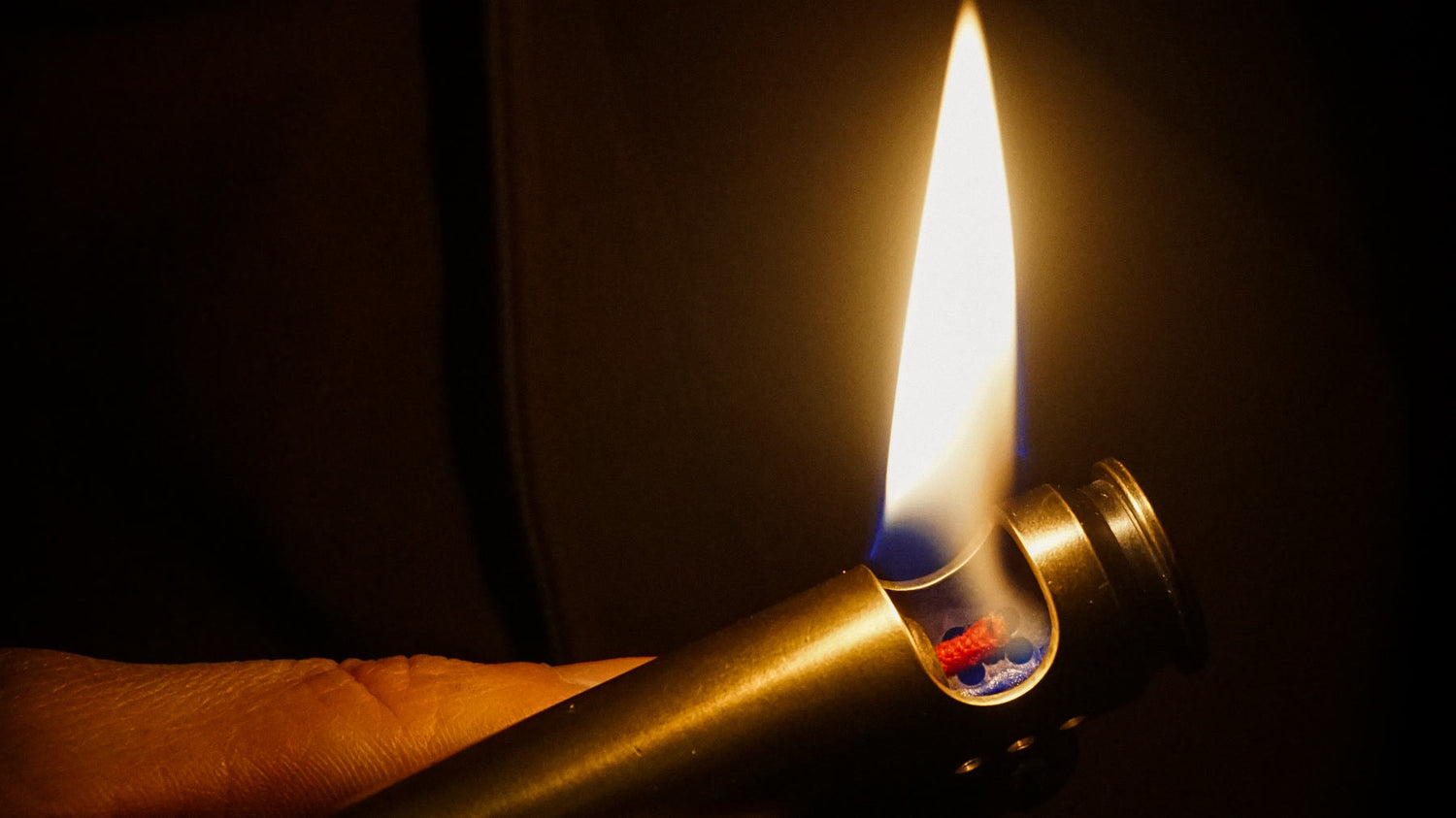
A current WEDO wick lighter made from a real repurposed .50 BMG brass casing. The current product record lists 82 × 20 mm, approximately 105 g, replaceable flint wheel, flint, wick, lighter cotton, O-ring, springs and chain, plus an accessory pack. It ships without fuel and requires standard lighter fluid before first use.
Best fit: An adult who has identified a liquid-fuel wick mechanism, selected fresh compatible fuel in a sound labeled container, and accepts recurring fuel, flint, wick, cotton, seal, and cleaning maintenance. It is not a reason to use old, unknown, contaminated, charcoal, or pressurized butane fuel.
Use this branch only when: The fuel identity, compatibility, container, and lighter condition all pass.
Check the current mechanism, dimensions, and included partsThe product card does not extend lighter fluid shelf life or approve any old container. Review current WEDO Usage & Care instructions for the exact model and use only the fuel named there.
Frequently Asked Questions
Can you mix old and new lighter fluid?
Do not mix them. Mixing hides identity and spreads any water, debris, rust, wrong fuel, or closure residue into the fresh supply. It also makes disposal harder. Do not pour old fluid back into a new can or top an uncertain lighter with fresh fuel to “improve” it. Keep the new product in its labeled original container and route the old product separately according to local hazardous-waste instructions.
How should I dispose of expired or unwanted lighter fluid?
For how to dispose of old lighter fluid, follow the label and local household hazardous-waste program. Keep it closed in its original labeled container. Never pour it into a sink, toilet, storm drain, soil, fire, trash container, or another chemical. EPA guidance says ignitable household products require special care and should not be mixed. If the container leaks, is badly corroded, or cannot close, contact local fire, hazardous-material, environmental, health, or solid-waste officials before moving it.
Does butane lighter fluid expire?
Treat butane refill fuel as a pressurized product, not the same as liquid pocket-lighter fuel. Use any printed date, storage limit, and instructions for that exact can. Do not use a can that is rusted, dented at a seam, leaking, missing its nozzle or label, unusually warm, or exposed to prohibited heat. Never puncture it to inspect the contents. Contact the maker or local hazardous-waste authority when age or condition is uncertain.
Should lighter fluid be refrigerated or frozen to extend shelf life?
No general guide should invent a refrigerator or freezer method for flammable fuel. Household appliances contain electrical components and are not ordinary approved flammable-liquid cabinets. Follow the exact label and SDS, which commonly require a cool, dry, ventilated, secure location away from sunlight, extreme temperatures, ignition sources, children, and incompatible materials.
Primary safety sources and evidence limits
- Zippo Lighter Fluid Safety Data Sheet for product-specific storage, handling, spill, exposure, and disposal boundaries.
- CPSC fuel-container safety for caps, child access, ventilation, ignition separation, and flame-jetting risk.
- EPA household hazardous-waste guidance for original containers, no mixing, no drain or ground disposal, and local collection routes.
- Poison Control hydrocarbon guidance for exposure risk. Follow the product label and local emergency or poison service after exposure.
These sources establish handling decisions, not one universal shelf-life number. Exact brand formulation, packaging, printed dating, local fire code, waste rules, and manufacturer instructions remain controlling.
Old lighter-fluid decision checklist
- Identify liquid pocket-lighter fuel, pressurized butane, or charcoal starter fluid before discussing age.
- Read the exact label, date, lot, storage limit, and safety data sheet.
- Confirm the original container, cap, spout, seams, label, and storage history.
- Do not smell closely, flame-test, puncture, decant, filter, or mix an uncertain product.
- Stop for leakage, wetness, staining, rusted seams, swelling, deformation, contamination, abnormal heat, or missing identity.
- Use fresh compatible fuel only after the lighter mechanism and condition are verified.
- Keep flammable fuel original, closed, upright, cool, dry, ventilated, secure, and away from ignition and children.
- Use local household hazardous-waste instructions; call before moving a damaged container.
The label and container outrank a calendar guess. If product identity, storage history, compatibility, or package integrity is uncertain, do not test the old fuel in a lighter.

Jätä kommentti
Tämä sivu on suojattu hCaptcha-tunnistuksella, ja hCaptchan tietosuojakäytäntöjä ja käyttöehtoja sovelletaan.