
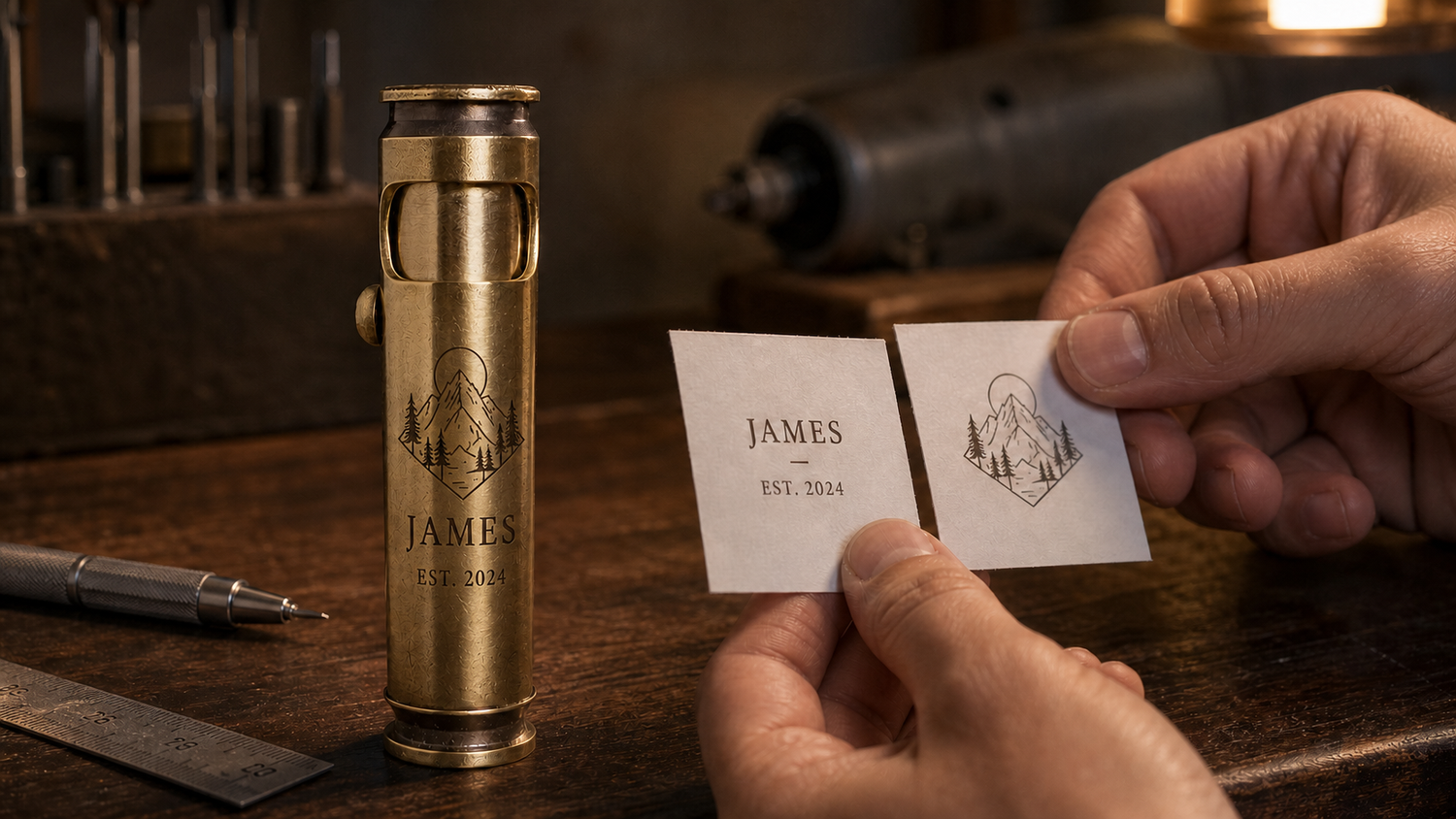
What makes a scripture gift useful rather than generic?
A useful scripture gift begins with the recipient’s routine, not a product category. Ask what the person will actually do with it after the occasion has passed. Will he read it, write in it, display it, carry it, wear it, or use it? A beautiful object that has no place in his life may still feel thoughtful on opening day, but it is unlikely to keep the message active.
The second test is specificity. The verse or reference should connect to a real season, conviction, shared memory, or practice. That does not mean choosing the longest passage or adding every personal fact. In most cases, one verified scriptural idea and one restrained personal detail communicate more clearly than a dense collection of names, dates, symbols, and quotations.
If the passage itself is not settled, pause here and use the guide on how to choose a Bible verse for a gift. This article does not compete with that question. It starts after the meaning is known and helps you choose the right format, amount of text, material, layout, and proofing process.
Which scripture gift format fits the recipient?
Start with the job the gift should perform. The five formats below cover most personalized scripture gifts without pretending that one is universally best.
| Gift format | Best for | Text capacity | Watch for |
|---|---|---|---|
| Bible or journal | A person who already reads, studies, writes, or records prayer. | A short cover line plus a longer inscription or letter inside. | Translation preference, usable page format, and whether personalization will help rather than discourage daily use. |
| Verse cards, jar, or memory set | Repeated interaction, family routines, encouragement, or memorization. | Several full passages can be separated into readable units. | Card organization, accurate references, replacement, and avoiding a random mix without context. |
| Wall art, plaque, or framed print | A home, office, church room, or memorial space where the recipient controls the display. | A short verse, selected lines, or a reference with larger type. | Room style, viewing distance, privacy, and whether public display suits the message. |
| Bookmark, wallet insert, jewelry, or wearable | Quiet personal carry and a short recurring reminder. | A reference, a few words, initials, or a small symbol. | Tiny lettering, skin sensitivity, loss, clothing style, and pressure to wear a visible faith statement. |
| Practical object | An adult who already uses the exact object in a real routine. | Usually a reference or compact line with one supporting detail. | Function, maintenance, safety, travel limits, and whether the object is appropriate at all. |
Choose books and journals for active readers
A personalized Bible can hold a name, occasion, or short line on the cover while a handwritten inscription inside preserves the longer explanation. A journal offers room for future notes instead of treating the gift as a finished message. These formats work best when the recipient already reads or writes; otherwise, they risk becoming symbolic shelf objects.
Choose cards and memory sets for repeated interaction
Cards, verse jars, and memory sets make sense when the person benefits from choosing, sorting, carrying, or revisiting passages. They can accommodate more text because each card remains readable. They are also replaceable: a damaged card, changed theme, or corrected reference does not require remaking the entire gift.
Choose wall pieces only for a known display space
Wall art is useful when you know the room, viewing distance, and recipient’s comfort with a visible faith statement. It can support larger lettering and a more complete passage, but public visibility is not automatically a benefit. A private grief message, for example, may belong in a small framed piece or keepsake rather than a large item guests will ask about.
Choose portable formats for short reminders
A bookmark, wallet insert, bracelet, or pendant can keep a reference close without carrying a full paragraph. Portability is the advantage; limited space is the constraint. If the message only works when six lines of tiny type are read under perfect light, the format is too small.
Choose a practical object only after the function passes
A practical scripture gift should still make sense if the engraving were removed. If the person would not use, maintain, or welcome the underlying object, personalization does not repair the mismatch. When that question is still open, return to the recipient-first Christian gift guide before comparing products.
Scripture gift ideas by occasion
Occasions can narrow the format, but they should not dictate a cliché. The better question is what the recipient will need after the event.
Baptism, dedication, or confirmation
Choose something that can continue the practice begun or affirmed at the ceremony: a readable Bible, journal, verse-card set, or modest keepsake with the date and one confirmed reference. The ceremony program and family blessing can stay in a letter. The object does not need to reproduce every word spoken that day.
Graduation, relocation, or a new chapter
Portable formats usually fit change better than large display pieces. A journal, bookmark, wallet insert, compact print, or an object the graduate already uses can move between rooms and routines. Use the year only when it will help the person remember the transition; otherwise, it can make the gift feel more like an award than a continuing reminder.
Wedding or anniversary
Shared objects work when both people approve the passage and where it will live. A framed reference, family Bible, prayer journal, or paired cards can support joint use. Avoid personalizing only one partner’s assumptions into a permanent “shared” message. Confirm names, date format, translation, and whether the couple prefers public display or private reading.
Grief, illness, recovery, or remembrance
Choose a format that does not require emotional performance. A private card, small framed piece, journal, or reference-only keepsake can be easier to receive than a large public display. Avoid turning the gift into an explanation of suffering. Preserve the longer personal message in your own words and let the recipient decide when to read it.
Pastor appreciation, ministry team, or group gifts
For a group, consistency matters more than heavy personalization. A shared reference, event name, or service year can work across several items, while individual names stay secondary. Confirm that the gift reflects the actual role and does not imply a title, doctrine, or institutional endorsement that the recipient has not approved.
How much Bible verse text should the gift carry?
A verse reference is not a lesser version of a scripture gift. It invites the recipient to read the passage in a trusted translation and keeps the permanent design clean. It is often the safest choice for jewelry, compact metal objects, bookmarks, and curved surfaces.
A short line can work when the selected words form a complete thought and have been checked against the source. Do not stitch together attractive fragments from different sentences or remove limiting words to make the quote fit. If shortening changes the meaning, return to the reference.
A full verse needs more than theoretical surface area. It needs comfortable letter height, sensible line breaks, contrast, margins, and enough visual quiet to be read without zooming. Longer passages belong on paper, cards, larger prints, or another medium designed for reading.
How to combine a verse, name, date, prayer, and symbol
Permanent personalization needs a reading order. Choose one main detail and one supporting detail. Everything else moves to a card, the reverse side, the inside cover, or a separate insert.
Make the verse or reference the lead
Place the scripture element first in the reading order. On a small object, that may be only the reference. On a larger print, it may be a short passage. If the full text becomes hard to read after the name and date are added, the format has reached its limit.
Use the name to establish belonging
A first name, initials, or short family name usually reads more naturally than a formal full name. Keep it visibly smaller than the scripture block unless a name-first design is intentional. Name-first can work on a Bible cover or certificate, but it changes the hierarchy and should not happen by accident.
Use one date only when it carries meaning
A baptism, wedding, graduation, recovery milestone, or memorial date may help locate the memory. Verify it from a reliable source and use an unambiguous format. If the date needs a paragraph of explanation, the explanation belongs in the card.
Protect prayers and dedications as complete sentences
Long prayers need room for grammar, pauses, and personal context. A short prayer line can be permanent when it stands alone. Otherwise, write the full prayer in a card or letter. Replaceable text is not less valuable; it is often the only way to keep the words comfortable to read.
Use symbols only when they clarify rather than decorate
A cross, branch, mountain, or other approved symbol can support the message, but it should not force the text smaller or imply a tradition the recipient does not share. One symbol is usually enough. On a permanent object, empty space is part of the design rather than unused capacity.

For additional examples beyond faith gifts, see the engraved gift ideas guide.
Which materials preserve scripture clearly?
The best material is the one that supports the intended use and keeps the text legible. Material alone does not guarantee quality; surface shape, finish, contrast, letter depth, wear, moisture, and viewing distance all matter.
- Paper and card stock: best for longer passages, prayers, and replaceable context. Confirm ink contrast, type size, and storage.
- Wood: useful for display pieces and larger lettering. Grain and burn variation can reduce the clarity of fine details, so proof the actual wood or a representative sample.
- Metal: suitable for durable short engraving when the finish, curvature, and contrast are controlled. Openings, seams, moving parts, and polished reflections reduce usable space.
- Leather: works for covers, bookmarks, and cases when lettering is not too fine. Texture and repeated flexing favor simple text and generous spacing.
- Fabric: better for short bold wording than detailed passages. Stitching, folds, wash cycles, and background color affect readability.
- Glass or acrylic: can support clean display text, but reflections and the background behind the object change contrast throughout the day.
Ask the maker for a proof that reflects the actual material, surface shape, and process. A flat digital mockup can hide problems that appear on a curved, textured, reflective, or flexible object.
How to proof a personalized scripture gift before production
Permanent wording should never be reconstructed from memory. Confirm the book name, chapter, verse, translation, capitalization, punctuation, and selected line breaks from the source the recipient actually uses. Translation guides can help compare versions, but the recipient or family remains the authority on preference.
Check the publisher’s current quotation and artwork terms as well. Crossway, for example, provides a permissions route for ESV text and artwork use; other translations have their own requirements. When the wording or permission is unclear, use the reference and place the longer quotation in a replaceable card.

- View or print at finished size. Do not judge the smallest line on a zoomed screen.
- Read every character. Check spelling, reference, translation, capitalization, punctuation, date, and symbols.
- Read the line breaks aloud. Make sure a break does not create a new meaning or awkward pause.
- Inspect physical boundaries. Keep safe margins around edges, curves, seams, openings, and moving hardware.
- Confirm contrast and lighting. Reflective metal, glass, dark wood, and textured leather can change how the same lettering reads.
- Use the right reviewer. The recipient, family, or authorized person should approve sensitive names, dates, translation, and visible wording.
If any detail remains uncertain, stop before production. A permanent gift benefits from a slower final check.
When does a scripture-engraved lighter fit?
A lighter fits only an adult who already uses one for a real purpose, maintains one, or collects them and welcomes the object. Faith alone is not a reason to choose a lighter. If the person has no use for one, a Bible, journal, verse-card set, bookmark, wall piece, service, meal, or shared experience is the better recommendation.
Text length should determine the size, not the desire to fill space. The Small Classic Scripture & Name measures 77 × 17 mm and approximately 80 g; it is suited to a short reference, name, date, or focused line. A longer compact verse needs more room and still requires a real-size proof.
The verified Large format measures 92 × 21.5 mm and approximately 130 g. It gives a compact approved passage more room than the Small model, but it does not make unlimited text readable. Keep one visual lead, control the line breaks, and leave space around the opening, side control, curved body, and lower structure.

Large Classic Scripture & Name
Best for an adult lighter user who wants one compact verified verse with a restrained name or date—not a verse, prayer, biography, date, and symbols competing at equal weight.
Check the Large Scripture & Name engraving spaceWEDO lighters are handmade and usually made and shipped in 3–7 business days. They ship without fuel. Review the usage and care guidance and current route restrictions before use or travel. If the format is appropriate but the specific model is still open, compare the WEDO faith collection only after completing the recipient and text checks above.
Common scripture gift mistakes—and what to do instead
Choosing the verse before understanding the recipient
A familiar passage is not automatically personal. Learn what the person reads, believes, is comfortable displaying, and is currently experiencing. If that information is private or uncertain, ask rather than turning the gift into a theological guess.
Choosing the product before choosing the text length
A small object cannot become a reading surface because the message matters. Decide whether the gift needs a reference, short line, full verse, or prayer first. Then select a format that can carry it clearly.
Using every available personalization field
Name, date, verse, prayer, title, symbol, and location do not all deserve permanent space. Optional fields are production choices, not requirements. One main detail and one supporting detail are usually enough.
Assuming visible faith language is always welcome
Some recipients prefer private reading and subtle carry. Others enjoy public display. Neither preference is more sincere. Match the visibility of the gift to the person, especially in work, school, travel, grief, or mixed-faith settings.
Approving a beautiful mockup without checking the real object
Large screens make small type look generous. Curves, grain, reflections, seams, and hardware reduce usable space. Demand a finished-size proof and inspect the actual boundaries before production.
Final scripture gift checklist
- What will the recipient actually do with this gift?
- Does the format fit reading, interaction, display, carry, or practical use?
- Has the verse or reference been chosen and verified?
- Should the permanent surface use the reference, a short line, or the full verse?
- Is there one clear primary message and no more than one necessary supporting detail?
- Do the name, date, translation, punctuation, and symbols match an approved source?
- Does the material keep the smallest text readable in normal light and at normal distance?
- Are the long prayer, dedication, and context preserved in a card or letter?
- Has the design been checked at finished size around every edge, curve, opening, seam, and moving part?
- Would the underlying object still suit the recipient without personalization?
Frequently asked questions
What is a scripture gift?
A scripture gift is an object, book, card, wearable item, or experience that uses a Bible reference or verified passage as part of its message. The object should serve a real habit—reading, remembering, displaying, carrying, or using—rather than acting as decoration with a random verse attached.
Which type of personalized scripture gift should I choose?
Match the format to what the recipient will actually do. Choose a Bible or journal for reading, verse cards for repeated interaction, wall art for a stable display space, a bookmark or wallet insert for quiet carry, and a practical object only when the person already uses that object. Then decide how much text the format can support.
Should I use a full Bible verse or only the reference?
Use the reference for a small surface, long passage, uncertain translation preference, or unclear reproduction terms. Use the full verse only after confirming the recipient’s translation, exact wording, permission, and finished-size legibility. A reference plus a readable card is better than a full verse reduced to crowded type.
How do I add a name and date to a Bible verse gift?
Keep the verse or reference as the visual lead. Add either the name or date as one visibly smaller supporting detail. Include both only when the finished-size proof remains easy to read. Put the relationship story, long dedication, or explanation of the date in a card rather than forcing it onto the permanent surface.
What scripture gift works well for a baptism or confirmation?
Choose something the person can continue using after the ceremony: a Bible with a dated inscription, a journal, a set of verse cards, or a simple keepsake with a confirmed reference. Avoid loading the object with the entire ceremony message. Preserve the longer blessing in a card or letter.
What scripture gift is suitable for graduation?
Graduation favors portable or repeatedly used formats: a journal, bookmark, wallet card, compact art print, or a practical object the graduate already uses. Add the graduation year only if it matters to the recipient. A short reference often survives changing jobs, cities, and routines better than a long occasion-specific message.
What materials work best for engraved scripture gifts?
Choose the material according to use and contrast, not prestige. Paper and cards hold longer readable text; wood works well for larger display lettering; metal supports durable short engraving when contrast and surface shape are controlled; leather needs generous spacing; fabric is better for short, bold text. Always approve a proof on the actual material and size.
How do I proof a personalized scripture gift?
View or print the design at finished size. Check the verse reference, translation, spelling, capitalization, punctuation, dates, and line breaks against the approved source. Read the smallest line without zooming, inspect margins around edges and hardware, and obtain approval before production. Stop when any wording or fit remains uncertain.
Can I give a scripture-engraved lighter to someone who does not smoke?
Only if the adult already uses a lighter for another real purpose or collects them and welcomes the object. Do not assume faith makes a lighter appropriate. If the person has no use for one, choose a book, card, journal, wall piece, service, or experience that better matches daily life.
How many images should a useful scripture gift guide include?
Use enough images to explain decisions, not to repeat products. A strong guide can use one feature scene, one format or hierarchy graphic, one personalization example, one proofing graphic, and one relevant product image. Every image should answer a different question and remain readable on mobile.
Sources and verification
- Bible Gateway translation guide — translation comparison route.
- Crossway permissions — current ESV quotation and artwork permission route.
- WEDO Small Classic Scripture & Name — current compact format, dimensions, weight, and text-fit guidance.
- WEDO Large Classic Scripture & Name — current Large format, dimensions, weight, production window, image, and fuel notice.



Jätä kommentti
Tämä sivu on suojattu hCaptcha-tunnistuksella, ja hCaptchan tietosuojakäytäntöjä ja käyttöehtoja sovelletaan.