
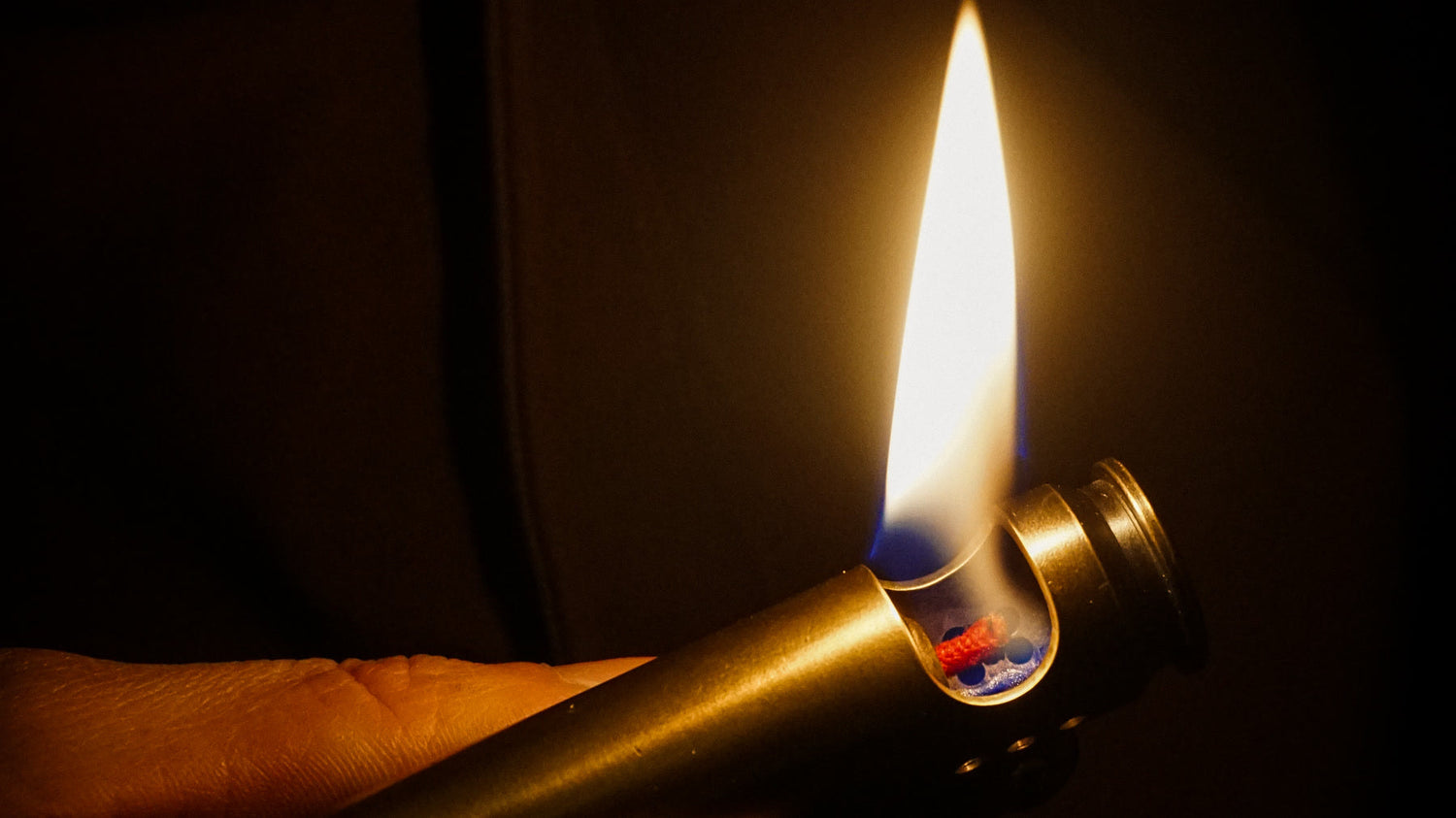
What does “lighter fluid” actually mean?
The phrase is less precise than it sounds. In everyday language it may refer to liquid pocket-lighter fuel, pressurized butane, or a liquid poured onto charcoal. Those products can sit near one another in stores and appear in the same search results, yet they are made for different containers, metering systems, seals, burners, and flame behavior. The label on the fuel and the mechanism inside the lighter must agree.
Begin with the lighter, not the bottle. Find the maker, model, fuel marking, manual, filler structure, wick or burner, and current condition. If the object is old, modified, cracked, corroded, leaking, or missing parts, identifying the general family is not enough to declare it ready for fuel.
Which fuel goes with which lighter mechanism?
This matrix is a sorting tool, not permission to improvise. Exact model instructions override a general category, especially for antiques, unusual inserts, catalytic devices, and multi-fuel equipment.
| Lighter type | Usual energy source | What to verify | Do not assume |
|---|---|---|---|
| Absorbent-packed wick lighter | Liquid pocket-lighter fuel labeled for wick lighters, commonly a volatile petroleum distillate. | Visible wick, absorbent cotton or packing, filler opening, cap or insert, and maker instruction. | Any clear or flammable liquid will work. |
| Refillable soft-flame gas lighter | Pressurized butane in a compatible refill can. | Refill valve, correct nozzle, gas controls, seal condition, purge or refill procedure, and manual. | Liquid fuel can be poured through the valve. |
| Jet or torch lighter | Pressurized butane, sometimes with model-specific quality or nozzle requirements. | Exact refill fitting, burner condition, flame control, temperature, and manufacturer procedure. | All cans and adapters fit every valve. |
| Disposable lighter | Factory-contained gas; many are not designed for consumer refilling. | Whether the exact product is explicitly refillable. | A visible valve-like part makes it serviceable. |
| Electric arc or coil lighter | Battery charging, not combustible fuel. | Charging input, battery condition, water exposure, and approved cable. | It needs lighter fluid because it is called a lighter. |
| Charcoal starter product | A grill-specific liquid or electric ignition method. | Grill instructions and the product label. | Charcoal lighter fluid belongs in a pocket lighter. |
If you are still deciding among mechanisms, use the types of lighters guide first. Fuel choice follows the mechanism; it does not create the mechanism.
How can you tell whether an unmarked lighter uses liquid fuel or butane?
Documentation is stronger than resemblance. Similar-looking bodies can contain different inserts, and old lighters may have replacement internals. Search the exact base marks and model before touching the filler.
- Look for the fuel path. A visible wick that descends into fibrous packing usually indicates liquid fuel. A burner connected to a refill valve and pressurized reservoir usually indicates butane.
- Inspect the filler without forcing it. Wick systems may expose packing behind a removable base, insert, or screw. Gas systems use a valve that must match the can nozzle. Do not puncture, pry, or enlarge anything.
- Check seals and condition. Cracks, looseness, heavy corrosion, missing caps, damaged threads, hardened seals, or a stuck valve turn identification into a repair question.
- Confirm with a model-specific source. Use the maker manual, verified product page, qualified repairer, or reliable parts diagram. If evidence conflicts, leave it empty.

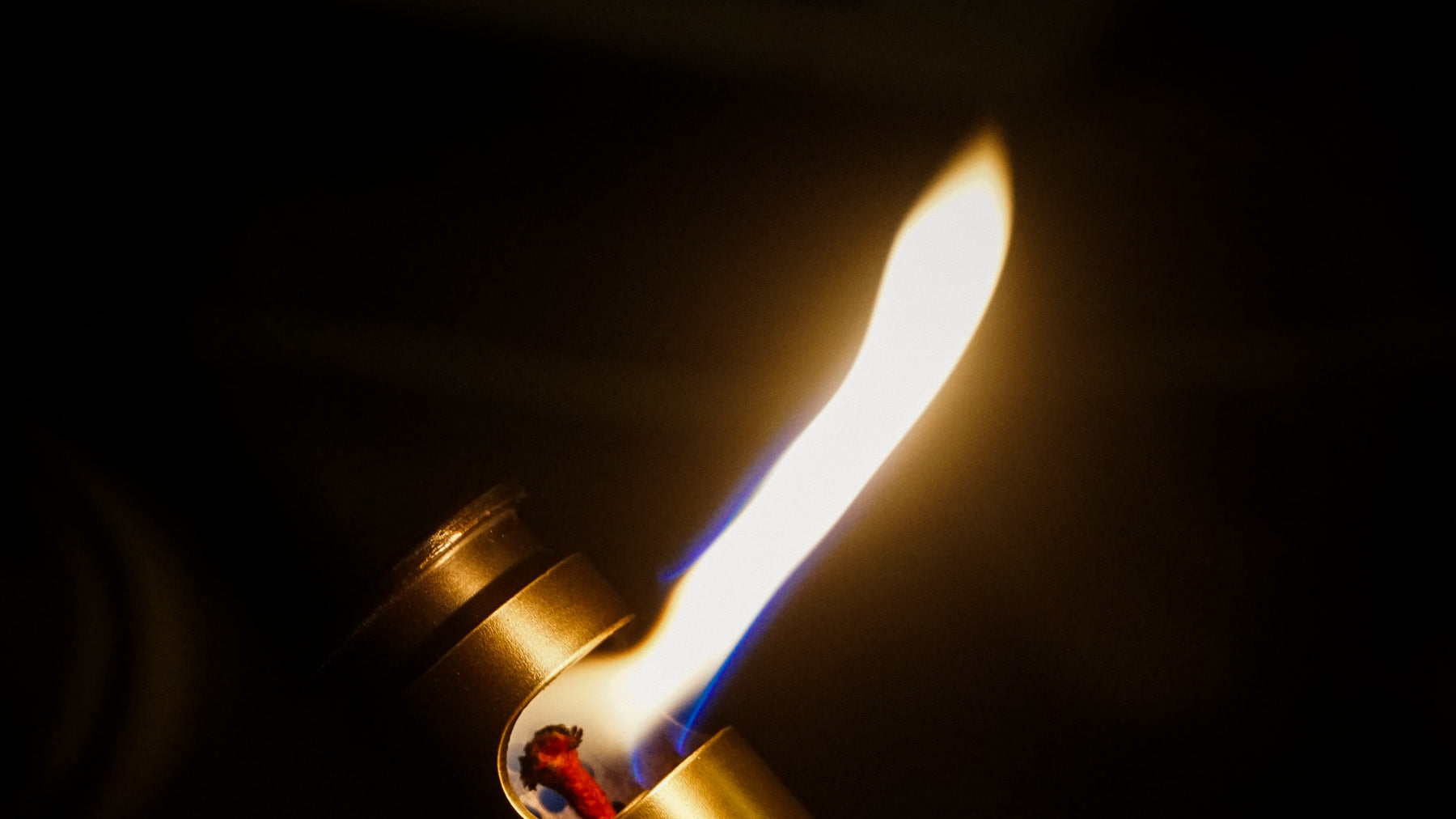
A wick is a fuel-delivery component, not the fuel itself. It draws liquid from absorbent packing toward the flame. A dry, contaminated, buried, or exhausted wick can prevent ignition even when the body contains fuel. Replacement belongs to the identified model; the wick replacement guide covers that separate maintenance task.
What should never be used as an improvised substitute?
“It burns” is not a compatibility test. A substitute can attack seals, leave residue, create an uncontrolled flame, change vapor pressure, produce unwanted odor, or move through the packing and wick differently. It can also make later diagnosis harder because the original fuel system is now contaminated.
| Product or substance | Why it is a poor substitute | Correct decision |
|---|---|---|
| Charcoal lighter fluid | Formulated and dispensed for grill ignition, not a small pocket-lighter reservoir and wick path. | Keep it with grill use only and follow the grill label. |
| Gasoline or automotive fuel | Extremely hazardous vapor behavior, additives, contamination, and no pocket-lighter compatibility claim. | Never improvise it as lighter fuel. |
| Lamp kerosene or lamp oil | Designed for a different wick, reservoir, airflow, and burn rate; may smoke, foul, or fail in a pocket lighter. | Use only in equipment that names it. |
| Alcohol, solvent, paint thinner, or cleaner | Composition, residue, seal compatibility, toxicity, and flame behavior may be unknown. | Do not fill a lighter with it. |
| Butane in a liquid-fuel wick lighter | No pressurized reservoir, valve, or gas burner exists to contain and meter it. | Use liquid wick-lighter fuel named for the model. |
| Liquid fuel in a butane valve | The valve and burner are designed for pressurized gas, not poured liquid. | Use a compatible butane can and nozzle. |
How do you choose the right lighter-fluid product?
For a wick lighter, choose a sealed product explicitly labeled for pocket or wick lighters and compatible with the exact model. The useful information is on the label: intended equipment, hazard warnings, storage conditions, container condition, and manufacturer directions. Marketing words such as premium, clean, universal, or extra pure do not replace compatibility.
For a butane lighter, confirm the can is intended for lighters, the nozzle or supplied adapter fits the valve, and the model procedure covers filling orientation, valve preparation, temperature, and rest time. Do not force a poor-fitting nozzle. Escaping gas can chill skin, damage a valve, and leave an uncertain fill.

Absorbent packing holds liquid fuel and feeds it to the wick. More liquid is not automatically better: overfilling can wet the outside, flood the wick area, waste fuel, and increase vapor around the next ignition attempt. If packing is missing, compacted, contaminated, or incorrectly replaced, solve that maintenance problem before adding more fuel.
How should you refill a lighter conservatively?
The exact manual controls. The sequence below establishes safe conditions common to many refills without pretending that every valve, insert, cap, or fuel quantity is identical.
- Confirm identity and fuel. Match the maker, model, mechanism, filler, and labeled fuel. Do not proceed on appearance alone.
- Choose the filling area. Work with the lighter cool, away from flames, sparks, cigarettes, hot surfaces, children, and enclosed vapor pockets. Follow the label ventilation requirement.
- Inspect before opening. Check the filler, cap, valve, seals, body seams, wick, and moving parts. Stop at damage, active corrosion, leakage, or an unfamiliar modification.
- Fill only by the model procedure. Use the specified orientation, nozzle, access point, and quantity or stop cue. Never force a valve or saturate the exterior.
- Close, clean, and wait. Secure the filler, wipe all external fuel, move away from the filling point, wash exposed skin, and allow any spill or vapor to clear. A stopwatch does not replace a dry, cool, leak-free condition.
- Test once under control. Keep the flame away from the face, clothing, fuel container, and filling area. If ignition or flame behavior is abnormal, extinguish and diagnose without repeated clicking.
For a verified WEDO model, follow the WEDO usage and care guide. This article explains the decision; the model page and care guide control the actual service procedure.
Why will a lighter not work after refilling?
Repeatedly adding fuel can turn a small service issue into a spill or leak. First separate fuel delivery, ignition, airflow, and hardware.
| Symptom | Possible cause | Low-risk next check | Stop when |
|---|---|---|---|
| Wheel turns but no spark | Missing, jammed, or exhausted flint; worn wheel; contamination. | Keep the lighter unfueled or safely closed and inspect the model-specific flint path. | The spring, wheel, or tube is damaged or forced. |
| Spark exists but wick stays dry | Fuel has not reached packing, packing is missing or compacted, wick placement is wrong, or fuel is empty. | Follow the maker soak and packing check; do not keep adding fuel blindly. | Fuel appears outside the intended reservoir. |
| Wick is wet but flame is weak or smoky | Wrong or contaminated fuel, charred wick, restricted airflow, or overfilling. | Extinguish, allow the unit to cool, and identify contamination before service. | Flame remains unstable, sooty, tall, or difficult to extinguish. |
| Butane will not enter | Nozzle mismatch, valve angle, temperature, blocked valve, or wrong procedure. | Verify the correct adapter and manual; never force the can. | The valve leaks, freezes excessively, bends, or continues hissing. |
| It works briefly, then stops | Low fuel, evaporative loss, gas lock, poor seal, exhausted wick, blocked jet, or internal fault. | Check the exact model service sequence and known consumables. | Recurring leakage or pressure loss suggests hardware service. |
If the pattern points to seals, joints, valves, alignment, or structural damage, use a model repair source or the high-quality lighter checklist. Fuel cannot repair a mechanical defect.
Does lighter fuel matter for cigars, pipes, candles, or outdoor use?
Yes, because the task changes the decision. Cigar guidance often favors butane or long matches to reduce petroleum odor or flavor near the tobacco. A candle may be easier to reach with a long utility lighter. A wind-exposed task may favor a protected wick or torch, but only within the intended use and local rules. No single fuel is best for every flame task.
Separate three questions: Is the fuel compatible with the lighter? Is the flame suitable for the object being lit? Is the environment safe for that flame? Passing one test does not pass the other two.
How should lighter fuel be stored and disposed of?
- Keep the original labeled container closed, upright when required, cool, and away from ignition, sunlight, hot vehicles, children, and pets.
- Do not transfer fuel into drink bottles, food containers, unmarked jars, or incompatible plastics.
- Keep liquid fuel and butane cans away from living-space heat sources and follow the label limits.
- Do not pour unwanted fuel into drains, soil, trash fires, or open containers. Use local household hazardous-waste instructions.
- Confirm seller, carrier, route, and destination rules before shipping fuel or a fueled lighter. Many lighters ship empty for this reason.
When does a serviceable liquid-fuel wick lighter fit?
It fits when an adult deliberately wants the steady flame character and mechanical maintenance of a wick system, has access to the correct labeled fuel, and accepts evaporation plus periodic flint, wick, and packing care. It is the wrong choice when the real need is a clean-taste cigar flame, a long-reach candle tool, a no-fuel electric device, minimal maintenance, or an unidentified collectible that should remain empty.

Liquid-fuel wick system · 82 × 20 mm · About 105 g
Medium Classic
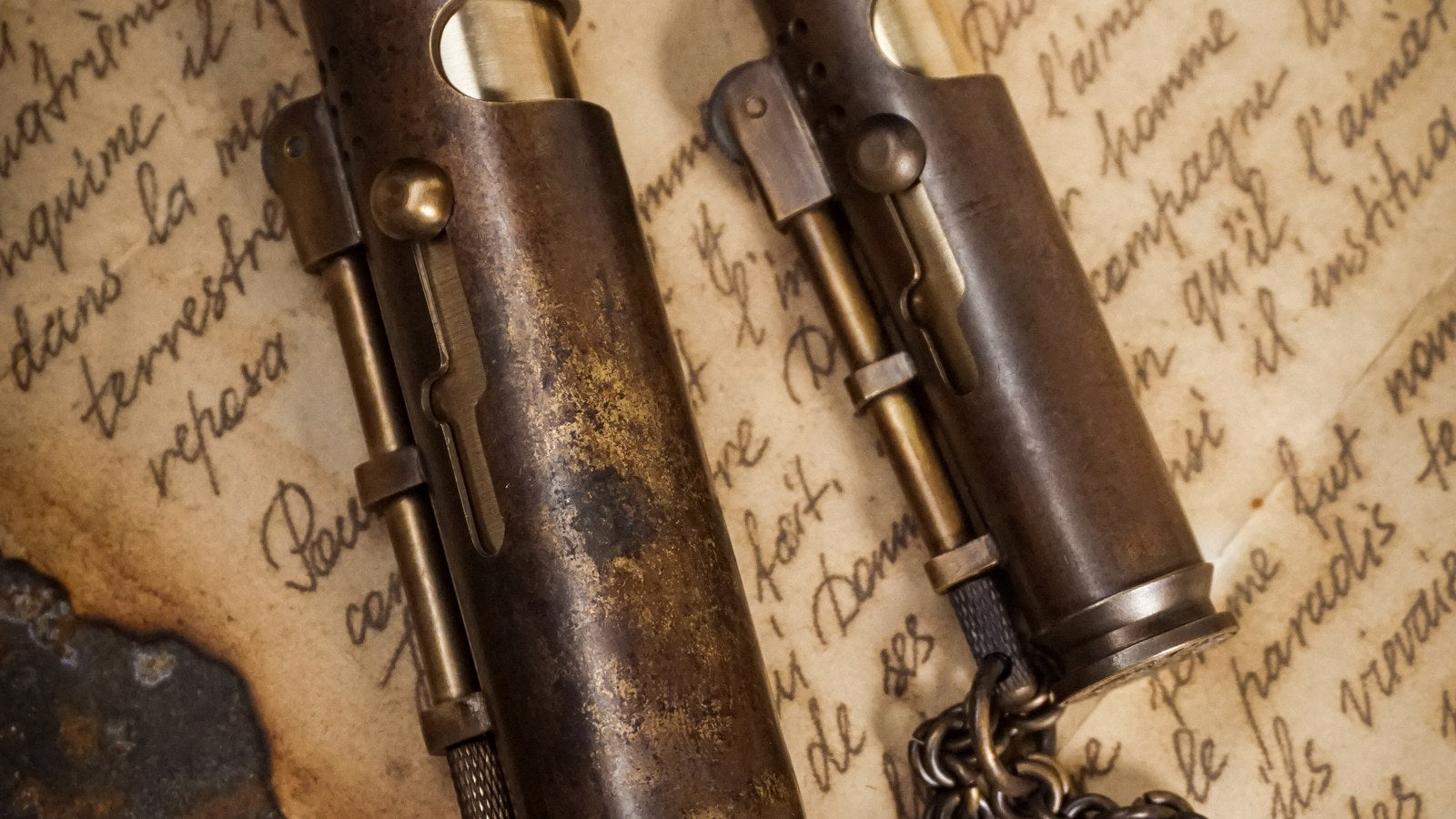
This current WEDO model uses a real repurposed .50 BMG brass casing and a serviceable wick mechanism. Its current PDP lists replaceable flint wheel, flint, wick, lighter cotton, O-ring, springs, and chain, plus an accessory pack. It ships without fuel and requires standard lighter fluid before first use.
Choose it only if a liquid-fuel wick lighter matches the task and maintenance preference. Choose a compatible butane, electric, long-reach, or specialist-restored option when that mechanism fits better.
Check the current mechanism, dimensions, and included partsFrequently asked questions
Is lighter fluid the same as butane?
No. Pocket-lighter fluid is a liquid fuel commonly used in absorbent-packed wick lighters. Butane is a pressurized gas used in refillable soft-flame and torch lighters. The containers, filler systems, seals, and burners are different. Use only the fuel named for the exact lighter.
Can I use charcoal lighter fluid in a pocket lighter?
Do not treat it as a substitute. Charcoal lighter fluid is labeled and dispensed for starting grills, not for the small packing, wick, seals, and controlled flame path of a pocket lighter. Use a product explicitly labeled for the identified lighter mechanism.
How can I tell whether an old lighter takes fluid or butane?
Look for the exact maker and model first. A wick leading into absorbent packing usually indicates liquid fuel; a refill valve and gas burner usually indicate butane. Those clues are not permission to fill a damaged or altered lighter. Stop if the filler, seals, valve, or history is uncertain.
Why will my wick lighter not light after refilling?
Common causes include overfilling, not allowing fuel to reach the wick, a dry or charred wick, exhausted cotton, an empty flint channel, a worn wheel, contamination, or the wrong fuel. Wipe external fuel, let vapors clear, and follow the model instructions. Stop if it leaks, smells unusually strong, becomes hot, or remains unpredictable.
How long should I wait after filling a lighter?
Use the manufacturer instruction rather than one universal number. At minimum, close the filler, wipe every external surface, move away from the filling area, and wait until spilled liquid and vapor have cleared before ignition. A cool lighter with no external wetness, leakage, or strong abnormal odor is the starting condition—not a stopwatch alone.
Does lighter fluid affect cigar taste?
It can. Cigar guidance commonly prefers butane or long matches because petroleum-based lighter fluid can add odor or flavor, especially if the flame or exhaust contacts the tobacco before combustion settles. That is a cigar-specific taste choice, not proof that every wick lighter is unsafe for every task.
Can I store lighter fuel inside the lighter for a long time?
Follow the exact maker instructions and the fuel label. Liquid fuel can evaporate, while gas systems can develop seal problems. Keep fuel and lighters cool, away from flames, sparks, children, vehicles in heat, and incompatible containers. For long storage, use the maker procedure rather than improvised draining or sealed display.
What should I do if lighter fluid gets on skin, in eyes, or is swallowed?
Move away from ignition sources and follow the product label. For exposure or suspected poisoning, contact local emergency services or poison control immediately. Do not induce vomiting unless a qualified professional tells you to. Bring the product container or label so responders know the substance.
Sources and method
This guide reviewed ten different current organic results for the exact query “lighter fluid for lighters,” then rebuilt the answer around the device rather than the product name. It separates wick fuel, butane, grill fluid, exposure response, cigar-specific preference, model care, and one verified WEDO example. Search results, product labels, transport rules, and model instructions can change; verify them at the time of use.
- Cambridge Dictionary — lighter fluid — Used to document that the phrase is broad and can refer to flammable liquid used in lighters or to light fires.
- MedlinePlus — Lighter fluid poisoning — Authoritative exposure and emergency-response boundary; no induced vomiting unless directed.
- Zippo — 4 oz Lighter Fuel — Primary example of a liquid fuel product labeled for wick lighters.
- Cigar Aficionado — Lighter Fluid — Cigar-specific odor and taste context, presented as preference rather than a universal safety rule.
- WEDO — Usage and Care — Exact operating and maintenance destination for identified WEDO models.
- WEDO — Medium Classic — Current model, mechanism, material, dimensions, weight, parts, no-fuel shipment, and approved image.
This guide does not identify an unknown chemical, certify a damaged lighter as safe, replace a manufacturer manual, provide medical diagnosis, or override local fire, shipping, disposal, and hazardous-material rules.

Lämna en kommentar
Denna webbplats är skyddad av hCaptcha och hCaptchas integritetspolicy . Användarvillkor gäller.