
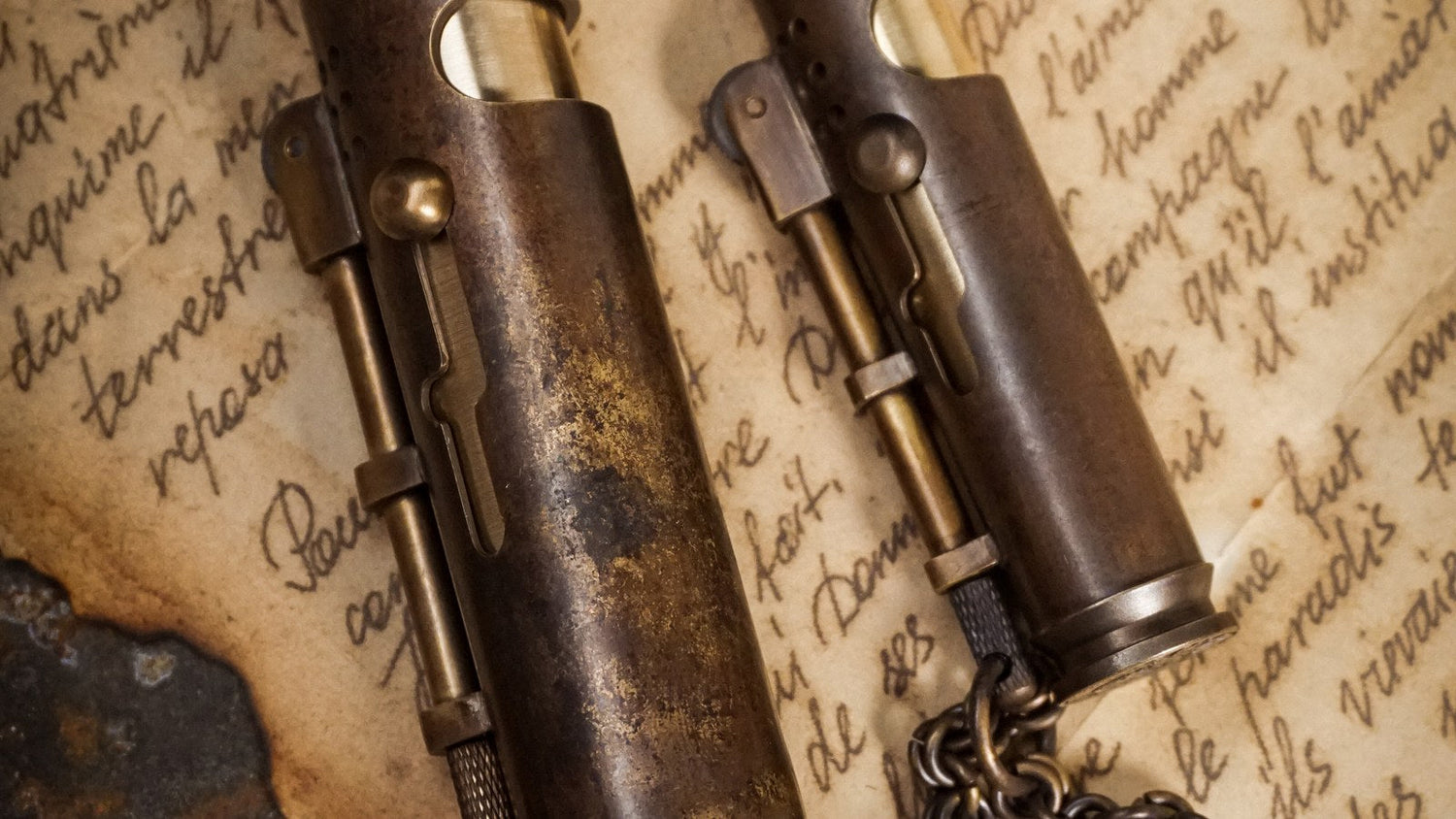
What does “vintage brass lighter” actually mean?
The phrase combines two words that sellers use loosely. Vintage can describe age, a design period, a current model name, or a deliberately aged appearance. Brass can describe a solid body, a brass sheet wrapped around another structure, a thin plated layer, or only a brass-colored finish. The words are useful starting clues, not a complete specification.
Current search results demonstrate the ambiguity. One official product is sold new with an Antique Brass finish. Another current product carries Vintage in its model name while explicitly remaining new. Tumbled brass is yet another current finish. At the same time, period dealers and marketplaces use similar wording for genuinely old objects. Read age, material, finish, and working condition as four separate fields.
| Listing phrase | What it may mean | Evidence to request | Do not assume |
|---|---|---|---|
| Vintage lighter | An older object, a vintage-shaped current model, or a seller’s style label. | Maker, model, production period, base marks, provenance, and exact photographs. | That it is historically old or collectible. |
| Solid brass lighter | A main external body made from brass, sometimes with steel or other working parts. | Maker material specification, construction details, and wear at edges and hidden surfaces. | That every component is brass or that weight proves composition. |
| Brass-plated or brass-color lighter | A thin brass layer or brass-colored coating over another substrate. | Explicit finish description and clear wear photographs. | That it can be polished like bare solid brass. |
| Antique, aged, or tumbled brass | A current surface treatment, protected patina, naturally aged stock, or a genuinely old surface. | Whether the item is newly made, how the surface was produced, and whether lacquer or sealant is present. | That surface appearance establishes the lighter’s age. |
If your real goal is historical dating or valuation, treat that as a separate antique-identification project. This guide stays with the narrower decision most buyers face: selecting a brass lighter whose material, function, size, and care demands match actual use.
Choose the lighter by purpose before choosing the patina
A good surface cannot rescue the wrong tool. Decide what the lighter must do after the first week of ownership. A collector may accept a non-working mechanism to preserve originality. A daily user needs reliable ignition, available consumables, and parts that can be serviced. A gift recipient may value readable personalization and a manageable size more than rarity.
| Main purpose | Prioritize | Acceptable compromise | Stop when |
|---|---|---|---|
| Historical collection | Documented maker, model, period, originality, provenance, and stable storage. | Non-working condition may be acceptable when disclosed. | The seller cannot support the age claim or has erased identifying surfaces. |
| Daily use | Known ignition system, sound seals, available flint or wick, comfortable size, and clear maintenance. | Modern replacement consumables and a protected aged finish. | Fuel system is unknown, leaking, cracked, seized, or unsupported. |
| Gift | Recipient’s habits, safe use, size, finish tolerance, return terms, and personalization space. | Modern vintage styling instead of uncertain age. | The gift creates unwanted maintenance or permanent wording has not been approved. |
| Display | Stable surface, accurate description, stand or case fit, and safe unfueled presentation. | A non-working mechanism if clearly labeled. | The display traps fuel vapor, moisture, or abrasive contact. |
| Outdoor or occasional use | Grip, wind behavior, protective design, replaceable parts, and a realistic carrying method. | More weight when it improves handling rather than appearance alone. | The chosen mechanism does not fit the conditions or local rules. |
If mechanism choice is still open, start with the types of lighters guide. The fuel system, ignition method, and maintenance cycle should be decided before color or patina.
How can you tell whether a lighter is brass?
The safest first test is documentary: maker specifications, model records, packaging, a clear product description, and photographs of the exact item. Then inspect construction. Bare solid brass generally shows similar yellow-brown metal at edges, threads, and worn areas, although surface oxidation can make those areas much darker. Plating may reveal a different substrate where the coating has worn through. Lacquer can make bare brass look unusually uniform and can react badly to polish.
A magnet is only a limited clue. Many brass-bodied lighters contain steel springs, wheels, screws, inserts, or internal structures, so localized attraction does not make the whole lighter “not brass.” No attraction does not prove composition either. Weight is similarly incomplete because dimensions, wall thickness, inserts, and fuel packing vary.

Use a non-destructive material check
- Read the exact claim. Look for solid brass, brass case, brass plated, brass color, antique brass finish, or aged brass rather than accepting the broad word brass.
- Match the model. Confirm that the specification belongs to the same model and variant, not a similar photograph or finish option.
- Inspect natural wear. Review edges, the base, threads, and hidden areas without scratching them. A different underlying color may indicate plating or coating.
- Identify protective layers. Ask whether lacquer, wax, clear coat, or another sealant is present before cleaning or polishing.
- Leave uncertainty visible. If the material is not verified, describe it as brass-colored or seller-described brass rather than upgrading the claim.
Inspect condition and serviceability before adding fuel
Condition is not one number. Separate the body, surface, ignition parts, fuel system, and evidence of repair. A lighter can look excellent yet leak, or show heavy patina while remaining mechanically sound. Ask the seller to show the object empty and cool. Do not request a flame video as the only proof; ignition does not reveal seal condition, fuel compatibility, or safe transport.

Body and surface
- Look for cracks, deep dents that interfere with moving parts, stress around hinges or cutouts, loose joints, and sharp deformed edges.
- Distinguish stable darkening and normal handling marks from active powdery corrosion, flaking finish, sticky residues, or unknown chemical deposits.
- Check whether personalization, maker marks, base markings, or date codes remain readable.
Ignition and moving parts
- Confirm that the wheel turns without excessive side play, the flint path is not blocked, the cap or snuffer moves correctly, and sliders or hinges are not forced.
- Inspect the wick or burner for severe charring, contamination, misalignment, or an incorrect replacement.
- Ask what was replaced. A serviced daily-use lighter can be desirable, but replacement parts must not be sold as untouched originality.
Fuel system
- Identify whether it is a wick, butane, plasma, or another system before adding anything.
- Check filler openings, seals, threads, packing, valves, and visible leakage or odor. Do not improvise a fuel because the lighter “looks like” another model.
- For an unfamiliar, cracked, corroded, leaking, or seized example, stop and use qualified repair support.
For current construction quality—separate from age or patina—use the high-quality lighter checklist. It keeps appearance from overwhelming fit, movement, seals, and serviceability.
Choose size, weight, and mechanism for the hand that will use it
Photographs hide scale. Record height, width or diameter, weight, control position, and the distance between the ignition control and grip. A taller cylindrical lighter may provide a substantial brass surface yet feel different from a flat flip-top model. A wide body may be comfortable on a desk and awkward in a pocket. A chain can improve retention while adding movement and contact marks.
Heavy does not automatically mean durable. Compare wall thickness, joints, moving parts, balance, and the availability of replaceable consumables. For regular use, a slightly smaller serviceable lighter often beats a larger decorative object. For display, a stable base and clear viewing angle may matter more than pocket comfort.
Five questions that prevent a style-first mistake
- Will it live in a pocket, bag, drawer, desk stand, display case, or outdoor kit?
- Can the intended user operate the control comfortably and safely with one hand?
- Are the correct flint, wick, cotton, seals, or other consumables available?
- Does the surface need to tolerate frequent touch, or is visible patina change welcome?
- Would a modern serviceable lighter solve the need better than a historical collectible?
Construction method can affect maintenance expectations but does not by itself prove age or quality. The handmade versus mass-produced lighters comparison explains what each production route can and cannot tell you.
Should you preserve the patina or polish the brass?
Patina is not automatically dirt, and brightness is not automatically improvement. On a historical object, surface change can support provenance and collector interest. On a modern aged-brass product, uneven tone may be the intended finish. On bare daily-use brass, an owner may reasonably prefer a brighter surface. The correct decision depends on material, coating, value, and intent.
| Surface situation | Best first action | Why | Avoid |
|---|---|---|---|
| Unknown, valuable, or historically important | Photograph, isolate, and remove loose dust only. | Marks, residues, lacquer, and patina may carry evidence. | Polish, solvent, acid, abrasion, replating, or disassembly without expertise. |
| Modern protected aged finish | Follow the maker’s care method and use a soft dry cloth. | The variation is part of the product; aggressive cleaning can make patches. | Metal polish unless the maker explicitly permits it. |
| Bare solid brass for daily use | Decide whether natural darkening is acceptable; clean gently before any polish. | Frequent touch changes brass naturally, and polishing creates an ongoing routine. | Assuming every dark area is harmful corrosion. |
| Brass-plated, printed, engraved, or lacquered | Use the finish-specific maker instruction. | A thin decorative or protective layer can be removed quickly. | General-purpose abrasive polish and hard brushes. |
| Active corrosion, sticky residue, fuel odor, or structural damage | Stop using it, isolate safely, and seek model-appropriate advice. | The problem may involve the fuel system or unstable material, not cosmetic dirt. | Masking the problem with polish or adding fuel to test it. |
Whatever you choose, record the before condition. That single step preserves information, makes change visible, and prevents a polished surface from being presented later as original.
How to clean and care for a brass lighter
Care begins with identification, not a universal homemade mixture. A wick lighter, butane lighter, electronic lighter, lacquered brass body, and plated body do not share one cleaning method. Use the exact maker instructions when available.
- Make the lighter safe to handle. Keep it cool and away from ignition sources. Follow the maker’s process for fuel and service access; do not casually drain or disassemble an unknown system.
- Document the surface. Photograph each side, base, mechanism, marks, dents, and color variation under neutral light.
- Remove loose debris dry. Use a clean soft cloth or soft brush. Keep lint and grit away from the wheel, wick, valves, threads, and moving joints.
- Use minimal moisture only when permitted. Put a small amount of neutral soapy water on the cloth, not into the lighter. Avoid flooding openings. Wipe with a barely damp clean cloth and dry immediately.
- Service the mechanism separately. Replace only the correct consumables and seals. Follow the identified model instructions rather than treating a cosmetic cleaning as mechanical repair.
- Store for the real interval. Keep it dry, away from heat and incompatible materials. For long storage, follow maker guidance on fuel removal and ventilation.
For a verified modern WEDO model, use the WEDO usage and care guide. Fuel type and first filling are intentionally not expanded here because they depend on the identified mechanism and belong to the dedicated care instructions.
Vintage brass lighter buying checklist
A strong listing answers ordinary questions with exact photographs and plain language. Do not let a dramatic patina, military story, or heavy weight replace the specification.
- Identity: What maker, model, variant, and approximate production period is claimed?
- Meaning of vintage: Is the item actually old, a current vintage-shaped model, or a modern aged finish?
- Material: Is the body solid brass, a brass case, plated, lacquered, brass-colored, or repurposed aged brass?
- Exact item: Are all photographs of the piece you will receive, including base and hidden wear?
- Dimensions: What are the measured size and weight, and is a scale photograph available?
- Mechanism: Which ignition and fuel system does it use?
- Condition: Are there cracks, seized parts, loose joints, active corrosion, leakage, or strong odor?
- Service history: Which parts, finishes, engravings, or coatings are original, replaced, repaired, or refinished?
- Consumables: Are correct flints, wicks, cotton, seals, or charging parts available?
- Shipment: Is it empty of fuel, and do the seller, carrier, route, and destination permit shipment?
- Return terms: Can it be returned if material, dimensions, or disclosed condition differ?
- Fit: Would you still choose it if the surface were less photogenic?
A period collectible, a modern solid-brass lighter, a modern aged-brass lighter, and a brass-plated decorative model can all be reasonable purchases. The mistake is paying for one category while receiving another.
When does a modern aged-brass lighter fit?
A modern aged-brass lighter fits when the goal is visible surface character plus current serviceability—not historical provenance. It can remove uncertainty about the maker, mechanism, dimensions, replacement parts, and return path while still allowing variation in tone and marks. It is the wrong choice when the buyer needs a documented period object, pristine polished uniformity, or a mechanism with almost no consumable maintenance.

Modern working assembly · Repurposed aged-brass casing · Medium size
Medium Military (Antique)
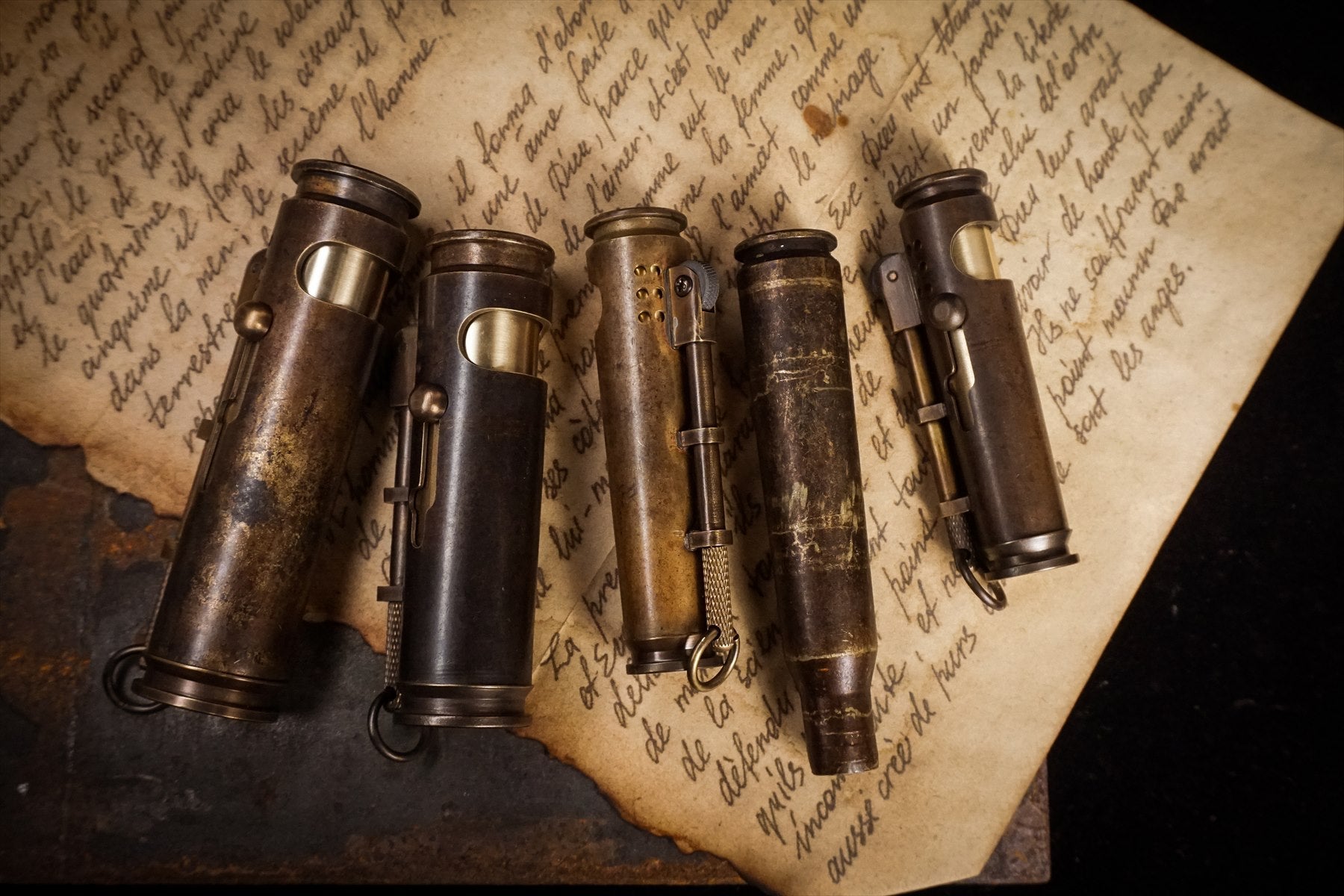
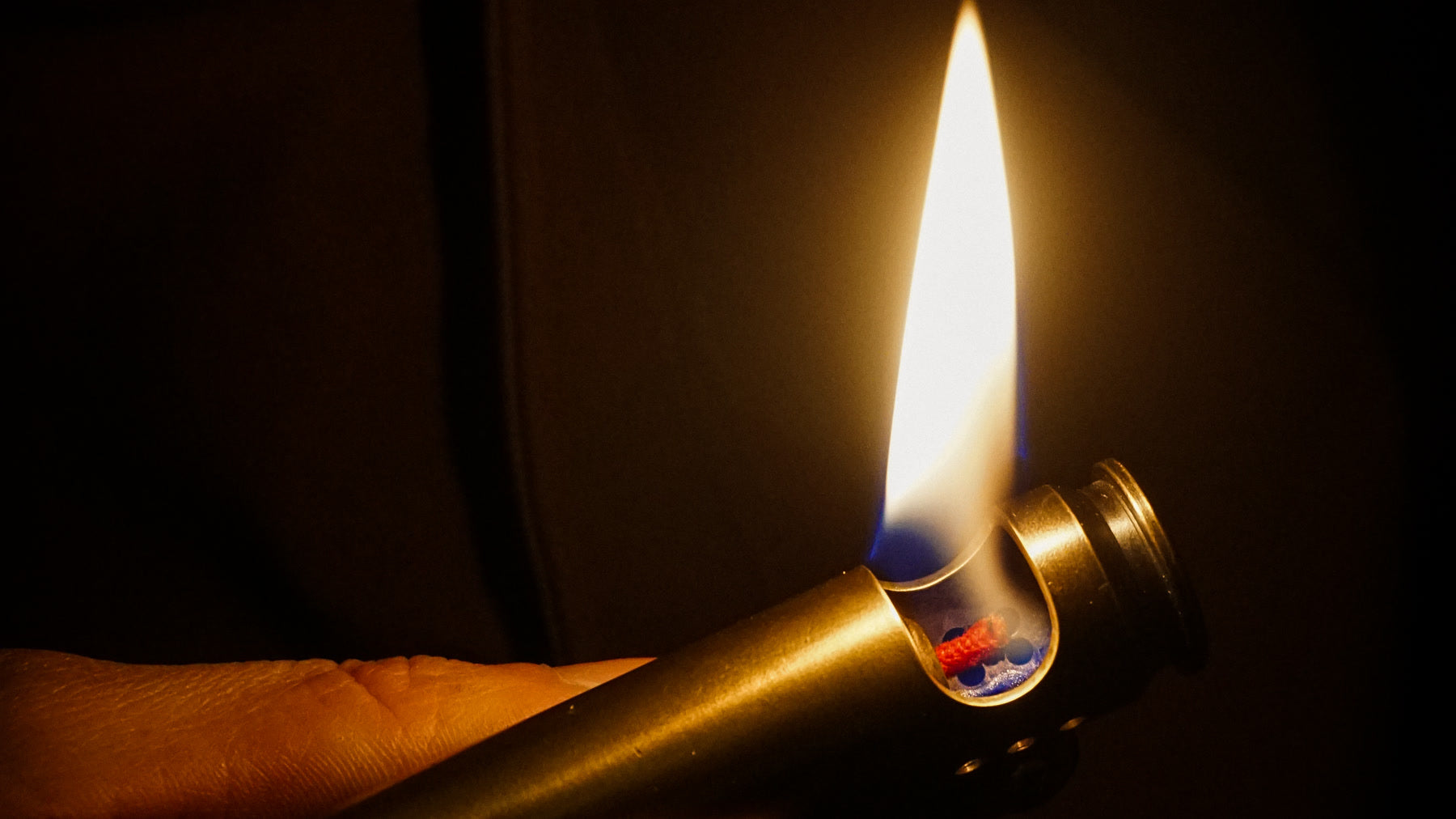
This current WEDO wick lighter uses a real repurposed aged-brass cartridge case. The PDP lists 82 × 20 mm and approximately 105 g. Its patina, oxidation, tone, and marks are preserved and protected, so pieces vary. It ships without fuel.
The page lists replaceable flint wheel, flint, wick, cotton, O-ring, springs, and chain, plus an accessory pack. Choose it if you want aged material character in a known modern mechanism and a practical size. Choose a documented period collectible instead if historical provenance is the goal.
Check the current model, dimensions, and included partsFrequently asked questions
Does vintage brass lighter mean the lighter is old?
No. Vintage can describe a historical object, a model name, an older-looking silhouette, or an antiqued finish. Brass may describe the body material, plating, or color. Read the maker, model, material, finish, production date, and provenance separately before treating vintage as an age claim.
How can I tell whether a lighter is solid brass or brass plated?
Start with the maker specification and construction record. Then inspect edges, worn corners, threads, the base, and hidden areas for a different underlying metal. A magnet can reveal some steel components but cannot prove that the whole body is solid brass. Avoid filing, acids, or destructive scratch tests on an assembled or collectible lighter.
Should I polish a vintage brass lighter?
Only when you know the finish and accept the result. Polishing may brighten bare solid brass, but it can remove wanted patina, lacquer, plating, printed marks, engraving contrast, and evidence of age. Document the surface first. For uncertain, valuable, plated, lacquered, or historically important pieces, use dry gentle cleaning and seek specialist advice.
How do I clean an aged-brass lighter without ruining the patina?
First identify the lighter and confirm it is unfueled and cool. Remove loose dust with a soft dry cloth or brush. If the maker permits damp cleaning, use very little neutral soapy water on a cloth, keep liquid away from the fuel system, wipe again with a barely damp clean cloth, and dry immediately. Stop if color transfers or the finish changes.
What should I inspect before buying a used brass lighter?
Ask for clear views of every side, base, filler area, wheel, wick or burner, cap, seals, hinges, threads, and any maker marks. Confirm the fuel system, whether it is empty, what parts were replaced, whether it leaks or binds, and whether returns are allowed. Working status and originality are separate questions.
Is a heavier brass lighter always better?
No. Weight can feel substantial, but it does not prove better brass, safer construction, reliable ignition, or easier maintenance. Choose dimensions and weight for the real task: pocket carry, desk use, display, outdoor handling, or collection. Judge mechanism, seals, replaceable parts, grip, and balance alongside weight.
How should I store a brass lighter?
Follow the maker instructions for the identified model. Keep it cool, dry, upright when appropriate, away from heat, sparks, children, and incompatible materials. For long storage, remove fuel only as the maker directs and allow safe ventilation. Do not seal a fueled or recently emptied lighter in an unventilated display case.
Do brass lighters ship with fuel?
Many do not because fuel is restricted in transport, but policies differ by seller, carrier, route, and jurisdiction. Confirm the exact listing and local rules. The current WEDO Medium Military Antique page states that it ships without fuel; use the identified model instructions before first filling.
Sources and method
This guide compared ten different current organic results for the exact query “vintage brass lighter,” then separated current product terminology from material, finish, use, and care decisions. Product facts for the WEDO example were checked against its current page and real approved shared-library photographs. Search results and seller claims can change; verify the exact item before purchase or service.
- Zippo — Classic Antique Brass — Primary example showing that Antique can describe a protected finish on a current new lighter.
- Zippo — Brushed Brass Vintage with Slashes — Primary example showing Vintage used as a current model and silhouette name rather than proof of age.
- Zippo — Tumbled Brass — Primary example of another current brass surface treatment.
- WEDO — Medium Military (Antique) — Current verified model, material, dimensions, weight, shipment state, included parts, replacement parts, and images.
- WEDO — Usage and Care — Current instructions for identified modern WEDO models only.
General information cannot authenticate an unknown object, certify material, declare a damaged lighter safe, or replace maker instructions, qualified repair, conservation advice, carrier rules, or local law.

Lämna en kommentar
Denna webbplats är skyddad av hCaptcha och hCaptchas integritetspolicy . Användarvillkor gäller.